AWS Contributors Engage Open Source Communities at Open Source Summit Korea 2026 and MCP DevSummit Seoul 2026

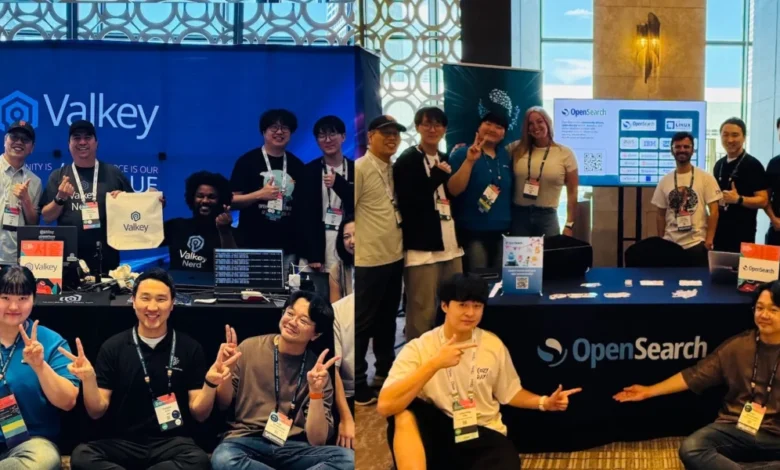
The global open source landscape witnessed a significant convergence of expertise and collaborative momentum last week as AWS contributors participated in the Open Source Summit Korea 2026 and the inaugural MCP DevSummit Seoul 2026. These four-day gatherings, held in the heart of South Korea’s technology sector, served as a primary nexus for developers, maintainers, and enterprise architects to align on the future of critical infrastructure projects, specifically focusing on the evolution of OpenSearch and Valkey.
A Convergence of Open Source Innovation
The Open Source Summit, a flagship event hosted by the Linux Foundation, provides a critical forum for the advancement of the open source software ecosystem. In 2026, the inclusion of the MCP (Model Context Protocol) DevSummit highlights a pivot toward standardizing how AI-driven applications interact with data sources. For AWS, the presence of its engineering teams at these events underscores a strategic commitment to fostering community-led development for projects that serve as the backbone of modern cloud-native architectures.
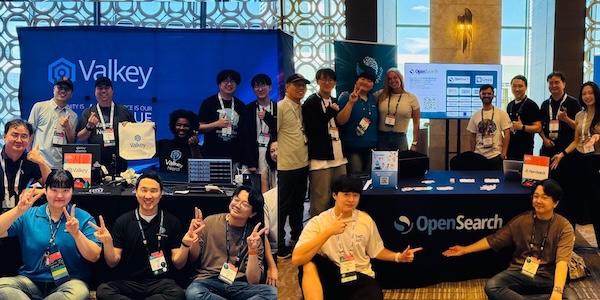
Throughout the week, participants engaged in a series of technical deep dives and collaborative workshops. A significant highlight was the active involvement of the local Korean OpenSearch community, whose members spearheaded booth operations and hosted a dedicated user group meetup. This grassroots engagement allowed for a direct exchange of feedback between the maintainers of these projects and the developers deploying them in high-stakes production environments.
The Evolution of OpenSearch: Scaling Data Observability
OpenSearch, an enterprise-grade suite for search and observability, has seen rapid iteration throughout 2026. The project’s primary goal remains the simplification of unstructured data management, a challenge that has grown in complexity as organizations shift toward massive, distributed log and metric environments.
The release of OpenSearch 3.7 on June 9, 2026, marked a pivotal milestone in this trajectory. By introducing integrated tools for tracking Service Level Objectives (SLOs) across logs, traces, and metrics within a single interface, the project has effectively lowered the barrier to entry for full-stack observability. Furthermore, the architectural optimizations introduced in version 3.7 have yielded a 5.5x increase in vector retrieval speeds, a critical enhancement for teams leveraging semantic search and Retrieval-Augmented Generation (RAG) workflows in AI applications.
AWS has moved quickly to integrate these advancements into its managed offerings. Since July 30, 2026, users of Amazon OpenSearch Service have gained access to version 3.7, benefiting from the enhanced search relevance and the new Query Insights features. The implications for the industry are profound; as data volumes expand, the ability to maintain performance while reducing the operational overhead of managing observability silos becomes a key competitive advantage for enterprises.
High-Performance Data Stores: The Rise of Valkey 9.1
Concurrent with developments in search technology, the Valkey community has made significant strides in defining the future of high-performance key/value data stores. Valkey, which serves as a vital component for caching, message queuing, and primary data storage, saw its 9.1 release on May 19, 2026.
The 9.1 update was characterized by a fundamental redesign of the project’s I/O threading model. This shift is not merely incremental; it addresses long-standing throughput bottlenecks in high-concurrency environments, delivering up to a 17% improvement in overall throughput. Additionally, the update introduced memory efficiency optimizations, specifically targeting strings under 128 bytes, which now consume up to 20% less memory.
For developers, these improvements translate directly to cost savings and architectural scalability. Since June 23, 2026, AWS has provided support for Valkey 9.1 within Amazon ElastiCache. By facilitating node-based clusters that utilize these optimizations, AWS is enabling organizations to run more demanding, multi-tenant workloads with stronger access controls and reduced hardware footprints. This shift reflects a broader trend in the industry: moving away from monolithic data solutions toward specialized, highly efficient, and modular open source components.
Chronology of Key Technical Milestones (2026)
- May 19, 2026: Official release of Valkey 9.1, featuring a redesigned I/O threading model and memory efficiency upgrades.
- June 9, 2026: Launch of OpenSearch 3.7, introducing unified SLO tracking and a 5.5x increase in vector search performance.
- June 23, 2026: Amazon ElastiCache adds support for Valkey 9.1, enhancing throughput for managed node-based clusters.
- July 30, 2026: Amazon OpenSearch Service integrates version 3.7, providing managed access to enhanced vector search and Query Insights.
- August 2026: AWS contributors participate in Open Source Summit Korea and MCP DevSummit, facilitating knowledge transfer and community networking.
Broader Implications for the Cloud Ecosystem
The collaborative nature of these events highlights a shift in how cloud providers interact with the open source community. Rather than operating in isolation, major entities like AWS are increasingly positioning themselves as participants—and contributors—within independent governance models like those established by the Linux Foundation.
This model of "open core" contribution is essential for the sustainability of projects like OpenSearch and Valkey. By aligning with community-driven roadmaps, companies ensure that the tools they rely on are not only robust but also standardized, preventing vendor lock-in and fostering an ecosystem where innovation can be ported across different environments.

The focus on Korea as a host for these summits also speaks to the region’s influence in the global developer community. With a high concentration of sophisticated enterprise users and a vibrant startup culture, the feedback loop generated during these summits provides invaluable data for maintainers. It helps prioritize features that address real-world latency, security, and scalability challenges.
Looking Ahead: Community Engagement
The momentum generated at the Seoul events is expected to continue through the remainder of the year. Both the OpenSearch and Valkey communities have established recurring event schedules, which serve as the primary venues for roadmap discussions and technical troubleshooting.
For developers and architects, these gatherings are no longer optional. As the underlying technologies powering modern cloud applications become increasingly complex, the ability to engage directly with the maintainers of these projects allows organizations to anticipate changes, influence development priorities, and ensure that their infrastructure remains resilient against the evolving demands of data-intensive computing.
As organizations continue to navigate the complexities of digital transformation, the success of these open source initiatives—backed by both global cloud providers and local community leaders—will likely remain a defining characteristic of the 2026 technology landscape. The focus on performance, efficiency, and integrated observability is not merely a technical trend, but a foundational requirement for the next generation of scalable, AI-ready enterprise systems.
For those interested in the ongoing developments, the AWS Builder Center remains the primary hub for documentation, community resources, and upcoming event notifications. As the industry moves toward the final quarter of the year, the collaborative efforts initiated in Seoul are set to serve as a blueprint for future community engagement and technical innovation.
Related posts: