Danantara Injection of IDR 456 Billion to Revive Stalled LRT City Projects Across 12 Locations


Jakarta, CNBC Indonesia — The Indonesian government has officially intervened to address the prolonged stagnation of several prominent transit-oriented development (TOD) projects across the Greater Jakarta area. Wakil Kepala Badan Pengaturan Badan Usaha Milik Negara (BP BUMN), Aminuddin Ma’ruf, announced that a substantial capital injection amounting to IDR 456 billion, channeled through Badan Pengelola Investasi (BPI) Danantara, will be directly allocated to revive and complete stalled LRT City projects.
The announcement follows intensive high-level stakeholder meetings addressing grievances from consumers who have faced years of delays in property handovers. The injected funds are earmarked to restart construction across 12 distinct LRT City locations that have suffered from severe financial bottlenecks and operational halts. The intervention signals a decisive move by state authorities to restore public trust in state-owned enterprise (SOE) property developments, particularly those integrated with strategic national transportation networks like the Light Rail Transit (LRT).
Scope of the Stalled Developments
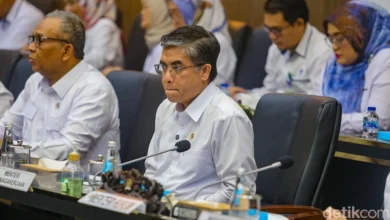
Speaking to members of the media following a closed-door coordination meeting at the BP BUMN Office on Tuesday, September 15, 2026, Aminuddin elaborated on the scale of the challenge. The meeting was attended by key stakeholders, including representatives from disgruntled consumer associations, officials from BP BUMN, management executives from PT Adhi Karya (Persero) Tbk. (ADHI), and its property subsidiary, PT Adhi Commuter Properti Tbk. (ADCP).
According to Aminuddin, the IDR 456 billion fund will be distributed strategically to cover 12 separate units or project sites. However, the severity of the delays varies significantly across these locations. Aminuddin candidly admitted that the portfolio includes both partially completed towers—where construction was frozen at various stages of structural or finishing work—and plots of land designated for the project where ground has not yet been broken.
"Indeed, we have a comprehensive plan to build everything across those 12 units, across those 12 points, across those 12 locations," Aminuddin stated to reporters.
The multi-site LRT City concept was originally conceived as an innovative urban housing solution designed to encourage public transportation usage by seamlessly integrating residential high-rises with LRT stations. However, macroeconomic headwinds, shifting post-pandemic real estate demands, and internal liquidity pressures at the developer level severely disrupted cash flows, leaving thousands of buyers in limbo.
Strict Deadlines and Inventory Audits Imposed on Adhi Karya
In response to mounting pressure from buyers and regulatory bodies, the government has imposed strict operational timelines on the project developers. PT Adhi Karya (Persero) Tbk., acting as the parent company and primary developer of the LRT City projects, alongside PT Adhi Commuter Properti Tbk. (ADCP), has been given a strict deadline until October 1, 2026.
By this date, both entities must complete a thorough and verifiable inventory of all residential and commercial units across the 12 locations that have yet to be formally handed over to their respective buyers. This audit aims to establish an accurate baseline of outstanding obligations, financial liabilities, and physical construction deficits.
Furthermore, a subsequent high-level summit has been scheduled between October 10 and October 15, 2026. This finalization meeting will bring together the same core stakeholders to review the audit findings, finalize construction schedules, and set binding milestones for project delivery.
To ensure absolute transparency and accountability, Aminuddin announced plans to personally visit all 12 LRT City locations in the immediate future. These field inspections are designed to allow regulatory authorities to independently assess site conditions, verify audit data provided by ADHI and ADCP, and prioritize which specific locations possess the technical and commercial viability to resume construction immediately.
Consumer Rights, Delays, and the Absence of Refund Options
The plight of consumers who invested their life savings into the LRT City projects has been a focal point of recent regulatory hearings. Many buyers have waited years beyond their original contractual handover dates, burdened by the double financial strain of paying mortgages to state or private banks while continuing to rent alternative housing.
Despite the profound frustrations expressed by consumer representatives during the September 15 meeting, Aminuddin clarified the government’s current legal and financial stance regarding monetary compensation. As matters stand, the government and the developers have not opened an option for direct financial refunds (refund) for affected buyers.
Instead, the official strategy relies on rescuing the projects entirely through the Danantara capital injection, ensuring that physical construction resumes so that buyers ultimately receive the physical units they purchased. Regulatory authorities argue that a blanket refund policy could trigger a systemic liquidity crisis for the developers, potentially collapsing the entire corporate restructuring framework and leaving all stakeholders with zero recourse. By prioritizing project completion, the state aims to protect the long-term value of the buyers’ investments while safeguarding the operational continuity of key SOE contractors.
Background Context: The Rise and Stall of Transit-Oriented Development
The LRT City initiative was launched with immense optimism during the rapid expansion of Greater Jakarta’s rail infrastructure. Designed around the pillars of Transit-Oriented Development (TOD), the brand aimed to alleviate chronic traffic congestion by offering middle-income urbanites affordable, rail-connected housing options in strategic nodes such as Cibubur, Bekasi, Depok, and South Jakarta.
PT Adhi Commuter Properti Tbk. (ADCP) was established as a dedicated subsidiary to spearhead these massive TOD projects, leveraging the parent company’s dominance in civil engineering and construction. However, the capital-intensive nature of high-rise property development, combined with the unprecedented economic shocks of the 2020–2022 global health crisis and subsequent high-interest-rate environments, severely constrained the company’s financial flexibility.
As project costs escalated and property sales slowed down, construction progress at numerous sites began to decelerate before grinding to a halt entirely. The intervention of BPI Danantara—Indonesia’s newly empowered sovereign investment fund tasked with optimizing and safeguarding strategic state assets—marks a pivotal turning point. By injecting state-backed capital, Danantara is stepping in where commercial financing avenues had previously stalled, acting as a financial stabilizer for critical infrastructure-adjacent projects.
Broader Implications for the Indonesian Property and SOE Sectors
The resolution of the LRT City crisis carries significant broader implications for both Indonesia’s real estate sector and the governance of State-Owned Enterprises.
First, the crisis underscores the systemic risks inherent in mega-project property developments undertaken by SOE subsidiaries without sufficient capitalization buffers or rigorous demand forecasting. The federal intervention sets a precedent that while the government will step in to protect consumer interests and maintain confidence in public infrastructure, it will also demand strict corporate accountability, detailed inventory audits, and tightly monitored execution timelines.
Second, the involvement of BPI Danantara highlights a shift in how state wealth fund mechanisms are deployed domestically. Rather than solely focusing on external foreign direct investment or large-scale macroeconomic infrastructure, Danantara is actively utilizing its financial leverage to solve micro-level consumer grievances and rehabilitate stalled domestic assets that directly impact the daily lives of urban citizens.
For the thousands of families who invested in LRT City units, the coming weeks will be crucial. With the October 1 inventory deadline approaching and subsequent finalization talks slated for mid-October 2026, all eyes remain fixed on BP BUMN, Adhi Karya, and ADCP to deliver transparent, binding commitments. Whether the IDR 456 billion injection will successfully transform these dormant construction sites into thriving, populated transit communities will depend heavily on the rigorous enforcement of the newly established regulatory milestones.