Understanding Your SLIK OJK Credit Score: How Peer-to-Peer Lending, Mortgages, and Job Applications Are Impacted by Financial History

The modern financial ecosystem relies heavily on data transparency, risk assessment, and credit scoring mechanisms to determine individual creditworthiness. In Indonesia, the System for Financial Information Services, managed by the Financial Services Authority and formally known as Sistem Layanan Informasi Keuangan (SLIK OJK)—historically recognized as BI Checking—serves as the ultimate benchmark for financial institutions evaluating loan and financing applications. As financial digitalization accelerates, the scope of SLIK OJK has broadened significantly, capturing a wider array of consumer credit behaviors, including digital lending through peer-to-peer (P2P) platforms. Consequently, an individual’s credit score is no longer merely a metric for securing bank loans; it has evolved into a critical determinant affecting major life milestones, ranging from home ownership to professional employment prospects.
The integration of P2P lending data into the SLIK OJK framework marks a pivotal regulatory shift. Previously, traditional banking institutions and multifinance companies relied primarily on conventional credit histories, credit card usage, and multi-purpose bank loans. However, the explosive growth of fintech lending introduced a blind spot in traditional risk assessment. Many consumers accumulated significant debt through numerous unregulated or regulated digital lenders without traditional financial institutions being fully aware of their debt-to-income ratios. To mitigate systemic risk, curb over-indebtedness, and protect both consumers and the broader financial sector, the OJK mandated that registered P2P lending platforms report borrower histories directly to SLIK. This integration ensures that a missed Rp 100,000 installment on a digital cash advance carries the same weight in official credit evaluations as a defaulted commercial bank loan.
The real-world implications of this stringent data integration are profound and immediate. According to data from the Real Estate Indonesia (REI) association, even prior to the formal tightening of digital lending reporting rules, approximately 40 percent of all applications for subsidized and commercial Credit Pemilikan Rumah (KPR), or home ownership loans, faced rejection. Industry associations and housing developers pointed directly to minor outstanding arrears on digital lending platforms as the primary culprit. Prospective homeowners, possessing stable primary incomes but burdened by forgotten or neglected digital micro-loans, found their dream of homeownership dashed due to poor SLIK scores.
Beyond the housing sector, the ramifications of credit scores have extended into labor and corporate recruitment markets. In recent years, OJK officials and human resource experts have highlighted an emerging trend: job seekers failing to secure employment because prospective employers—particularly within the banking, financial services, and corporate sectors—incorporate background checks, including SLIK OJK evaluations, into their hiring criteria. Employers increasingly view a candidate’s financial discipline as a direct reflection of their personal integrity, trustworthiness, and risk management capabilities. A poor credit score can thus derail a career before it even begins, transforming a purely financial metric into a barrier to social and economic mobility.
Navigating the Five Tiers of the SLIK OJK Scoring System
To understand how financial institutions evaluate applicants, consumers must first comprehend the structured grading scale utilized within the SLIK OJK database. According to guidelines outlined by major financial institutions such as PT Pegadaian, the credit scoring system is categorized into five distinct tiers, officially known as Kualitas Pembiayaan:
- Collectibility 1 (Kolektibilitas 1 / Lancar): This denotes current credit. The debtor fulfills all payment obligations on time, with zero arrears or delays in principal and interest payments. This is the pristine score required to effortlessly access any banking or financing product.
- Collectibility 2 (Kolektibilitas 2 / DPK – Dalam Perhatian Khusus): This indicates credit under special attention. The debtor has experienced minor payment delays ranging from 1 to 90 days. While individuals in this category may still qualify for certain loans, financial institutions will scrutinize their applications much more rigorously.
- Collectibility 3 (Kolektibilitas 3 / Kurang Lancar): This represents substandard credit. The debtor has experienced payment delays ranging from 91 to 120 days. At this stage, loans are heavily restricted, and aggressive restructuring or clearance is mandatory before any new credit can be considered.
- Collectibility 4 (Kolektibilitas 4 / Diragukan): This signifies doubtful credit. Payment arrears have persisted between 121 and 180 days. The likelihood of full recovery by the lender is deemed low, and the debtor is effectively locked out of formal financial markets.
- Collectibility 5 (Kolektibilitas 5 / Macet): This is the worst classification, representing defaulted or bad credit (kredit macet) with arrears exceeding 180 days.
Banking regulations dictate that only individuals falling into Collectibility 1 and Collectibility 2 can seamlessly apply for and receive approval for fresh loans from commercial banks. Consumers who find themselves categorized under Collectibility 3, 4, or 5 must undertake comprehensive credit rehabilitation before traditional lenders will even entertain their financing proposals.
The Regulatory Stance and Official Procedures for Data Rectification
Recognizing the anxieties surrounding erroneous credit reports and accidental defaults, regulatory authorities have provided clear avenues for remediation. Agusman, Chief Executive of Supervisors for Financing Institutions, Venture Capital Companies, Microfinance Institutions, and Other Financial Services at the OJK, has consistently emphasized that SLIK data is dynamic. It is entirely possible for a borrower to update and improve their credit standing, provided they fulfill their financial obligations or execute the specific administrative steps mandated by existing regulations.
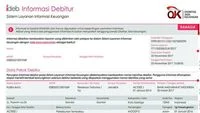
The first step in managing one’s financial reputation is proactive self-monitoring. Consumers are no longer required to visit physical OJK offices or rely solely on bank intermediaries to check their credit history. The regulatory body provides an accessible, transparent digital portal through the official website idebku.ojk.go.id. By submitting identification documents and completing the verification process online, citizens can independently pull their Individual Debtor Information (iDeb) report free of charge. Experts strongly recommend that every citizen review their iDeb report at least once a year, or prior to initiating major life purchases such as mortgages, vehicle financing, or business loans.
What steps must a borrower take if their iDeb report reveals a poor credit score or unresolved historical arrears?
The remediation path depends entirely on the accuracy of the data presented in the report:
- Settlement of Outstanding Obligations: If the negative score is due to legitimate, unresolved debt or historical arrears, the sole and definitive method to clear the record is to fully pay off the remaining balance. Partial payments or ignored notices will not suffice to remove the negative flag. Once the debt is settled with the respective financial institution or P2P lending platform, the debtor must request an official Certificate of Loan Clearance (Surat Keterangan Lunas or SKL).
- Dispute Resolution for Data Errors: In scenarios where a borrower discovers a negative mark that they believe is erroneous—such as a debt that was already paid, identity theft, or clerical errors by the lender—they have the legal right to dispute the entry. The borrower must contact the customer service department of the reporting financial institution or submit a formal complaint through OJK consumer protection channels. Lenders are legally obligated to investigate and rectify data discrepancies if an error is verified.
Regulatory timelines dictate that once a debtor successfully settles their obligations or clears a disputed error, the respective financial institution is required to update the SLIK OJK database within a maximum timeframe of 30 calendar days. Following this update, the debtor’s collectibility score will reflect their current, unencumbered status.
Broader Economic Implications and Future Outlook
The tightening of credit scoring mechanisms in Indonesia reflects a broader global shift toward rigorous risk management and comprehensive financial inclusion. On one hand, the integration of P2P lending data into the SLIK OJK ecosystem creates a safer environment for banks and institutional lenders, significantly lowering non-performing loan (NPL) ratios and protecting depositors’ capital. It establishes a culture of financial accountability, discouraging reckless borrowing habits among consumers who might otherwise accumulate unsustainable debt across multiple digital applications.
Conversely, this hyper-connected credit environment poses significant challenges for the unbanked and underbanked population. Many young professionals and informal workers rely on micro-loans for emergency liquidity. A single miscalculation or medical emergency that triggers a default on a minor digital loan can severely impair an individual’s financial mobility for months or even years, blocking access to affordable housing loans, vehicle financing, and formal employment opportunities.
Financial literacy campaigns have therefore become an urgent necessity. Educational initiatives spearheaded by the OJK, banking associations, and fintech companies must focus on teaching consumers how debt accumulation on digital platforms cascades into long-term financial exclusion. Borrowers must understand that convenience in obtaining instant digital credit comes with long-term reputational responsibilities within the national financial architecture.
Ultimately, the evolution of SLIK OJK underscores a fundamental truth of modern economics: financial reputation is a valuable, quantifiable asset. In an era where data flows seamlessly between digital lending applications and major regulatory databases, maintaining a pristine credit score is no longer just a banking preference—it is a vital prerequisite for personal economic survival and upward mobility in Indonesia.