Amazon Bedrock AgentCore Runtime Launches Persistent Infrastructure Instances for Complex AI Workflows

The rapid evolution of generative AI has moved beyond simple chat interfaces and single-turn query responses. As enterprises increasingly transition autonomous AI agents from experimental prototypes to mission-critical production environments, the limitations of ephemeral, stateless compute environments have become a primary bottleneck. To address these architectural challenges, Amazon Web Services has unveiled runtime instances for Amazon Bedrock AgentCore, a new compute option designed to provide persistent, managed infrastructure for complex, long-running agentic workloads.
This release marks a significant milestone in the maturity of the Bedrock ecosystem. By offering a middle ground between lightweight microVMs and self-managed EC2 clusters, AWS is positioning itself to capture a larger share of the enterprise AI orchestration market, where reliability, statefulness, and resource-heavy computation are no longer optional features but baseline requirements.
The Evolution of Agentic Infrastructure
Historically, developers attempting to deploy sophisticated AI agents faced a "complexity gap." When an agentic workflow required more than a few seconds of processing time—such as multi-day data analysis, complex GUI automation, or intensive code compilation—developers were forced to manage their own infrastructure. This involved the manual provisioning of EC2 instances, the configuration of complex networking topologies, the implementation of proprietary session management systems, and the constant oversight of scaling policies.

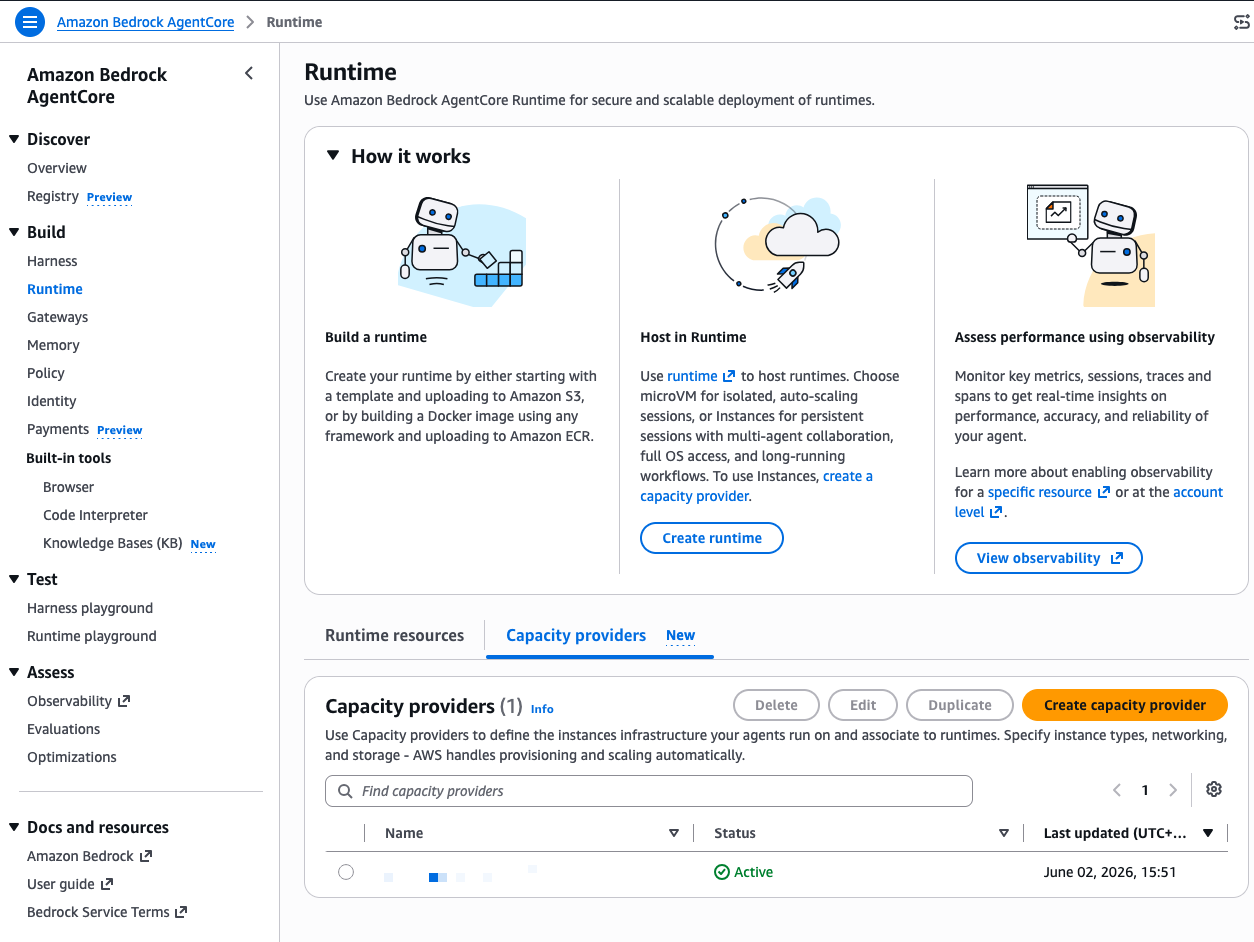
The introduction of AgentCore runtime instances effectively offloads this operational burden. The service provides AWS-managed EC2 infrastructure where developers can deploy multiple agents within a single, unified runtime environment. Each agent retains its own specific dependencies and artifact types, but they are capable of operating on the same host, utilizing shared sessions that persist for up to 14 days.
This shift is particularly significant for teams utilizing popular orchestration frameworks such as LangGraph, CrewAI, and LlamaIndex. By integrating directly with AgentCore APIs, these frameworks can now leverage a managed backend that handles the heavy lifting of state persistence, GPU acceleration, and resource isolation, allowing engineering teams to focus on model logic rather than infrastructure plumbing.
Architectural Advantages and Technical Capabilities
The core value proposition of the new runtime instances lies in their ability to handle compute-intensive tasks while maintaining persistent state. Unlike traditional serverless functions that expire after a brief window, these instances support hibernation and resumption. A complex multi-step workflow can be paused during periods of low activity—such as an overnight window—and resumed with the complete state intact, significantly optimizing costs without sacrificing the continuity of the agent’s memory.
Furthermore, the integration of GPU acceleration directly into the runtime instance environment addresses a critical pain point for developers performing inference on large models or conducting resource-heavy tasks like real-time security scanning or visual data processing. By pairing these instances with Amazon Elastic Block Store (Amazon EBS) and AgentCore Memory, developers can ensure that the "knowledge" accumulated by an agent persists across multiple sessions and disparate environments.
From an orchestration standpoint, the service encourages a hybrid approach. A lightweight orchestrator can reside on a runtime microVM, managing high-level API traffic and routing, while offloading specialized, compute-heavy labor to worker agents running on persistent instances. This tiered architecture enables a highly scalable system that balances cost-efficiency with high-performance execution.
Chronology and Operational Integration
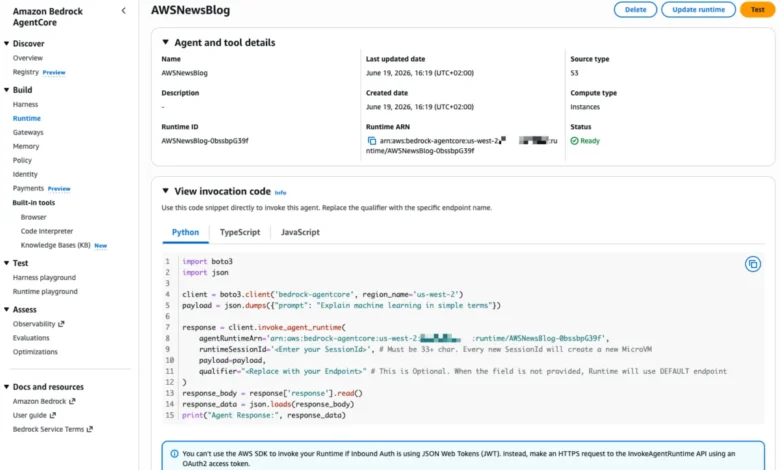
The rollout of this feature follows an extensive period of development focused on refining the AgentCore runtime API. The deployment process is designed to be streamlined for existing AWS users. The integration follows a four-step cycle:
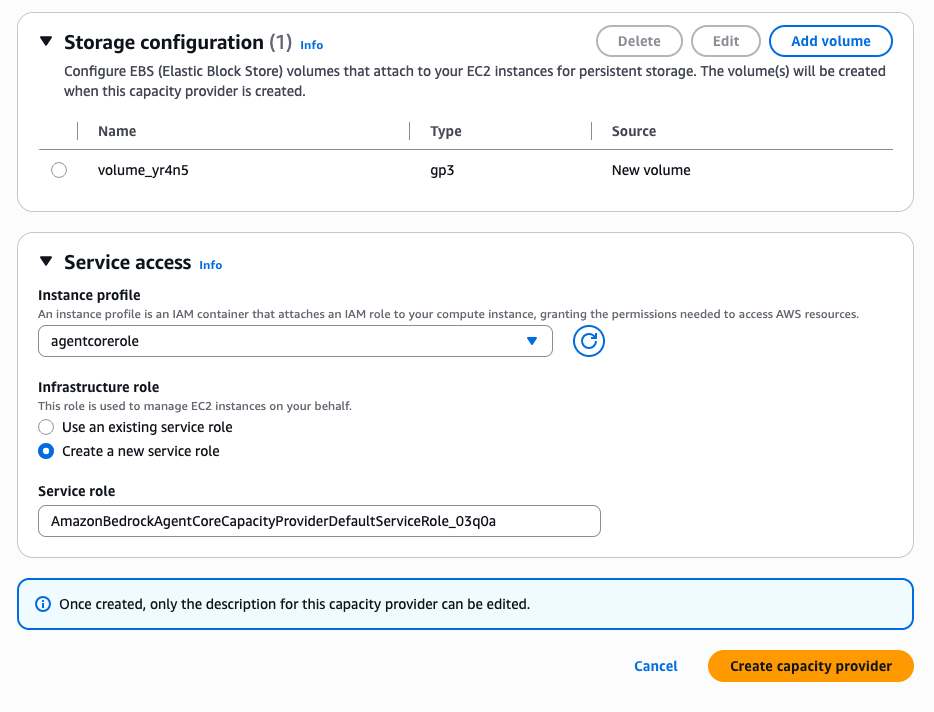
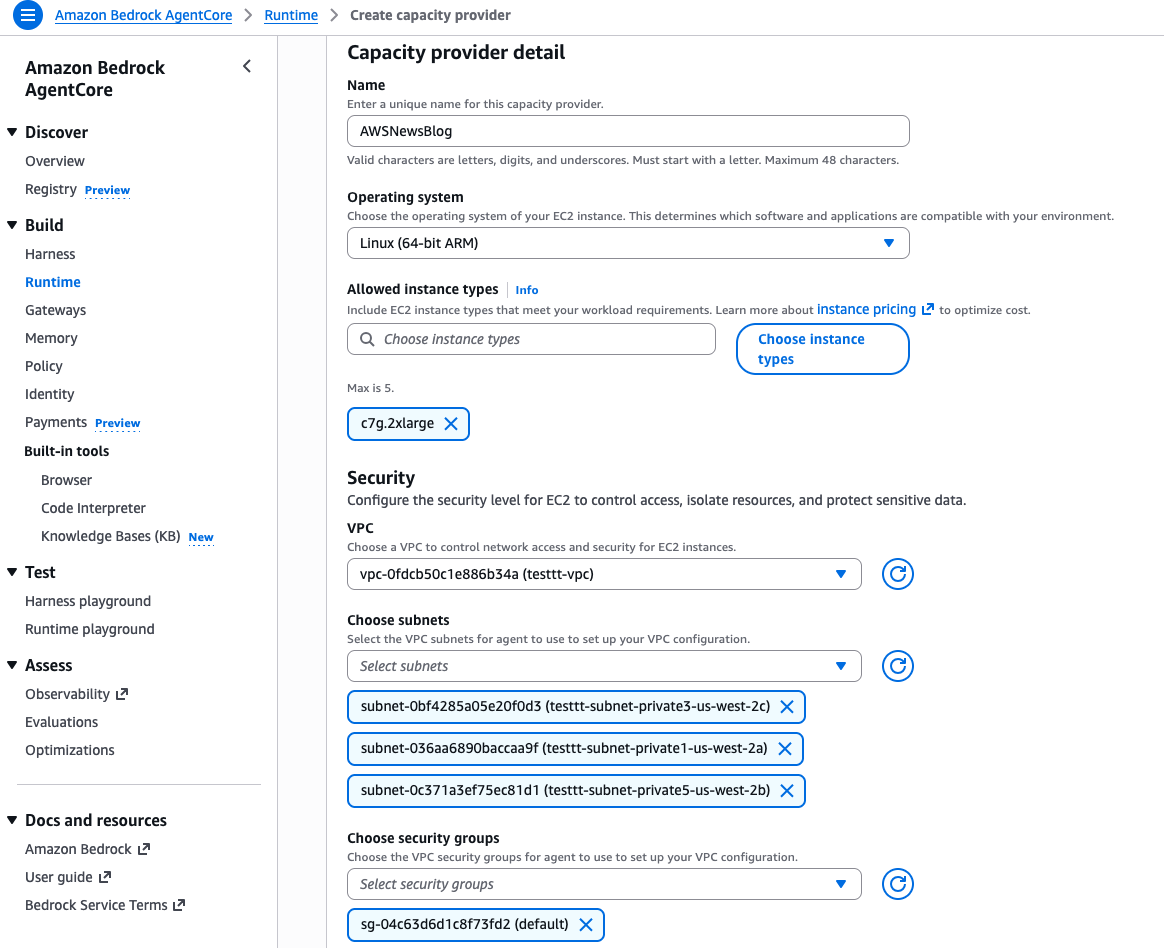
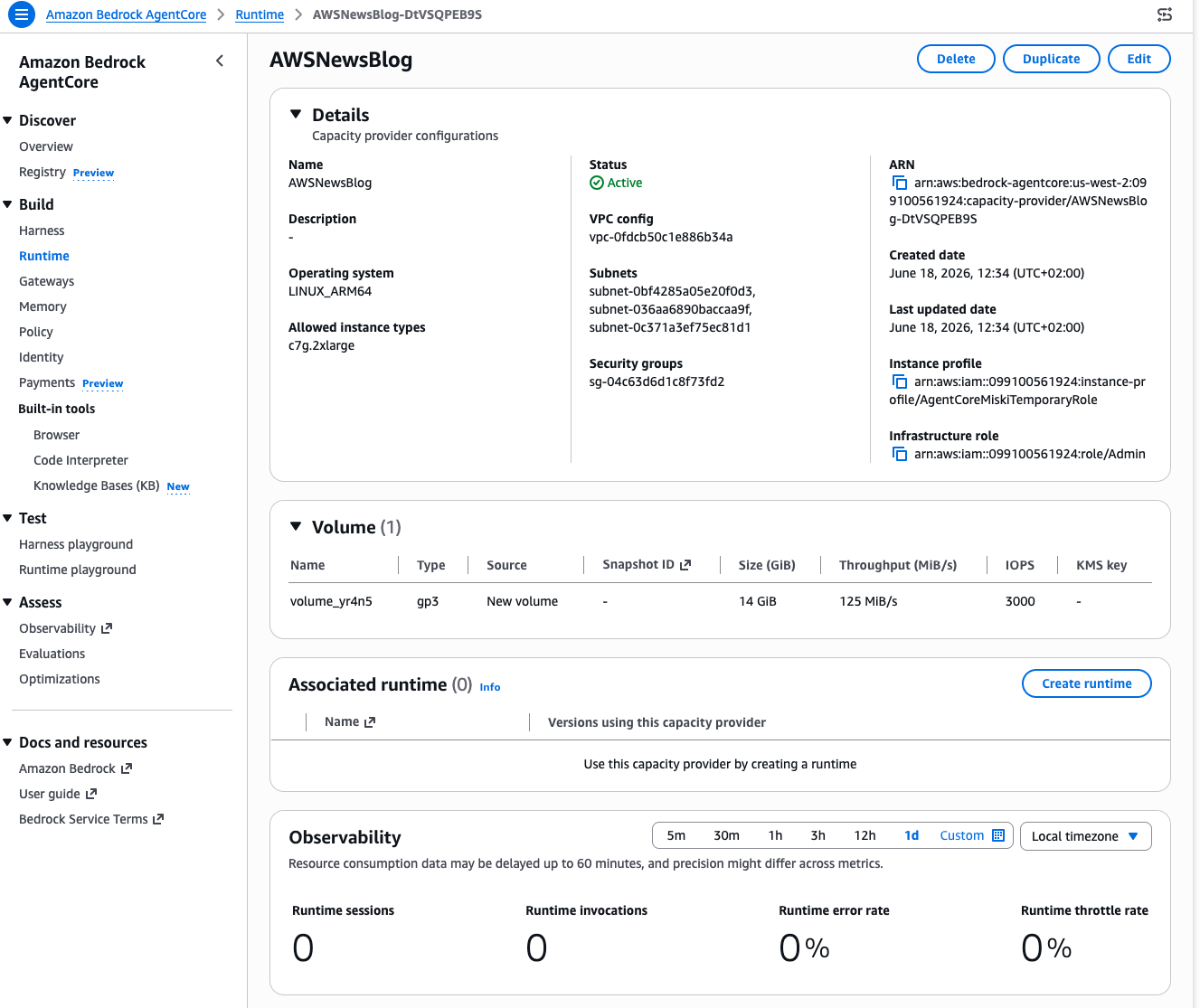
- Capacity Provisioning: Users define a "capacity provider," which acts as the foundation for the EC2 infrastructure. This step allows for the selection of specific operating systems, instance types (including high-memory and GPU-optimized variants), and network configurations.
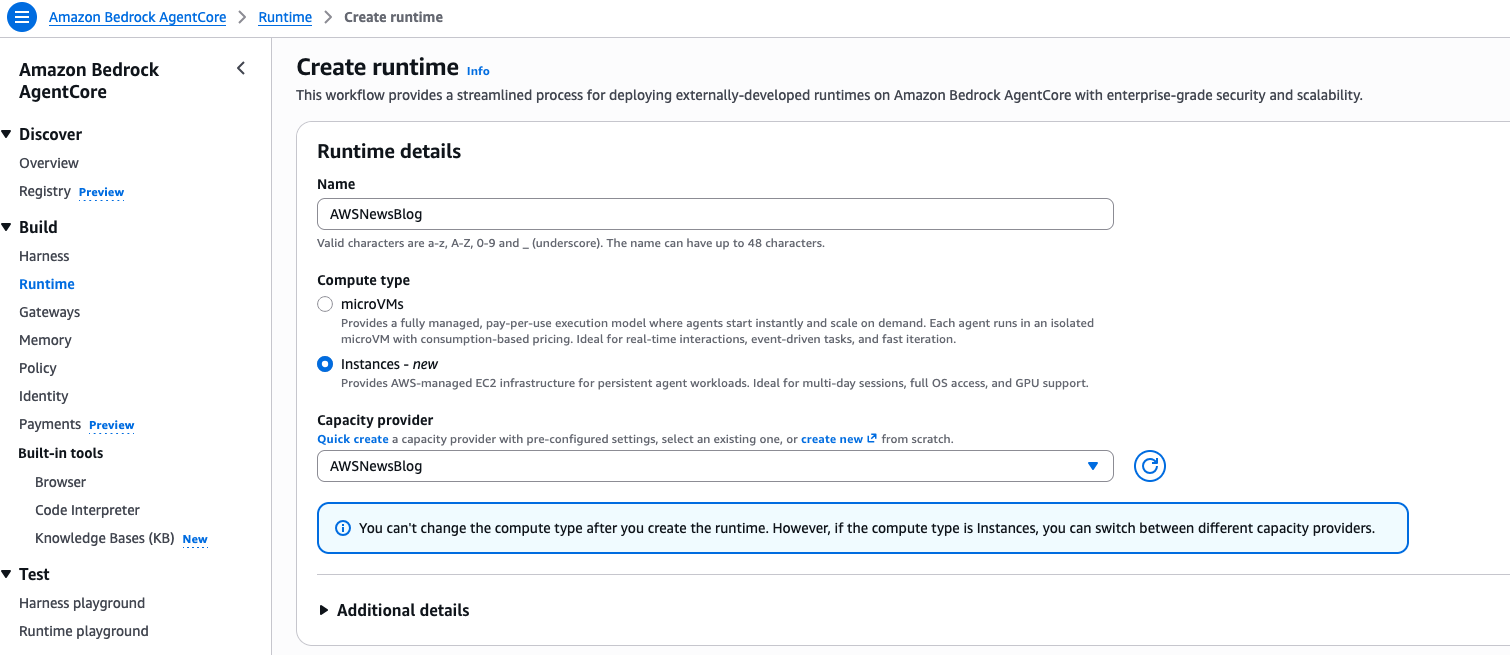
- Runtime Configuration: Once the capacity provider is established, developers create a runtime environment, linking it to the pre-configured infrastructure.
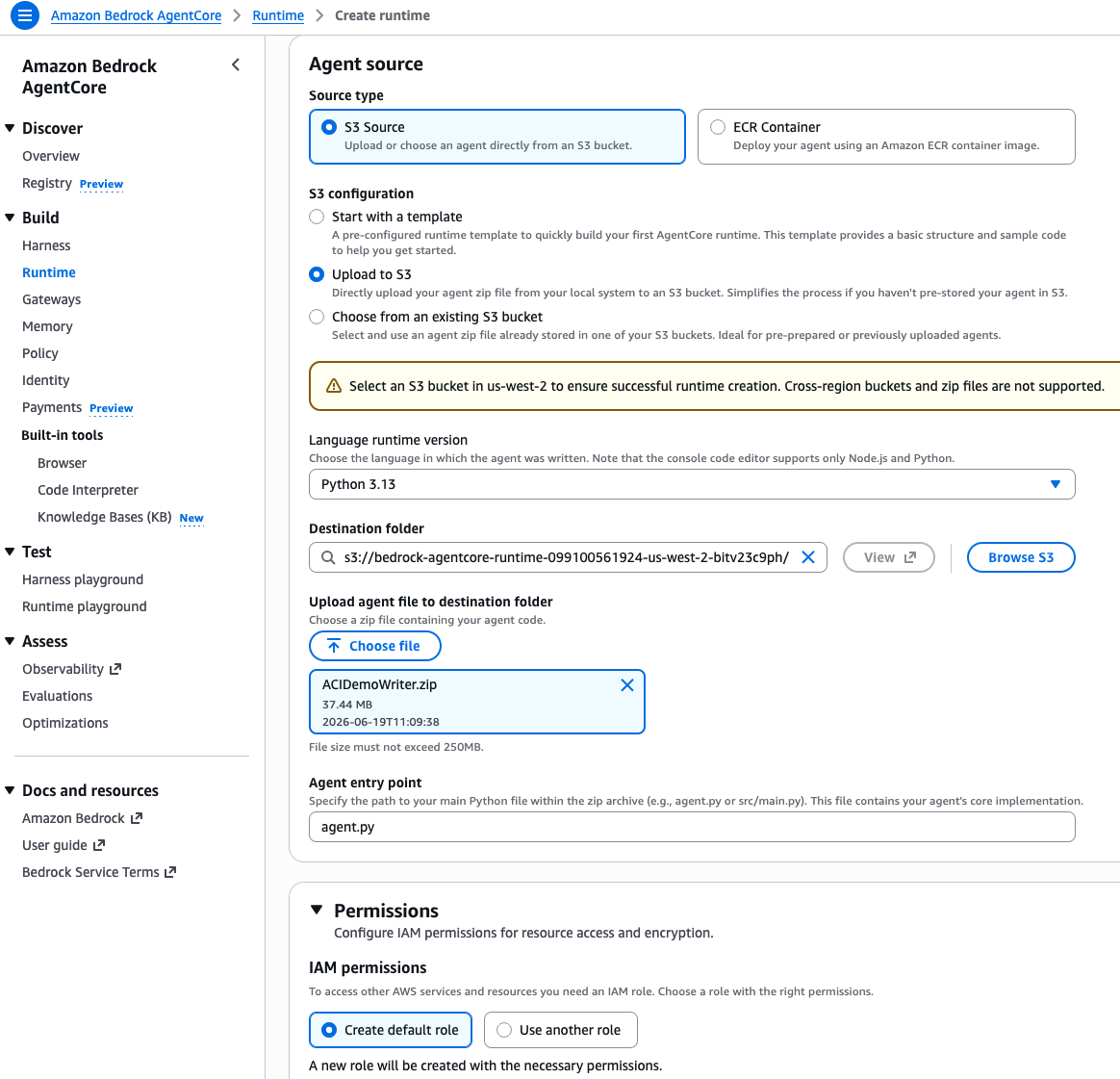
- Agent Deployment: Agents are packaged as zip files or container images. By utilizing a simple
@app.entrypointdecorator within their code, developers can define how the agent interacts with the runtime. - Invocation and Collaboration: Through shared session identifiers, agents gain the ability to interact with a common file system. This allows for seamless data handoffs—such as a code-writing agent generating a file that a secondary code-reviewing agent immediately parses and evaluates—without the need for intermediary API calls or external message queues.
Industry Implications and Market Analysis
The release of persistent runtime instances is a strategic maneuver that aligns with the broader industry trend toward "agentic automation." Industry analysts have noted that the primary barrier to the widespread adoption of autonomous agents is not the intelligence of the models themselves, but the reliability of the "plumbing" that connects them to enterprise data and persistent execution environments.
By providing a managed solution that supports up to 14-day persistent sessions, AWS is addressing the needs of high-stakes industries, including financial services, healthcare, and software development. For example, a financial compliance agent tasked with monitoring transactions over a business week can now maintain its state and context throughout the entire duration, rather than re-initializing its knowledge base every time a new query arrives.
Moreover, the ability to support collaborative multi-agent workflows on a single host is expected to reduce the latency associated with agent-to-agent communication. In traditional cloud architectures, agents often communicate over networks, introducing overhead and potential points of failure. By co-locating these agents in a shared filesystem environment, AWS has eliminated this overhead, potentially accelerating the execution speed of complex, multi-stage tasks.
Future Outlook and Technical Considerations
While the new runtime instances offer significant flexibility, they also require a shift in how developers approach state management. Because the agents can now persist data on the underlying disk, developers must be diligent about security and cleanup, particularly when dealing with sensitive information. The integration with AWS Identity and Access Management (IAM) and existing observability tools ensures that these instances maintain the high security standards expected of enterprise-grade cloud deployments.
As of the current release, the service supports a wide range of frameworks and models, reinforcing the "model-agnostic" philosophy that has defined Amazon Bedrock. Whether a team is using the latest iteration of Anthropic’s Claude, Amazon’s Titan models, or open-source alternatives, the runtime instances provide a consistent compute substrate that treats the model as a modular component rather than a defining constraint.
The introduction of these instances represents a maturing of the AI development lifecycle. As organizations continue to integrate autonomous agents into their core business logic, the demand for stable, predictable, and persistent infrastructure will only increase. By abstracting away the underlying EC2 complexity, Amazon is lowering the barrier to entry for building robust, long-term AI workflows, effectively shifting the focus of the AI industry from "can we build it?" to "how efficiently can we scale it?"
For technical teams, the next phase will likely involve the optimization of these long-running agents for cost and performance. With features like session hibernation and the ability to selectively choose instance types, the economic model of running autonomous agents is becoming increasingly granular. As adoption scales, the industry can expect to see further refinements in how these agents interact with legacy enterprise systems, potentially bridging the final gap between AI-driven intelligence and traditional, process-driven corporate infrastructure.