Best Buy Integrates ChatGPT and Expands Digital and Physical Strategies for the Holiday Shopping Season

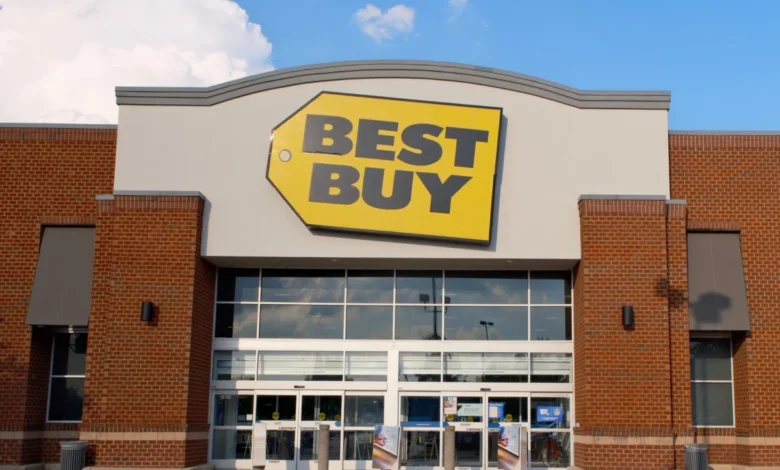
Best Buy is fundamentally reshaping its approach to the upcoming holiday shopping season by integrating generative artificial intelligence into its consumer touchpoints, expanding its online marketplace, and modernizing its physical retail footprint. As consumer expectations shift toward hyper-personalized, instantaneous digital interactions, the major consumer electronics retailer is leaning heavily into conversational commerce. By partnering with OpenAI, Best Buy allows shoppers to discover gift ideas, compare specifications, and complete transactions entirely within the ChatGPT interface, eliminating traditional friction points in the online buyer journey.
This strategic pivot comes at a pivotal transitional moment for the company. Jason Bonfig, Best Buy’s chief customer, product, and fulfillment officer, is preparing to step into the role of chief executive officer on November 1, succeeding Corie Barry, who has guided the organization since June 2019. Under this new leadership trajectory, the company is aggressively scaling its digital infrastructure, scaling up its third-party marketplace, and optimizing domestic supply chains to capture maximum market share during the most critical financial quarter of the retail calendar.
The Evolution of Best Buy’s AI-Powered Shopping Ecosystem
The integration of ChatGPT—first disclosed by executive leadership during the fiscal second-quarter earnings call on August 27—marks a watershed moment in how traditional big-box retailers approach conversational artificial intelligence. Rather than treating AI merely as an informational search tool, Best Buy is embedding transactional capabilities directly into external AI platforms. This ensures that the brand remains visible where modern consumers increasingly seek out product recommendations, technical advice, and holiday gift curation.
Concurrently, Best Buy has been building out its own proprietary conversational artificial intelligence assistant, known as Ask Blue. Launched in August, Ask Blue functions as an intelligent virtual shopping and support concierge. The tool leverages comprehensive product databases, verified customer reviews, real-time pricing, and local inventory levels to help consumers differentiate between complex technology products. Whether a shopper needs to check physical dimensions for spatial fit, verify cross-platform compatibility, or resolve technical troubleshooting inquiries, Ask Blue provides instant answers. It can also seamlessly escalate complex customer service inquiries to self-service portals or live human support specialists.
The development of Ask Blue builds upon a foundational partnership established in 2024, when Best Buy teamed up with Google Cloud and Accenture to engineer advanced generative AI capabilities designed to empower both customers and frontline retail employees. Industry analysts note that these synchronized deployments—both internally on BestBuy.com and externally across partner platforms like OpenAI—demonstrate a comprehensive strategy to dominate the AI-enabled commerce landscape.
Chronology of Strategic Shifts and Marketplace Expansion
Best Buy’s aggressive push into artificial intelligence and platform expansion did not happen overnight. The retailer’s strategic timeline over the past several quarters highlights a methodical, deliberate transformation:
- August 2025: Best Buy officially launches its U.S. online marketplace, more than doubling its digital product assortment almost overnight and laying the groundwork for scaling third-party vendor integration.
- June 2026: The company begins rolling out immersive "Meta Lab @ Best Buy" experiential zones to more than 50 U.S. retail locations, introducing interactive smart mirrors, virtual reality fittings, and dedicated demo spaces for Meta AI glasses and Quest headsets.
- August 1, 2026: Best Buy operates a vast physical network comprising 926 stores in the United States and 142 locations in Canada, even as digital channels continue to capture a growing share of overall business volume.
- August 27, 2026: During the fiscal second-quarter earnings call, incoming CEO Jason Bonfig formally announces the groundbreaking commerce integration with OpenAI and provides optimistic updates on digital growth metrics.
- September 14, 2026: Best Buy publishes its official holiday preview blog post, formally detailing how consumers can utilize ChatGPT for end-to-end gift discovery and purchasing.
- October 2026: Select Best Buy stores prepare to introduce dedicated Google in-store experience zones, broadening physical vendor partnerships ahead of peak foot traffic.
- November 1, 2026: Jason Bonfig officially assumes the title of chief executive officer, taking the reins as the holiday shopping season accelerates.
Financial Performance and Marketplace Scalability
Digital commerce continues to serve as a primary growth engine for Best Buy, accounting for approximately one-third of the company’s total domestic business. During the second fiscal quarter, U.S. online sales rose 5.1% year-over-year, reaching $3.0 billion. This digital revenue accounted for 33.1% of total domestic revenue, ticking upward from 32.8% during the same period in the previous fiscal year.
A major driver of this digital expansion is Best Buy’s online marketplace. Launched initially in August 2025, the platform has matured rapidly. By late 2026, the marketplace features nearly 1 million products sourced from over 5,000 distinct brands, including a newly incorporated roster of international third-party sellers. During the second quarter alone, the online marketplace generated approximately $300 million in gross merchandise volume (GMV). Leadership projects that the marketplace’s GMV will reach an impressive $1.3 billion for the full fiscal year.
To capitalize on this expanded inventory, Best Buy is launching its digital Gifting Center significantly earlier than in prior years. The platform incorporates advanced recommendation algorithms that evaluate specific gift recipient profiles, personal interests, and targeted price brackets to generate tailored gift ideas. Furthermore, to combat cart abandonment and meet modern consumer expectations for speed, Best Buy has dramatically improved its supply chain velocity. Bonfig reported that next-day delivery is now available in nearly every major metropolitan market across the United States, a massive operational leap from the first quarter, when such rapid fulfillment was restricted to fewer than half of those locations.
Revitalizing the Physical Store Footprint for the Holidays
While digital and artificial intelligence strategies command headlines, Best Buy recognizes that physical retail remains indispensable—particularly during the high-stakes holiday shopping window. Market research consistently underscores the enduring appeal of brick-and-mortar stores. According to recent industry surveys from Narvar and eTail Insights cited by eMarketer, more than half of U.S. retail leaders expect their physical storefronts to generate the highest volume of holiday order fulfillment.
To leverage this physical preference, Best Buy is fusing digital innovation with experiential in-store merchandising. The Meta Lab @ Best Buy initiative, which began expanding to over 50 U.S. stores in June, features 900-square-foot dedicated hubs designed to let consumers physically interact with advanced hardware. Equipped with smart mirrors, personalized fitting stations, and live demonstrations for virtual reality and AI wearables, these spaces transform traditional retail aisles into interactive technology showrooms.
Building on this momentum, select Best Buy locations are scheduled to roll out dedicated Google in-store experience zones in October. These physical touchpoints are strategically designed to complement the retailer’s online ecosystem, creating an omnichannel loop where consumers can research products via ChatGPT or Ask Blue online, test the hardware physically in a store, and complete their purchases through whichever channel they find most convenient.
Category Outlook and Economic Implications
As Best Buy navigates the second half of its fiscal year, executive leadership anticipates robust sales growth across several key product sectors. Smartphones, televisions, and emerging consumer technology categories are projected to maintain steady upward momentum. Additionally, major appliance sales trends are expected to remain stable, while the anticipated market release of Grand Theft Auto VI is widely forecasted to drive a significant spike in video game hardware and software sales during the fourth-quarter holiday rush.
Conversely, computing category growth is expected to moderate. This anticipated cooling off is largely attributed to the retailer lapping two consecutive years of outsized gains, specifically a highly lucrative third quarter from the previous year when consumer demand surged due to the official end of software support for Windows 10.
Fact-Based Analysis of Industry Implications
Best Buy’s strategic convergence of generative artificial intelligence, third-party marketplace scaling, and experiential physical retail offers valuable insights into the broader evolution of North American retail. By positioning itself at No. 8 in the Top 1000 Database—which tracks the largest online retailers by annual ecommerce sales—and holding a strong position in Digital Commerce 360’s AI Rankings, the company illustrates how legacy brick-and-mortar giants can successfully reinvent themselves.
The decision to integrate commerce directly into third-party AI ecosystems like ChatGPT reflects a fundamental shift in digital discovery. Consumers are increasingly bypassing traditional search engines and retail homepages in favor of conversational, intent-driven platforms. By meeting shoppers directly within these AI chat environments, Best Buy effectively shortens the path to purchase, capturing high-intent consumers at the exact moment of inspiration.
Ultimately, Best Buy’s comprehensive holiday strategy demonstrates that modern retail success relies not on choosing between digital and physical channels, but on seamlessly blending them. Through advanced generative AI tools like ChatGPT and Ask Blue, a vastly expanded online product catalog, accelerated logistics networks, and immersive store experiences, the retailer is constructing a resilient omnichannel framework designed to weather shifting economic currents and capture consumer loyalty during the most competitive retail season of the year.