ESW Partners with Microsoft Copilot to Launch Agentic Commerce Solution for Global Retailers

The global ecommerce landscape is witnessing a fundamental shift in consumer behavior as traditional search-based discovery begins to give way to autonomous, AI-driven interactions. In a significant move to capitalize on this transition, ESW, a leading global direct-to-consumer (DTC) ecommerce technology provider, has announced the launch of ESW Agentic Commerce. This new solution, developed in strategic partnership with Microsoft Copilot, is designed to enable brands to integrate their product catalogs directly into the burgeoning ecosystem of artificial intelligence assistants, allowing for a seamless transition from product discovery to secure transaction within a single AI-powered interface.
As an "international growth engine," ESW has built its reputation on helping major brands navigate the complexities of cross-border trade, including localization, duties, taxes, and global logistics. With the introduction of Agentic Commerce, the company is extending its infrastructure to meet shoppers where they are increasingly spending their time: within conversational AI platforms. The solution aims to solve a critical bottleneck in the current AI landscape—the gap between an AI assistant identifying a product and the consumer actually being able to purchase it without leaving the chat environment.
The Mechanics of Agentic Commerce and the Microsoft Partnership
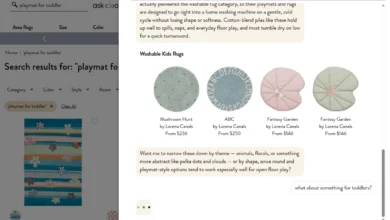
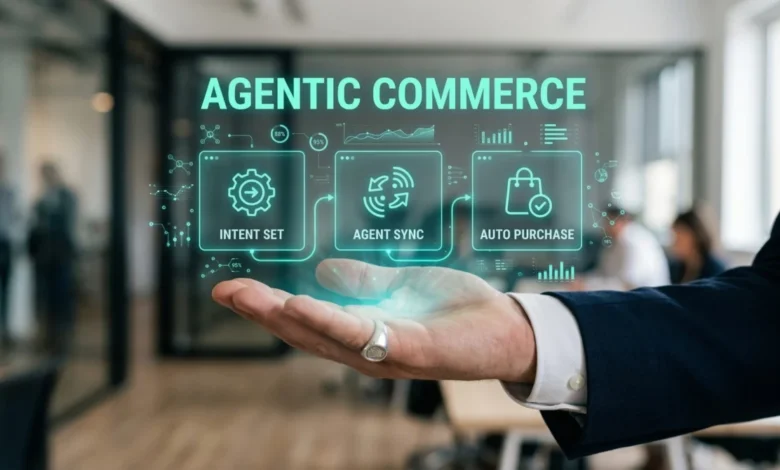
The term "agentic commerce" refers to a paradigm where AI agents—software entities capable of autonomous or semi-autonomous action—act on behalf of either the consumer or the brand. Unlike traditional generative AI, which primarily focuses on creating text or images, agentic AI is designed to execute tasks. In the context of ESW’s new offering, this means the AI can not only suggest a pair of boots to a shopper based on their travel plans but can also check real-time inventory, calculate international shipping costs, apply localized taxes, and facilitate a secure checkout.
The partnership with Microsoft Copilot is central to this launch. By leveraging Microsoft’s robust AI infrastructure, ESW allows brands to surface their product catalogs within one of the world’s most widely used enterprise and consumer AI assistants. The ESW Agentic Commerce functionality serves as an orchestration layer, connecting a retailer’s existing ecommerce backend to the AI interface. According to the company, this "AI layer" manages the entire lifecycle of a transaction, including discovery, payment processing, fraud management, and post-purchase customer service.
For retailers, the primary value proposition lies in the "Agentic Hub." This infrastructure is designed to be platform-agnostic, meaning that while the initial launch focuses on Microsoft Copilot, the technology is built to extend across various AI agents and platforms as the market evolves. This prevents retailers from having to rebuild their integration for every new AI tool that enters the market.
Market Positioning and the Digital Commerce 360 Data
The scale of ESW’s influence in the North American market is underscored by data from Digital Commerce 360. Currently, 10 of the Top 2000 online retailers in North America utilize ESW for their international ecommerce operations. While 10 may seem like a small number in a list of 2000, their market impact is outsized. In 2025, these 10 retailers combined for approximately $18.19 billion in web sales.
These figures highlight the high-stakes nature of ESW’s technology updates. The brands under the ESW umbrella include iconic names such as Levi’s, J.Crew, L’Oreal, and Calvin Klein. For these multi-billion-dollar entities, the ability to maintain a competitive edge in product discovery is vital. As consumers move away from Google search or direct site visits and toward "asking" an AI for recommendations, these brands must ensure their catalogs are not only visible to AI agents but are also "shoppable" through them.
A Response to Shifting Consumer Trends and Industry Forecasts
The launch of ESW Agentic Commerce is backed by compelling industry research that suggests a radical transformation in how commerce will function by the end of the decade. ESW pointed to a McKinsey & Company report projecting that agentic commerce could represent a global economic opportunity of between $3 trillion and $5 trillion by 2030. This projection is based on the assumption that AI agents will become the primary "concierge" for consumer needs, handling everything from grocery replenishment to complex luxury purchases.
Furthermore, research from Gartner indicates a looming disruption for traditional search engines. Gartner predicts that traditional search engine volume could decline by as much as 25% by 2026 as consumers shift their queries to AI assistants. For retailers who have spent two decades optimizing for Search Engine Optimization (SEO), this shift represents a "search apocalypse" that requires a new strategy: Agentic Engine Optimization (AEO).
Erich Eichmann, CEO of ESW, emphasized that the technology is finally catching up to the vision of seamless AI commerce. "AI is changing how consumers discover and buy products," Eichmann stated. "But until now, the technology needed to turn those interactions into real commerce globally just hasn’t been there. Retailers don’t need another AI demonstration—they need infrastructure that generates revenue and powers the next generation of ecommerce."
Operational Automation: Beyond Discovery
One of the most complex aspects of global ecommerce is the "back-office" operations that occur after a customer clicks "buy." ESW’s Agentic Commerce solution addresses this by deploying pre-built AI agents to automate several critical functions:
- Fraud Management: AI agents can analyze transaction patterns in real-time within the AI interface to identify and block fraudulent activity before it impacts the retailer.
- Payment Orchestration: The system automatically handles currency conversion and supports local payment methods, which is essential for the international brands ESW serves.
- Fulfillment and Logistics: By integrating with the brand’s existing supply chain, the AI can provide accurate delivery windows and shipping costs globally.
- Customer Service: Post-purchase inquiries—such as "Where is my order?" or "How do I return this?"—are handled by AI agents that have access to the transaction history and the brand’s specific policies.
This level of automation is intended to reduce the "friction" that often leads to cart abandonment in traditional mobile or desktop shopping. By keeping the consumer within the AI environment, brands can capture intent the moment it arises.
Strategic Implications for the Retail Industry
The move by ESW and Microsoft reflects a broader trend of "everywhere commerce," where the point of sale is no longer confined to a specific website or physical store. It follows the trajectory of social commerce, where platforms like TikTok and Instagram integrated checkout features to prevent users from leaving their apps. Agentic commerce is the next logical step in this evolution, moving from visual social feeds to conversational and intent-based AI.
However, the transition to agentic commerce presents several challenges for the industry. One primary concern is the "black box" nature of AI recommendations. If a consumer asks Microsoft Copilot for the "best sustainable denim," the criteria the AI uses to select a brand like Levi’s over a competitor becomes a critical point of contention. ESW’s solution attempts to mitigate this by ensuring that a brand’s catalog is structured in a way that AI agents can easily parse and verify, ensuring higher accuracy in recommendations.
Another implication is the changing role of the brand website. If discovery and checkout happen within an AI assistant, the brand’s own site may transition from a sales hub to a secondary resource for deep-dive brand storytelling or loyalty management. This shift requires a massive reallocation of marketing budgets from traditional search ads to AI-platform integrations.
Looking Ahead: The 2025-2030 Timeline
As ESW rolls out this solution to its client base, the retail industry will be watching closely to see the adoption rates among the "Top 2000" retailers. The integration of Agentic Commerce is designed to be non-disruptive, working with existing platforms like Salesforce Commerce Cloud, Adobe Commerce, and Shopify. This "plug-and-play" approach is likely to accelerate adoption among large enterprises that are wary of "ripping and replacing" their core infrastructure.
Eichmann noted that the current era is reminiscent of the early days of mobile commerce. "Just as brands had to build for the web and later for mobile, they now need to be ready for AI," he said. The company’s goal is to provide the "Agentic Hub" that allows retailers to keep pace with the rapid evolution of AI without having to develop the complex underlying technology themselves.
In conclusion, the launch of ESW Agentic Commerce marks a pivotal moment in the intersection of retail and artificial intelligence. By providing the plumbing for global transactions within AI interfaces, ESW is positioning itself as a vital intermediary in a future where AI agents—not just humans—are the primary drivers of commercial activity. As the $3 trillion to $5 trillion opportunity begins to materialize, the partnership between technology providers like ESW and AI giants like Microsoft will likely define the next decade of global trade.