Radaris and the Digital Shell Game: A Landmark Legal Battle Over Data Privacy and Accountability


The consumer data broker Radaris.com has long maintained a reputation for systematically ignoring requests to purge personal information from its expansive network of people-search services. This disregard for privacy mandates recently culminated in a significant judicial rebuke, as a New Jersey court ordered the transfer of Radaris.com and more than a dozen associated domains to the plaintiffs in a lawsuit alleging violations of state privacy laws. This development marks a watershed moment in the ongoing conflict between aggressive data brokers and the advocates of Daniel’s Law, a statute designed to shield law enforcement officials, judges, and government personnel from the dangers of having their private data publicly searchable.
The legal confrontation began in earnest in February 2024, when Atlas Data Privacy Corp initiated litigation against Radaris. The core of the complaint centers on Daniel’s Law, which grants protected individuals the right to have their sensitive information removed from commercial databases. Non-compliance carries a penalty of $1,000 per violation. For years, Radaris navigated a complex maze of corporate entities and jurisdictional shifts to avoid these liabilities, but the recent judicial order suggests that the “shell game” strategy may finally be losing its effectiveness.
The Anatomy of an Opaque Empire
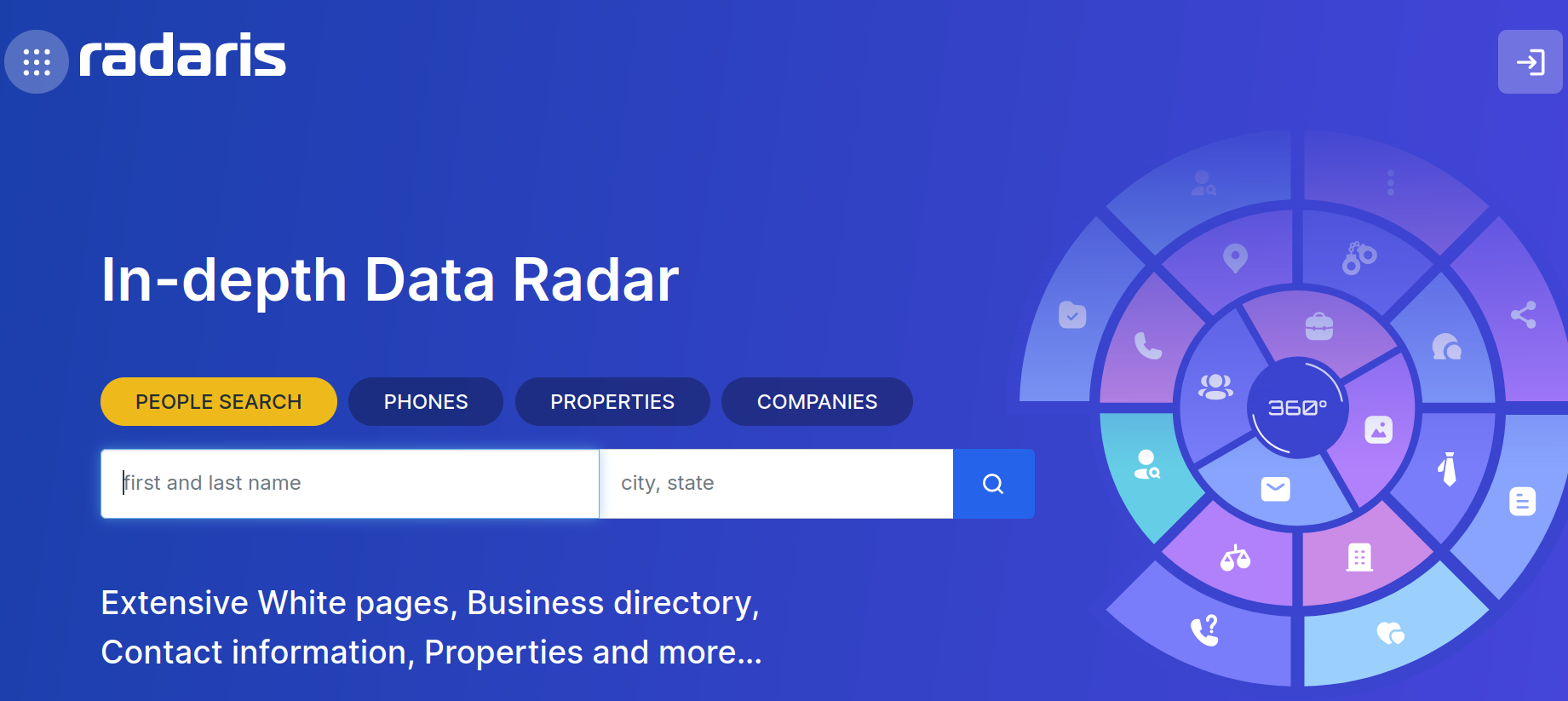
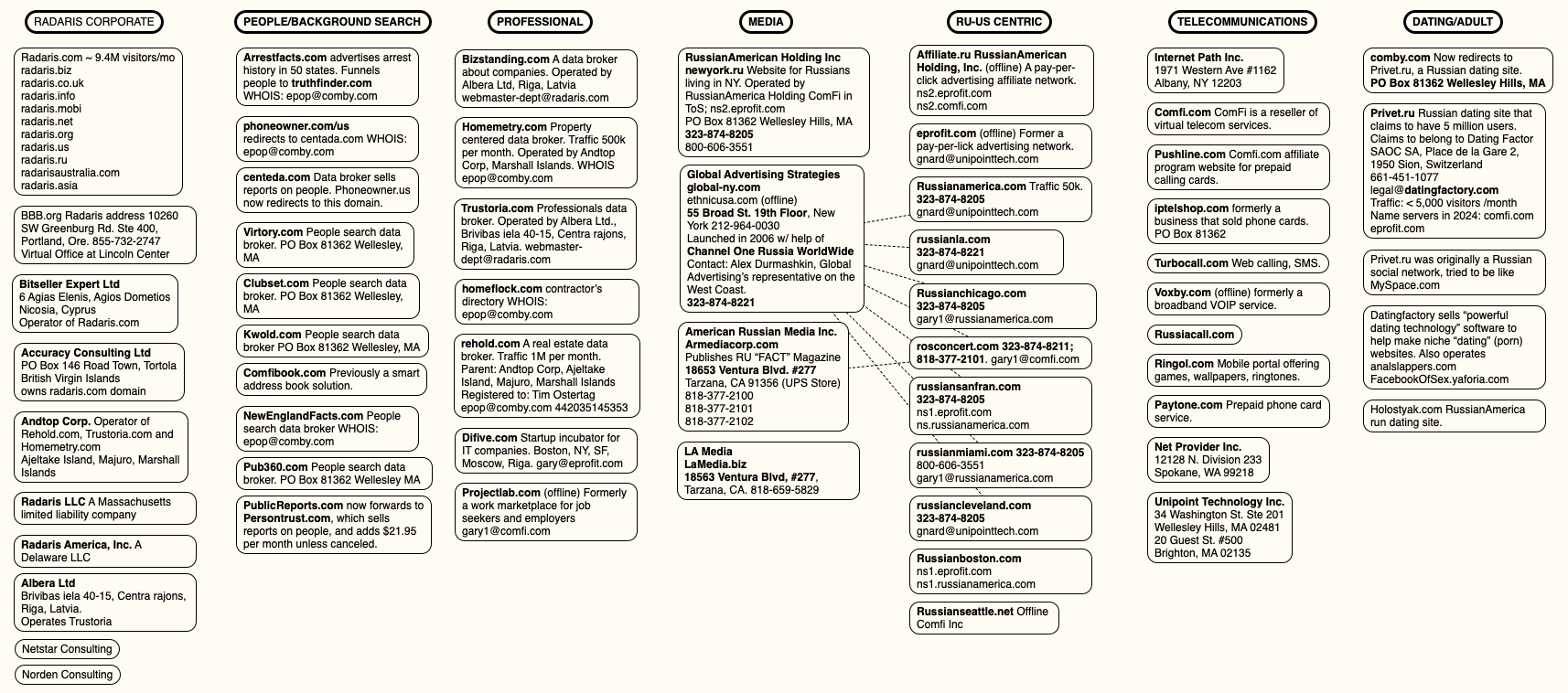
The infrastructure behind Radaris is far more intricate than a single website suggests. Investigative reporting has identified the co-founders as Igor and Dmitry Lubarsky, brothers of Russian origin residing in Massachusetts. The brothers oversee a sprawling digital conglomerate that includes various people-search portals, Russian-language dating platforms, and numerous affiliate marketing programs.
The operational strategy employed by the Lubarsky brothers involved the use of a fictitious CEO, “Gary Norden.” This persona was utilized in official press releases and investor pitches for years, providing a veneer of corporate legitimacy that masked the true controllers of the operation. When questioned about these discrepancies, attorneys representing the Lubarsky brothers initially claimed the reporting was defamatory and suggested that the true owners were Ukrainian. However, internal documentation—including thousands of emails obtained through the discovery process—has since dismantled this narrative, confirming that the vast web of companies, including Bitseller Expert Limited, Digital Orbit Corp, and Virtura Corp, are all controlled by a small group of individuals operating out of the Boston area.
A Chronology of Evasion and Litigation
The battle for accountability has been defined by a series of procedural maneuvers and strategic delays. The history of this conflict reveals a clear pattern:
- 2017: Radaris faced a class-action lawsuit but failed to mount a defense, leading to a $7.5 million default judgment. The court initially ordered the transfer of Radaris.com to the plaintiffs.
- Post-2017: Radaris’s legal team successfully appealed the judgment by arguing that the court had failed to name the true corporate owner at the time, a Cyprus-based entity called Bitseller Expert Limited. The domain transfer was halted.
- October 2020: The operation shifted its primary management entity from Bitseller to Andtop Company, a firm registered in the Marshall Islands.
- February 2024: Atlas Data Privacy Corp filed its initial complaint in New Jersey, targeting the systemic failures of Radaris to comply with Daniel’s Law.
- June 2025: Following procedural challenges regarding service of process, Atlas re-filed its lawsuit, significantly expanding the list of defendants to include the various corporate shells that Radaris utilized to shift liability.
- August 2026: A New Jersey judge, finding that the defendants had been given ample opportunity to contest the claims but had repeatedly failed to do so, ordered the transfer of 14 domains to Atlas.
This "island-hopping" phase, as described by Atlas CEO Matt Adkisson, saw the company frequently updating its terms of service to reflect management by entities in jurisdictions like the Seychelles or the British Virgin Islands. In one instance, when Radaris claimed management by a Marshall Islands firm, an investigation commissioned by the plaintiffs revealed that the entity did not even legally exist at the time of the claim.
Financial Scope and Industry Partnerships
The scale of the Radaris operation is substantial. Financial data extracted during the litigation indicates that Radaris.com generates approximately $42,000 in monthly revenue, while its sister site, Veripages.com, nets roughly $45,000 per month. A significant portion of this revenue is driven by partnerships with major marketing and advertising firms, including the Lifetime Value Company.

Perhaps most ironically, the litigation revealed that the Radaris network also derived income from partnerships with "data removal" services, such as Onerep. This creates a circular ecosystem where consumers are essentially charged to have their data removed from one platform, only for that platform to be linked to the very networks that aggregate the information in the first place. These revelations highlight the inherent conflicts of interest within the unregulated data-brokerage industry.
The Broader Legal and Constitutional Landscape
The implications of this case extend far beyond the fate of Radaris. While the New Jersey court has taken a firm stance, the broader landscape of data privacy law remains in flux. At least 14 states have introduced or passed legislation modeled after Daniel’s Law, yet these laws face significant constitutional pushback.
Data brokers have aggressively challenged these statutes, arguing that they infringe upon First Amendment rights. Currently, dozens of lawsuits filed by Atlas have been moved to federal courts, where the constitutionality of restricting the publication of "publicly available" records is being litigated. The conflict has already resulted in divergent outcomes; while some states have bolstered their privacy protections, others, such as West Virginia, have seen their privacy laws declared facially unconstitutional by federal courts.
Privacy experts, including Justin Sherman, emphasize that the current legal framework is fundamentally inadequate for the digital age. Most privacy laws include sweeping exemptions for data categorized as "public record," such as marriage certificates, property filings, and motor vehicle records. As long as these exemptions remain, people-search sites will continue to exploit the "public" nature of this data to build highly granular dossiers on millions of citizens.
Future Implications and Policy Gaps
The case of Radaris serves as a diagnostic tool for the vulnerabilities of American privacy. Without a comprehensive federal data protection law, individuals are forced to navigate a patchwork of state-level statutes that are often inconsistently applied and subject to endless legal challenges. The lack of federal oversight means that sensitive data—such as the 153 million driver’s license records recently exposed in the IDScan.net breach—remains unprotected from being commodified and sold to the highest bidder.
As the legal battle continues, the transfer of the Radaris domains to Atlas remains a significant, albeit temporary, victory for privacy advocates. The defense team, led by attorney Victor Worms, has indicated plans to move to vacate the default judgment, arguing that a non-entity cannot be the subject of a lawsuit and that the transfer of the domain violates constitutional protections against forfeiture.
For now, the radaris.com URL directs users to a notice regarding the court-ordered transfer. Whether this sets a precedent for the rest of the industry depends heavily on upcoming rulings from the U.S. Court of Appeals for the Third Circuit, and potentially the Supreme Court. Until then, the "shell game" of data brokerage remains a primary obstacle to digital privacy, leaving millions of Americans’ personal details accessible through a shifting, elusive network of corporate entities. The situation underscores a stark reality: in the absence of a cohesive federal privacy strategy, the onus of protection rests on fragmented, often under-resourced litigation, leaving the average citizen perpetually exposed.
Related posts: