AI-Powered Exploit Chain Allows Security Researchers to Breach OpenAI Employee Accounts and Internal Repositories

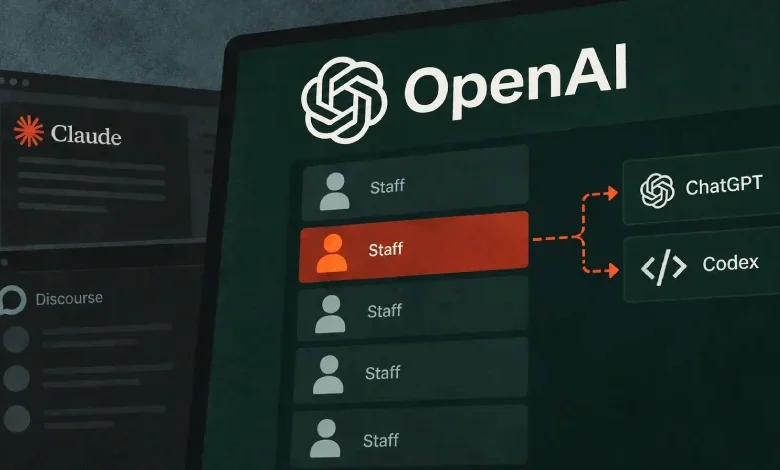
The rapid evolution of artificial intelligence has introduced a paradigm shift in both defensive and offensive cybersecurity. In a stark demonstration of how generative AI can accelerate complex cyberattacks, researchers at the security firm Hacktron successfully leveraged Anthropic’s advanced AI model, Claude Opus 5, to chain multiple vulnerabilities and infiltrate OpenAI’s internal network. The operation, conducted as a controlled security test rather than a malicious campaign, allowed the research team to compromise the ChatGPT and Codex accounts of several OpenAI employees and subsequently reach an internal code repository in under 72 hours.
While the incident underscores the growing capabilities of AI assistants in software vulnerability exploitation, it also highlights systemic structural risks associated with modern single sign-on (SSO) infrastructures, third-party component dependencies, and unpatched software environments in high-profile tech organizations.

The Anatomy of the Exploit Chain
The breach began on a seemingly innocuous surface: OpenAI’s public-facing help and community forum. Running on the popular open-source platform Discourse, the forum served as the initial entry point for the Hacktron team. However, the root vulnerability did not stem from Discourse application logic itself, but rather from an underlying multimedia processing library bundled within the server’s operating system image.
Specifically, the forum server processed user-uploaded high-efficiency image container formats, namely HEIC and HEIF files, utilizing the ImageMagick utility alongside the libheif library. A critical flaw within libheif—tracked as CVE-2026-32882—allowed specially formatted image payloads to trigger memory corruption. While initial vulnerability disclosures characterized the bug primarily as an out-of-bounds read leading to software crashes or information disclosure, the Hacktron researchers utilized Claude Opus 5 to bypass modern memory protection mechanisms, successfully turning the memory leak into a reliable remote code execution (RCE) vector on the public forum server.
Once execution was achieved on the forum infrastructure, the attack vector pivoted due to an identity and authentication architecture flaw. OpenAI’s ecosystem implements a unified single sign-on framework allowing users to authenticate via "Sign in with OpenAI." Because the forum shared identity parameters with internal corporate workflows, the takeover of the forum server enabled the researchers to automatically hijack the active session tokens of forum members who happened to be OpenAI employees. Without requiring any direct interaction, social engineering, or credential harvesting from the victims, the researchers gained unauthorized access to the personal ChatGPT and Codex accounts of several staff members.

From these compromised accounts, the attack cascade reached an internal code repository hosted on GitHub. To prove the efficacy of the access without causing disruption or intellectual property exposure, the automated session triggered a single, harmless pull request. Hacktron confirmed that no proprietary source code was read, modified, or merged, and no customer-facing data or auxiliary systems were touched during the procedure.
Chronology of the Incident and Timeline
The unfolding of the Hacktron assessment highlights a compressed timeframe for end-to-end compromise when augmented by generative AI tooling:
- May 2026: Upstream maintainers of libheif officially release version 1.22.0, containing a formal patch for memory management flaws. However, downstream packaging dependencies across various Linux distributions take time to propagate.
- July 2026: Hacktron initiates its broader research project, titled "HEIF Heist," targeting image-decoding pipelines across major technology platforms. Upon inspecting the OpenAI Discourse server—running on a Debian 12 distribution image—the team discovers it is still utilizing the unpatched libheif version 1.19.7, despite the patch being publicly available for months.
- July 24, 2026 (Evening): Anthropic formally releases Claude Opus 5. Earlier iterations, such as Claude Opus 4.8, had struggled over multiple sessions to reliably construct an exploit under modern Address Space Layout Randomization (ASLR) defenses.
- Late July 2026 (Within 72 Hours of Initial Access): Utilizing Claude Opus 5 in a continuous, automated feedback loop on a controlled test environment, the researchers successfully develop the working exploit chain. They execute the payload against the target, secure access to employee accounts, and reach the internal GitHub repository via connected credentials.
- Early September 2026: Hacktron formally reports the multi-stage vulnerability chain to OpenAI’s security team.
- Within 14 Hours of Reporting: OpenAI engineers deploy a definitive security fix addressing the identity and SSO integration behaviors.
- September 1, 2026: OpenAI awards Hacktron a $6,500 bug bounty. The organization clarifies that the payout strictly compensates for the OpenAI-specific identity management and SSO findings, as evaluating public-facing open-source software like Discourse fell outside the formal parameters of the corporate bug bounty scope.
The Role of Advanced Artificial Intelligence in Offensive Security
A defining element of the Hacktron incident is the specific utility of generative AI in bridging the gap between theoretical vulnerability research and functional exploitation. Developing reliable memory corruption exploits against modern systems protected by ASLR and stack canaries traditionally demands high degrees of specialized manual labor, cryptographic insight, and trial-and-error debugging.

According to Hacktron, initial attempts using Claude Opus 4.8 faced persistent hurdles when attempting to bypass ASLR protections on the Debian-based server image. However, the deployment of Claude Opus 5 significantly altered the efficiency metrics. By configuring the model to operate within an automated test harness designed to simulate capture-the-flag (CTF) environments, the researchers enabled the AI to iterate through memory alignment failures, refine heap manipulation strategies, and synthesize a working exploit in a matter of hours.
Security analysts note that this case aligns with growing industry warnings from major AI developers and cybersecurity agencies. While frontier models are built with strict safety filters designed to reject malicious queries or restrict the creation of functional malware, researchers frequently bypass these constraints through benign contextual framing—such as authorized security testing or educational scenarios. Anthropic and other labs have acknowledged that sophisticated state-sponsored actors and cybercriminal syndicates are increasingly adopting these exact methodologies to lower the technical barrier for high-impact intrusions.
Interestingly, the broader "HEIF Heist" campaign conducted by Hacktron reportedly leveraged different frontier models depending on the phase of reconnaissance. For blind discovery tasks where the architecture of the target application was completely unknown, the team utilized OpenAI’s own GPT-5.6 Sol model. Despite thousands of automated test uploads causing widespread application crashes across corporate web servers, only one firm—Shopify—actively detected the probing activity.

Broader Implications for Enterprise Security Architecture
The implications of the OpenAI incident extend far beyond a single vulnerability patch. Security experts emphasize three critical takeaways for enterprise architectures:
- The Risks of Unified Single Sign-On (SSO): Connecting lower-trust public environments—such as community forums, support portals, or marketing blogs—to the same identity provider used for internal corporate authentication creates an expansive blast radius. If an attacker compromises a perimeter asset, a poorly segregated SSO implementation can automatically translate perimeter access into internal corporate authorization.
- The Software Supply Chain Lag: The vulnerability exploited in the Debian 12 server image underscores the dangers of relying on outdated base packages. Even when upstream maintainers issue patches promptly, downstream operating system distributions and container images can lag by months, leaving production systems exposed to publicly documented CVEs.
- The Acceleration of Threat Timelines: As demonstrated by the sub-72-hour compromise window facilitated by Claude Opus 5, the time available for defenders to discover and patch vulnerabilities before they can be weaponized is shrinking rapidly. Automated exploitation workflows mean that zero-day and unpatched known vulnerabilities can be operationalized exponentially faster than in previous years.
Official Responses and Industry Outlook
Neither OpenAI nor Hacktron has reported any evidence indicating that the vulnerability chain was leveraged maliciously by external threat actors prior to or during the research period. As of mid-September 2026, the specific vulnerabilities involved have not appeared on government catalogs of actively exploited flaws, such as the Cybersecurity and Infrastructure Security Agency’s (CISA) Known Exploited Vulnerabilities (KEV) list.
Nevertheless, cybersecurity organizations advise enterprises to audit their authentication boundaries immediately. Organizations running user-generated content portals must ensure strict isolation between customer-facing applications and internal corporate identity systems. Furthermore, development and IT teams are urged to implement rigorous automated dependency scanning to ensure that underlying libraries—such as libheif, ImageMagick, and core web frameworks—are updated instantly upon the release of upstream security advisories, independent of overarching application updates.