Microsoft Secures Leadership Position in the 2026 Gartner Magic Quadrant for Container Management Amid Rapid AI Integration

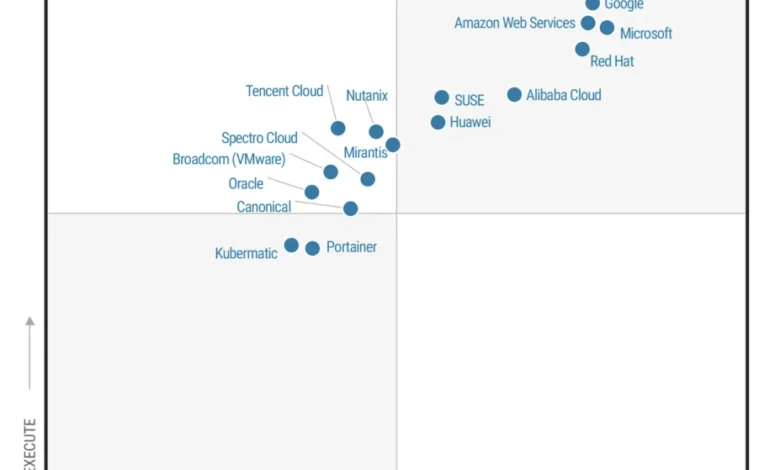
Microsoft has been named a prominent Leader in the 2026 Gartner Magic Quadrant for Container Management, earning the furthest positioning to the right for Completeness of Vision. This prestigious industry validation arrives at a critical juncture for enterprise IT, as container platforms are increasingly required to stretch across diverse workloads, complex operating models, and strict geographic deployment boundaries that many organizations never anticipated when containerization first entered the mainstream market.
The recognition underscores Microsoft’s strategic evolution over the past decade, shifting from foundational distributed systems orchestration toward comprehensive hybrid and artificial intelligence infrastructure. As organizations navigate the complex realities of modern digital transformation, the ability to manage containerized applications seamlessly across cloud environments, edge locations, and strict regulatory boundaries has become a paramount business requirement.
A Decade of Evolution: From Basic Orchestration to Intelligent Infrastructure
When developers and systems engineers began working on Kubernetes over a decade ago, the core objective was relatively narrow: democratize distributed systems to make reliable services easier to build. Early architects deliberately described workloads in terms of functional needs rather than physical locations, granting the scheduler the necessary flexibility to make optimal runtime decisions. This foundational philosophy ensured that the underlying orchestration layer maintained neutrality regarding the specific nature of the running applications.
Today, however, the rapid integration of artificial intelligence has entirely reshaped the requirements for container management. While Kubernetes has proven naturally suited to host AI workloads, the broader industry shift requires applications and intelligence models to operate in close physical proximity to data sources, end-users, and specific sovereign or regulatory jurisdictions. Modern enterprises require far more than basic container orchestration; they demand an unified platform that establishes a consistent operating model across multicloud, edge, and hybrid deployments without forcing engineering teams to repeatedly re-architect legacy applications.
This overarching vision anchors Microsoft’s extensive container portfolio, which spans the Azure Kubernetes Service (AKS), Azure Container Apps, Azure Arc, and Azure Kubernetes Fleet Manager. By integrating these tools, Microsoft aims to deliver architectural cohesion across fragmented IT landscapes.
Dual Architectural Models for Enterprise AI Deployment
Across enterprise customer deployments, Microsoft has observed artificial intelligence infrastructure converging into two distinct architectural models. Each model serves a unique purpose within the enterprise ecosystem, demanding specialized platform capabilities.
In the first model, dedicated platform teams maintain ownership of a persistent serving layer, specialized GPU scheduling, the complete model lifecycle, and rigorous compliance boundaries. As operational volume scales and becomes predictable, organizations increasingly demand that AI infrastructure behave like any standard platform capability—consumed seamlessly by application teams while remaining tightly governed by central IT operators. Within the Azure Kubernetes Service, open-source utilities like the AI toolchain operator automate model deployment and GPU provisioning. Furthermore, AKS holds CNCF AI Conformance certification, providing enterprise customers with long-term compatibility assurances as the surrounding technology ecosystem evolves.
In the second architectural model, applications or autonomous agents invoke real-time inference on demand, execute generated code, and immediately release computing capacity once the task is complete. This model places a heavy premium on elasticity and rapid hardware isolation. Capacity must provision instantly, deprecate when idle, and securely sandbox workloads whose runtime behaviors cannot always be predicted in advance. Azure Container Apps was specifically engineered for this serverless operating model, featuring on-demand serverless GPUs for real-time inference alongside hardware-isolated sandboxes designed to preserve application state between interactions.
Most modern enterprises require both architectural models within their broader digital strategies. Consequently, the primary engineering challenge for modern cloud providers is lowering the friction of crossing the boundary between these two paradigms, allowing developers to utilize identical container images, network controls, and security policies regardless of the deployment tier.

Managing Scale and Mitigating Cluster Sprawl in Hybrid Environments
As inference engines follow data distribution, enterprise IT estates inevitably decentralize. Clusters rapidly accumulate across multiple geographic regions, localized enterprise datacenters, and edge sites characterized by intermittent or entirely prohibited network connectivity due to strict data sovereignty mandates.
Industry analysts note that hybrid cloud strategies frequently fail when organizations treat coordination failures as localized cluster issues rather than enterprise platform challenges. Configuration drift between distinct locations, uneven rollout of software upgrades, and inconsistent policy enforcement across environments represent significant operational hazards for growing businesses.
To combat these challenges, Microsoft developed AKS Everywhere to deliver a consistent, Azure-secured Kubernetes platform extending seamlessly from the public cloud to remote edge locations. Furthermore, Azure Arc for Kubernetes projects a unified identity, policy enforcement, and observability framework across CNCF-conformant Kubernetes environments, including competing third-party cloud platforms. To address the severe cluster sprawl that accompanies massive organizational growth, Azure Kubernetes Fleet Manager provides centralized administration for upgrades, workload placement, and policy synchronization across large fleets of clusters.
Maintaining operational stability across these sprawling estates depends entirely on upstream alignment. Microsoft has deliberately maintained close parity with upstream Kubernetes without relying on proprietary forks. Open-source principles remain central to the company’s cloud strategy; Microsoft currently stands as the second-largest overall contributor to Cloud Native Computing Foundation (CNCF) projects and the leading contributor among major cloud providers over a consecutive three-year period.
Operational Efficiency and the Rise of Agentic Operations
As organizational reliance on containerization expands, cluster counts frequently outpace the growth of internal operations teams. Enterprises often experience this operational friction before establishing a comprehensive management strategy.
To mitigate administrative overhead, Microsoft introduced features like AKS Automatic, which applies battle-tested operational practices derived from running hyperscale Kubernetes infrastructure internally, while preserving the foundational flexibility of the native Kubernetes API.
Looking forward, the industry is experiencing a profound transition toward agentic operations. Emerging diagnostic tools, including the Azure SRE Agent and the AKS MCP Server, empower human operators to transition swiftly from initial alert detection to diagnosis and remediation utilizing existing security permissions and governance controls. Rather than replacing human operators, these intelligent agents are designed to absorb routine investigative workloads that traditionally consume significant operational bandwidth.
Industry Implications and Customer Momentum
The 2026 Gartner Magic Quadrant evaluation highlights the growing maturity of the container management market as vendors vie to support increasingly complex, AI-driven workloads. Enterprise validation underscores the practical utility of these platforms in production environments. For instance, engineering leadership at CallRevu noted that utilizing Azure Kubernetes Service provides critical cost efficiency and scalability, enabling dynamic GPU scaling based on call volume and sandbox model testing without impacting production stability.
Ultimately, enterprise technology leadership emphasizes that individual operational teams must retain the autonomy to determine where specific workloads belong across a diverse IT estate. The primary responsibility of a modern container platform is facilitating those strategic shifts without compelling engineering organizations to redesign foundational applications or adopt fragmented operating models. As container orchestration continues to absorb artificial intelligence, edge computing, and sovereign compliance mandates, the competitive landscape will increasingly favor vendors capable of unifying complex distributed environments under a single, cohesive governance framework.