AWS Elastic Beanstalk Launches New Cluster Mode to Revolutionize Managed Application Deployment

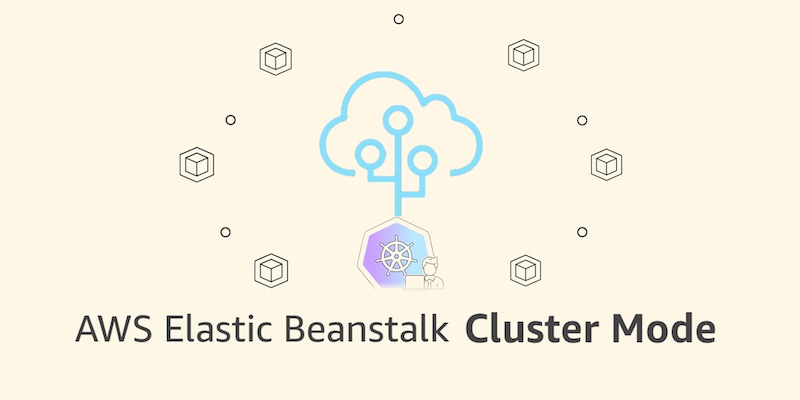
Since its inception in 2011, AWS Elastic Beanstalk has served as a cornerstone of the Amazon Web Services ecosystem, providing a simplified abstraction layer for developers to deploy applications without managing the underlying server infrastructure. Over the last fifteen years, the service has evolved from a basic deployment tool into a sophisticated, fully managed operational engine. Today, AWS marks a significant milestone in this evolution with the introduction of "Cluster Mode," a new architectural approach that leverages Amazon Elastic Kubernetes Service (Amazon EKS) to provide a unified, highly scalable management experience for enterprise application portfolios.
A Legacy of Operational Evolution
When Elastic Beanstalk was first introduced, the cloud computing landscape was vastly different. The service was designed to handle the "heavy lifting" of provisioning, capacity balancing, and auto-scaling for developers working in languages like Java, .NET, Python, and Ruby. By abstracting the complexities of EC2 instances and load balancers, Elastic Beanstalk allowed organizations to focus strictly on business logic.
However, as microservices architectures became the industry standard, the operational requirements for managing dozens or hundreds of individual services began to outpace traditional deployment models. In recent years, AWS has systematically re-engineered the Elastic Beanstalk foundation. This modernization effort included the integration of AI-powered environment analysis for automated health diagnostics, the release of official GitHub Actions to streamline CI/CD pipelines, and the implementation of OpenTelemetry for improved observability. These features paved the way for the sophisticated container orchestration capabilities unveiled in the new Cluster Mode.
The Technical Architecture of Cluster Mode
At its core, Cluster Mode transitions Elastic Beanstalk from a per-environment, instance-centric model to a resource-shared, container-orchestrated model. By utilizing Amazon EKS as the underlying infrastructure, Cluster Mode enables multiple applications to reside on a shared, managed foundation. This transition effectively addresses the "operational bloat" that often occurs when organizations manage large portfolios of services independently.
In this new architecture, the EKS control plane manages the orchestration, while Elastic Beanstalk provides the developer-friendly interface that users have relied upon for over a decade. This allows teams to share infrastructure resources across multiple applications, significantly reducing the per-application cost as the portfolio scales. Whether an organization is managing a modest set of ten services or a complex ecosystem of hundreds, the management experience remains consistent, providing uniform operational guarantees across every stack.

Chronology of Modernization (2011–2026)
- 2011: AWS launches Elastic Beanstalk, introducing the concept of "Infrastructure as a Service" abstraction.
- 2016–2020: Expansion of support for diverse runtimes, including Go and Docker-based deployments.
- 2026 (February): AWS releases the official GitHub Action for Elastic Beanstalk, enabling native CI/CD integration.
- 2026 (April): Introduction of AI-powered environment analysis to proactively identify and remediate health issues.
- 2026 (September): General Availability of Elastic Beanstalk Cluster Mode, transitioning the service to an EKS-powered foundation.
Streamlining the Deployment Lifecycle
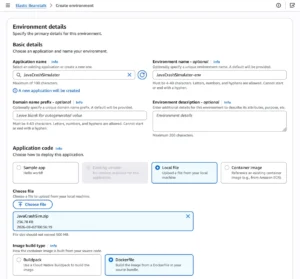
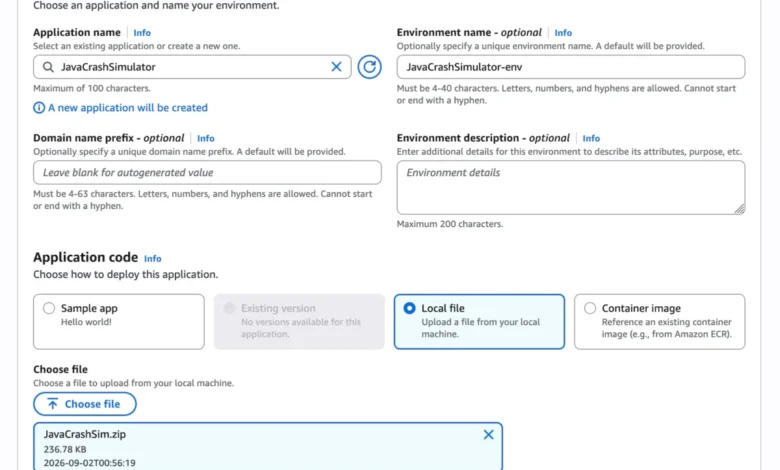
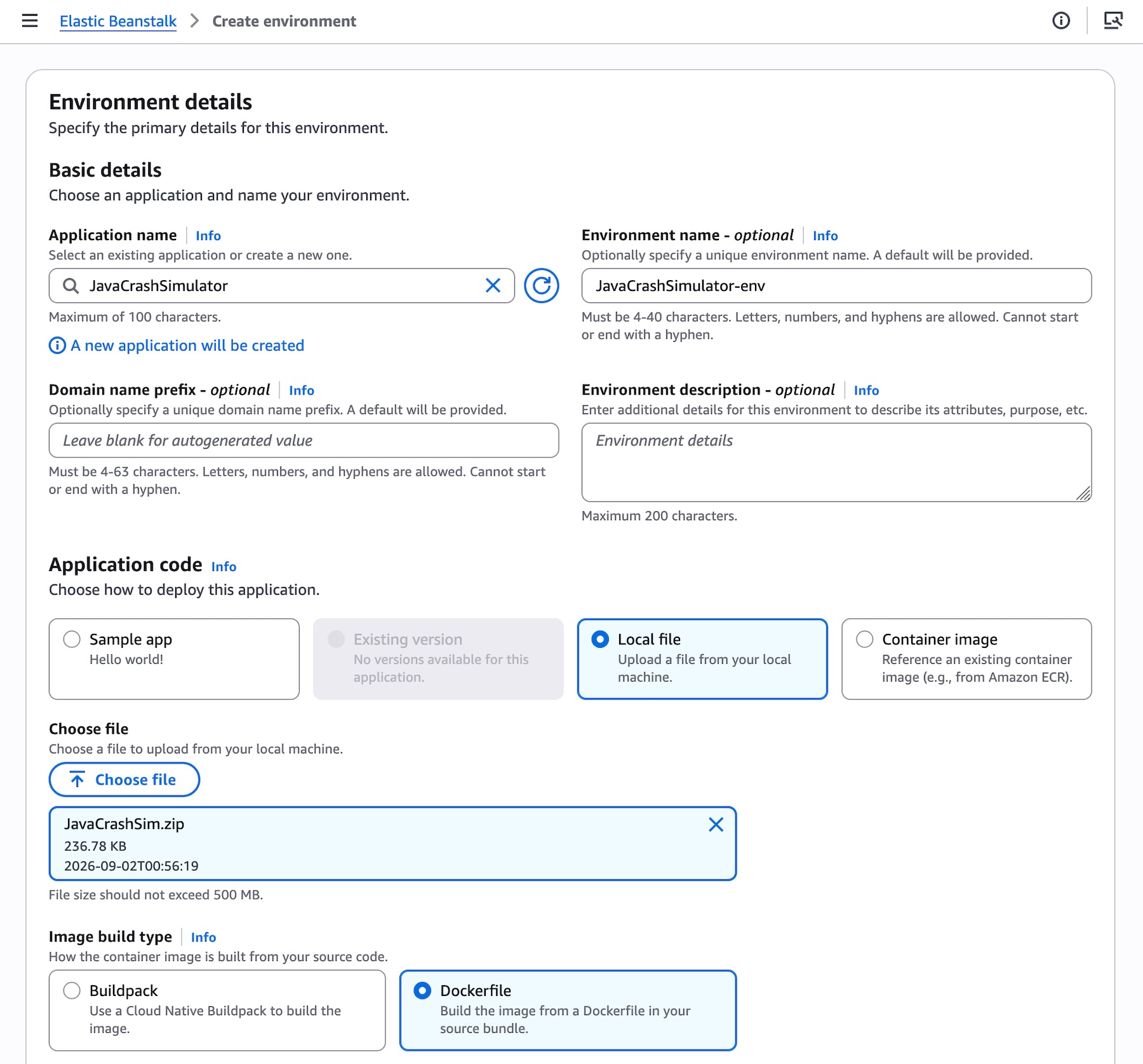
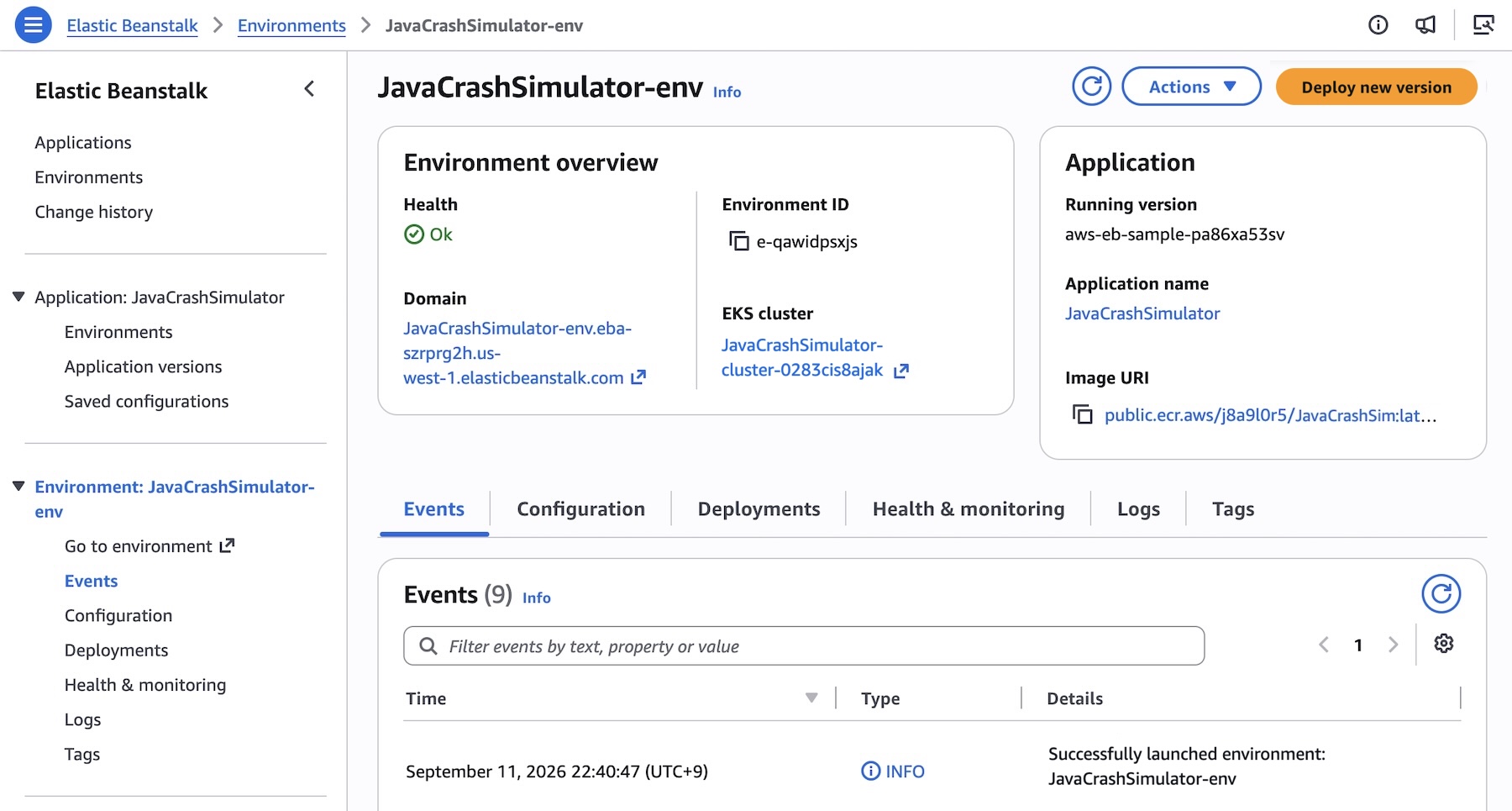
The deployment process for Cluster Mode has been optimized to minimize friction. Developers can provide source code, Dockerfiles, or container images directly through the console or via the command line. Upon the initial creation of a cluster in a specific set of subnets, the system triggers the creation of an EKS cluster—a process that typically completes in approximately ten minutes. Once this foundation is established, subsequent deployments are significantly faster due to the reuse of existing resources.
For teams operating in automated environments, the AWS CLI and EB CLI remain primary tools. The configuration process allows for precise control over resource allocation, including CPU and memory limits, replica counts, and health check paths. By defining these parameters in standard configuration files (such as the frontend-options.json example provided by AWS), developers can maintain parity across development, staging, and production environments with minimal overhead.
Strategic Implications for IT Operations
The launch of Cluster Mode carries significant implications for DevOps teams and CTOs tasked with managing large-scale infrastructure. The primary benefit is the decoupling of application management from infrastructure management. By centralizing the operational baseline, organizations can enforce security and compliance policies—such as secrets management through AWS Secrets Manager and HTTPS defaults via AWS Certificate Manager—across the entire portfolio simultaneously.
Furthermore, the introduction of traffic-splitting deployments with automatic rollback mechanisms provides a safety net that was previously difficult to implement manually. These features, combined with event-driven autoscaling, ensure that applications remain resilient under fluctuating traffic conditions.
Industry analysts suggest that this move is a direct response to the increasing complexity of cloud-native development. By providing a "managed container" experience that retains the simplicity of the original Elastic Beanstalk, AWS is positioning itself to capture organizations that want the power of Kubernetes without the steep learning curve associated with manual cluster management.
Coexistence and Migration
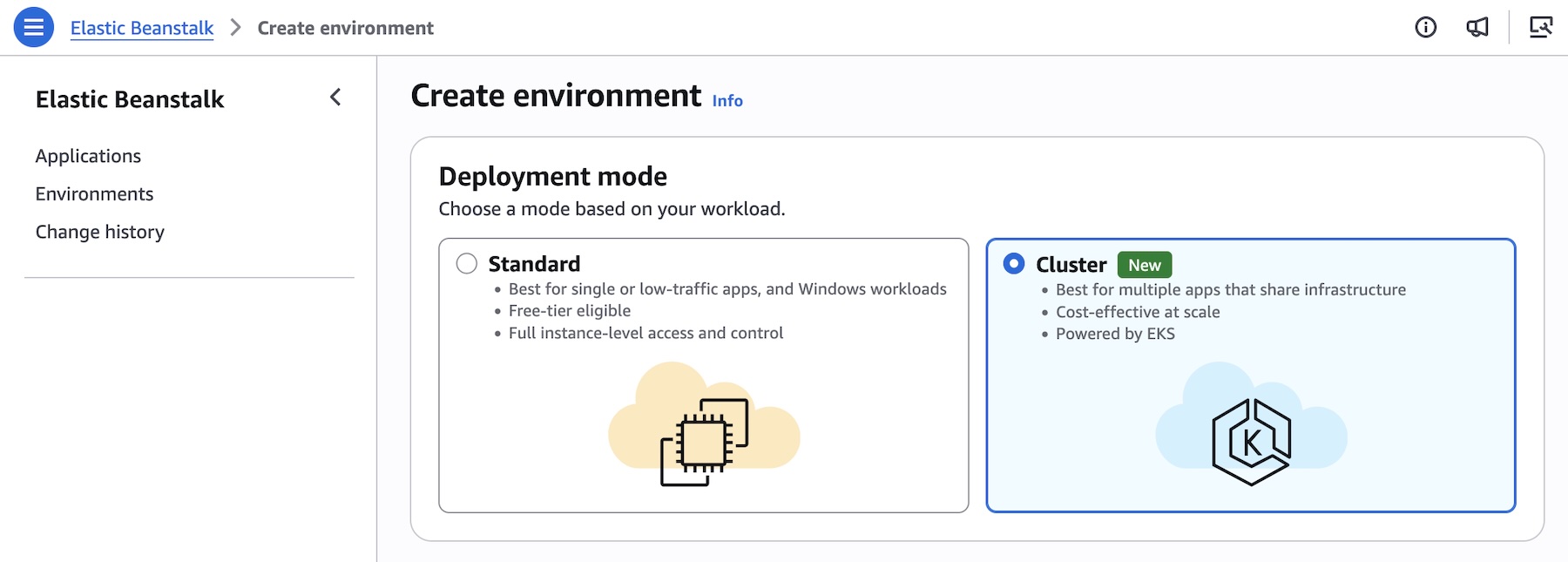
AWS has emphasized that the existing "Standard Mode," powered by Amazon EC2, will continue to receive full support. This is a critical decision for enterprises with legacy applications that require specific configurations not yet optimized for containerization.
The two modes are designed to operate side-by-side within the same Elastic Beanstalk application. This allows organizations to adopt a "migrate-at-your-own-pace" strategy. Before any migration occurs, the service performs validation checks to ensure compatibility, mitigating the risk of downtime or configuration drift. This granular approach to modernization is a hallmark of the AWS philosophy, prioritizing backward compatibility while simultaneously pushing the boundaries of new functionality.
Economic Considerations and Availability
From an economic perspective, Cluster Mode does not introduce a new, separate service fee. Instead, customers continue to pay for the underlying AWS resources consumed by their applications. This includes the EKS control plane fee, EKS Auto Mode compute, Amazon ECR storage, and Amazon CloudWatch monitoring.
While this ensures transparent billing, it is important to note that Cluster Mode environments are not eligible for the AWS Free Tier. Organizations planning to adopt this architecture should account for the EKS control plane costs in their capacity planning.
As of the current announcement, Elastic Beanstalk Cluster Mode is generally available in all AWS regions where Elastic Beanstalk is currently supported. Organizations looking to verify regional availability or access specific API documentation are encouraged to utilize the AWS MCP (Model Context Protocol) Server, which allows AI-integrated tools to interact with documentation and regional data in real-time.
Final Assessment
The transition of AWS Elastic Beanstalk to an EKS-based foundation represents a major evolution in the platform-as-a-service (PaaS) sector. By bridging the gap between high-level application management and low-level container orchestration, AWS is providing a pathway for businesses to standardize their operations.
As software teams face increasing pressure to shorten release cycles and improve system reliability, the ability to offload the maintenance of the underlying "plumbing" is more valuable than ever. With the introduction of Cluster Mode, Elastic Beanstalk has successfully repositioned itself as a modern, future-proof solution for the next generation of cloud-native workloads. Whether for a startup deploying its first service or an enterprise managing a complex microservices mesh, the platform now offers a compelling, unified experience that aligns with the current demands of modern cloud engineering.
Related posts: