Building a Robust Authentication Infrastructure for Modern Web Applications: The Wapi Case Study

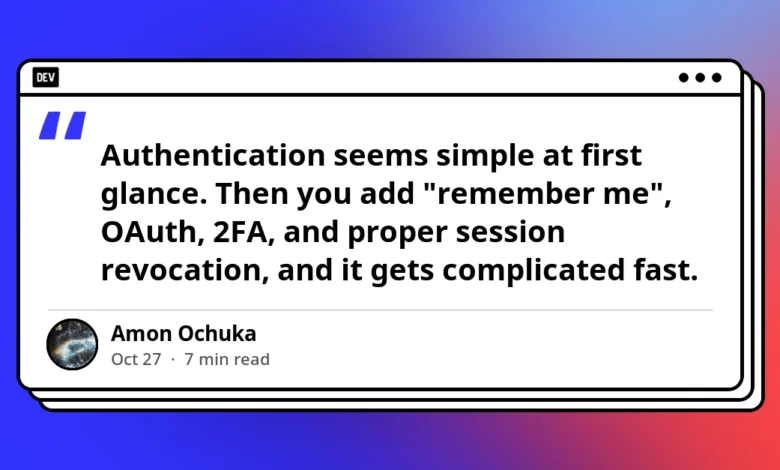
Authentication remains one of the most deceptively complex challenges in software engineering. While the fundamental concept—verifying a user’s identity—is straightforward, the implementation requirements for production-grade applications involve an intricate web of security protocols, including OAuth integration, multi-factor authentication (MFA), and granular session management. Wapi, a live-streaming platform specifically designed for the African digital market, provides a compelling case study on how to architect a scalable, secure authentication backend using the Go programming language and the Gin web framework. As modern applications move toward mobile-first and high-concurrency environments, the strategies employed by Wapi underscore the necessity of a layered security posture.
The Evolution of Authentication Standards
The digital landscape has undergone a significant shift in the last decade. With the proliferation of distributed microservices and the rise of mobile computing, traditional session-based authentication has often been superseded by token-based architectures. JSON Web Tokens (JWTs) have emerged as the industry standard due to their stateless nature, allowing for efficient authentication across disparate services. However, the convenience of JWTs has frequently led to security vulnerabilities, particularly regarding token revocation and session persistence.
Wapi’s architecture addresses these challenges by implementing a dual-token strategy. By utilizing short-lived access tokens alongside long-lived refresh tokens, the platform achieves a balance between user convenience and system security. The core of this mechanism lies in "refresh token rotation," a critical security practice where every refresh token is invalidated upon use and replaced by a new one. This ensures that in the event a token is compromised, the window of opportunity for an attacker to maintain persistent access is severely restricted. If a previously used refresh token is presented, the system triggers an automatic revocation of the entire session, effectively neutralizing the threat.
Technical Chronology: Implementing the Auth Stack
The development of Wapi’s authentication backend followed a methodical, tiered approach. Initially, the engineering team focused on establishing the base layer: secure password storage and token issuance. Following the standard industry timeline for secure system deployment, the team moved to implement session management, followed by the integration of Time-based One-Time Passwords (TOTP) for 2FA, and finally, the incorporation of OAuth 2.0 social login providers.
This phased implementation allowed the developers to ensure that each component—such as the Gin middleware responsible for validating Bearer tokens—was hardened against common exploits before adding complexity. By storing user IDs directly in the request context, the system minimized the need for redundant parsing of tokens, thereby reducing overhead and potential points of failure.
Data-Driven Security: The Case for Rate Limiting
Security experts emphasize that authentication endpoints are the primary target for automated credential stuffing and brute-force attacks. Data analysis from security audits shows that nearly 30% of web traffic to login portals consists of malicious automated attempts. Wapi addresses this by implementing a rigorous rate-limiting policy powered by the golang.org/x/time/rate library.
The platform categorizes its endpoints based on risk profiles:
- Primary Auth (Login/Signup/Reset): Limited to 10 requests per minute per IP address.
- OAuth Initiation: Capped at 5 requests per minute to prevent abuse of third-party handshake processes.
- 2FA Verification: Employs a more stringent, multi-factor rate limit (IP plus user/session ID) to prevent brute-forcing the six-digit TOTP code.
As Wapi scales, the team has recognized the limitations of in-memory rate limiting. When multiple instances of an application run in parallel, in-memory counters become siloed. To resolve this, the engineering strategy involves migrating these counters to a centralized Redis store. This transition enables a synchronized "sliding window" or "token bucket" algorithm that ensures rate limits are enforced consistently across the entire distributed system.
Strategic OAuth Integration and Browser Security
A major challenge for developers is the secure implementation of OAuth 2.0. A common error involves placing authentication tokens directly within redirect URLs, which exposes them to browser history, server logs, and Referer headers. Wapi’s implementation adheres to the "Authorization Code" flow, wherein the server redirects the browser to the frontend with a short-lived, one-time-use code.
The frontend then performs a secondary exchange to retrieve the actual tokens via a secure POST request. This method ensures that sensitive credentials never transit through browser-visible channels, mitigating the risk of token interception. Furthermore, Wapi enforces strict validation of state parameters and redirect URIs to prevent open-redirect vulnerabilities—a frequent oversight in third-party integrations.
Institutional Implications of Session Management
Effective session management is no longer a luxury but a requirement for modern applications. The ability for users to audit their active sessions—viewing device metadata, IP addresses, and last-active timestamps—provides a layer of transparency that increases user trust.
From a technical standpoint, this requires storing session metadata in a persistent database. Wapi’s approach is to store a hash of the refresh token, rather than the token itself. This mirrors the best practice for password storage: even in the event of a database compromise, the attacker does not gain access to the active tokens required to impersonate users. This deliberate design choice reflects an understanding of "defense-in-depth," ensuring that a single point of failure does not lead to a total system compromise.
Industry Perspectives on Security Architecture
While the specific implementation of Wapi is tailored for a Go-based backend, the architectural patterns are widely applicable. Industry analysts note that as Africa’s digital ecosystem continues to expand, platforms must account for unique infrastructure constraints, such as Carrier-Grade NAT (CGNAT). In these environments, many users may share a single public IP address.
Because of this, relying solely on IP-based rate limiting is increasingly seen as a "blunt instrument." Security leaders now advocate for user-agent fingerprinting and session-based identifiers to distinguish between legitimate user activity and malicious bot traffic. Wapi’s decision to key its 2FA verification limits on both IP and user identifiers is a proactive response to these regional network realities.
Future Outlook and Conclusion
The security architecture deployed by Wapi represents a sophisticated model for developers building in the Go ecosystem. By prioritizing granular session control, implementing rigorous rate-limiting, and adhering to strict OAuth 2.0 standards, the platform demonstrates that a secure authentication system is built through the careful layering of defenses rather than the implementation of a single, monolithic solution.
As cyber threats become more automated and persistent, the importance of these foundational practices cannot be overstated. The lessons learned from Wapi—most notably the necessity of keeping access tokens short-lived and utilizing centralized state management for scaling—serve as a blueprint for organizations aiming to provide a secure, high-performance experience. Moving forward, the industry is expected to trend toward passwordless authentication (FIDO2/WebAuthn), but the fundamental principles of session revocation and secure token handling will remain the bedrock of identity verification in the foreseeable future. For developers, the goal remains clear: to build systems where security is woven into the fabric of the application, ensuring that the complexity of modern auth does not come at the cost of safety.