AI Agents vs. AI Workflows: A Strategic Framework for Technical Decision-Making in Enterprise Development

The rapid evolution of Large Language Model (LLM) integration has introduced a significant nomenclature crisis within the software engineering industry. As developers rush to implement generative AI, the term "agent" has become a catch-all descriptor for everything from simple automated scripts to sophisticated, autonomous reasoning engines. This ambiguity often leads to over-engineering, where development teams commit to complex, unpredictable, and expensive agentic architectures for problems that could be more efficiently solved by deterministic workflows. To move beyond the hype, it is essential to distinguish between the two architectural paradigms: the rigid, pre-defined workflow and the flexible, agentic loop.
The Architectural Divide: Defining the Paradigms
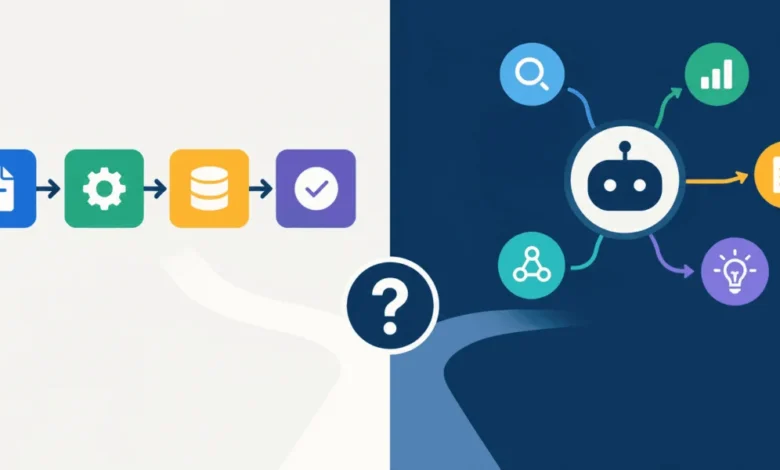
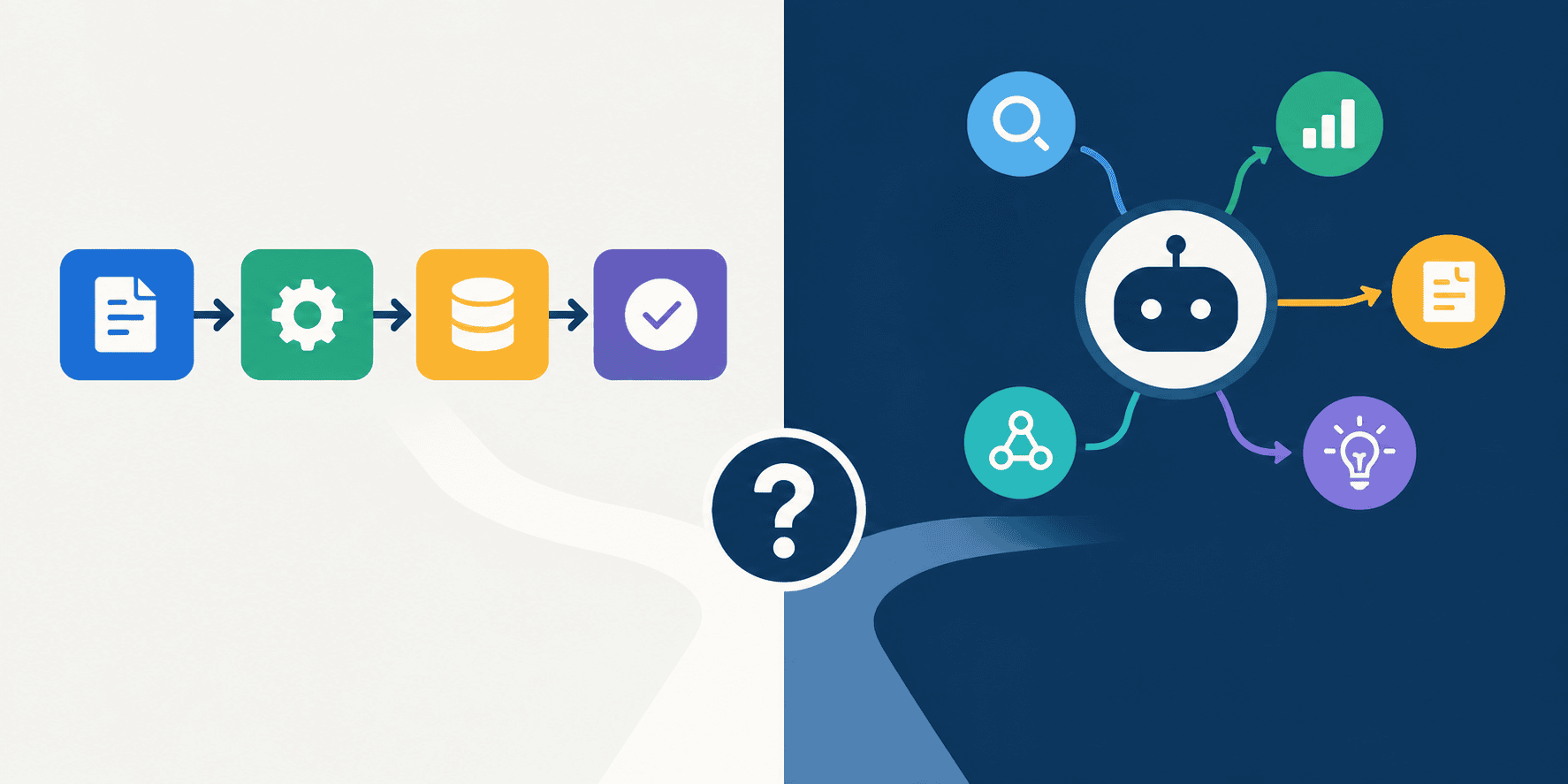
At the core of the current industry confusion is a misunderstanding of control flow. A workflow, often referred to as a pipeline or a chain, is a deterministic system where the logic, branching, and sequence of operations are established at design time. Even when these systems incorporate LLMs as reasoning engines at specific nodes, the overall trajectory remains governed by the developer. The software operates within a set of guardrails where the "if-this-then-that" logic is explicitly mapped, ensuring that the system follows a predictable path to a known output.
In contrast, an agentic system delegates the control flow to the LLM at runtime. An agent is provided with a high-level objective and a set of tools, and it is tasked with determining the sequence of actions necessary to achieve that goal. This involves a continuous loop of planning, acting, observing the results, and, if necessary, backtracking or pivoting its strategy. Unlike a workflow, the agent is not following a pre-drawn map; it is navigating a terrain that it explores in real-time.
The Chronology of Implementation and the Cost of Complexity
The industry has seen a distinct shift in how these systems are deployed. In the early stages of the LLM boom (roughly 2022–2023), most enterprise applications were rudimentary wrappers around API calls. As requirements grew more complex, developers attempted to bridge the gap by creating long, complex chains—the precursors to modern workflows. By late 2024, the "agent" moniker gained prominence, leading many firms to pivot toward autonomous agents to handle tasks like customer support automation, code generation, and data analysis.
However, historical data from early adopters suggests that this shift has not always been productive. Industry benchmarks indicate that autonomous agents frequently incur significantly higher costs due to "reasoning bloat." Because an agent must constantly re-evaluate its progress, it consumes a higher volume of input and output tokens compared to a workflow. Furthermore, latency is a persistent issue; while a workflow executes in a linear fashion, an agent’s multi-step reflection process often results in significantly longer wait times for the end user.
A Practical Heuristic: The Flowchart Test
To determine the necessity of an agentic architecture, engineering leads often employ a single, fundamental diagnostic test: Can a competent human engineer map the entire logic of the task on a whiteboard before the system is ever initialized?
If the answer is yes, a workflow is almost certainly the superior choice. Workflows provide several distinct advantages in a production environment:
- Predictability and Debugging: Because the path is predetermined, engineers can isolate failures at specific nodes. If a refund processing pipeline fails at the "validate eligibility" stage, developers know exactly where the logic broke down.
- Compliance and Auditability: In regulated industries such as finance or healthcare, the ability to document the exact sequence of actions is non-negotiable. Workflows allow for an explicit audit trail that autonomous agents, which may vary their approach from incident to incident, cannot easily replicate.
- Resource Efficiency: Workflows minimize unnecessary token consumption. By restricting the LLM to specific, well-defined tasks—such as classifying an intent or summarizing a text—the system avoids the high costs associated with recursive reasoning loops.
When Autonomy Is Actually Required
Despite the efficiency of workflows, there are legitimate use cases for agents. The defining characteristic of an agent-ready problem is "open-endedness." Consider a complex production outage where the root cause is unknown. The sequence of logs, metrics, and incident documentation that must be reviewed is not constant. In one instance, the agent might need to investigate a database latency spike, while in another, it may need to inspect regional DNS errors. Because the path is discovered only after the agent observes the system’s output, an autonomous approach is not just a preference; it is a necessity.
In such scenarios, the agent’s ability to loop and backtrack is its greatest asset. The model acts as an orchestrator, determining which tools are required based on the current state of the investigation. This level of flexibility is nearly impossible to capture in a static flowchart, as the state space of potential failures is too large to pre-program.
Strategic Implications for Enterprise Development
The current trend toward "agent-first" development carries significant risks. Organizations that prioritize agentic architectures for routine tasks often find themselves grappling with "non-deterministic drift," where the system begins to exhibit unpredictable behavior that is difficult to replicate in testing environments.
A survey of current software development patterns suggests a "hybrid-first" approach is becoming the industry standard. Organizations are increasingly building robust, deterministic workflows and reserving agentic "islands" for specific modules where high-level reasoning is required. For example, a customer support platform might use a hard-coded workflow for account authentication and policy verification, but trigger a small, bounded agent only when the system encounters a novel, non-standard user inquiry.
Establishing Best Practices
To avoid the pitfalls of over-engineering, teams should adhere to a strict vetting process:
- Audit Input Variability: If the input is highly structured, such as a standardized legal contract, avoid agents. If the input is unstructured and highly variable, consider an agent.
- Establish Baseline Performance: Before introducing agentic autonomy, build a baseline workflow. If the workflow achieves an 80% success rate with LLM-based judgments at key nodes, the marginal gain of moving to an agent may not justify the significant increase in technical debt and operational costs.
- Constraint-First Development: Start with the most constrained system possible. If the process is clearly definable, keep it within the bounds of a workflow. If, and only if, the system demonstrates consistent failure due to the rigidity of the flow, should developers consider shifting that specific component to an agentic architecture.
Conclusion
The distinction between a workflow and an agent is not merely academic; it is a critical strategic decision that influences the cost, reliability, and maintainability of an entire AI infrastructure. While the allure of autonomous, "thinking" software is strong, the most successful enterprise implementations remain those that leverage the precision of deterministic workflows. By viewing the AI agent as a specialized tool for discovery rather than a universal solution, engineers can build systems that are not only sophisticated but also scalable and secure. The ultimate goal is to move beyond the marketing hype and apply the right degree of complexity to the right problem, ensuring that the software remains a robust engine of productivity rather than an unpredictable black box.
Related posts: