GitHub Actions Supply Chain Vulnerability Exposes CI/CD Pipelines as Compromised Repositories Briefly Go Live

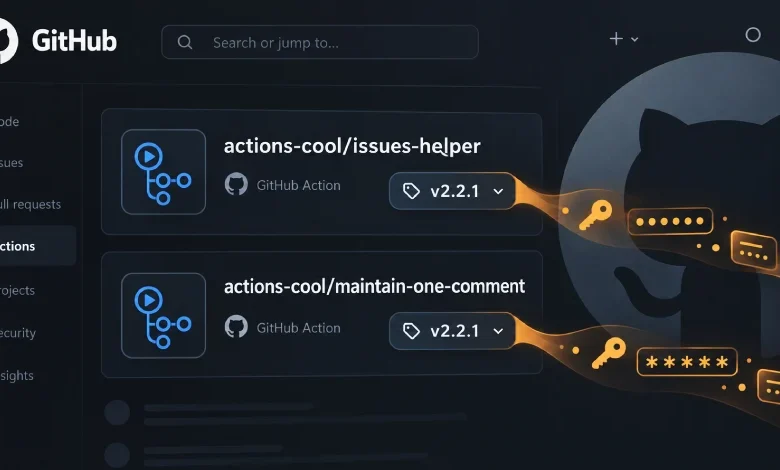
In an unusual and alarming software supply chain incident, two widely used GitHub Actions repositories associated with the infamous "Mini Shai-Hulud" threat cluster were briefly restored and made accessible to the public, inadvertently reactivating dormant malicious payloads. The security lapse, which occurred mid-September 2026, highlights persistent structural vulnerabilities in how modern development pipelines handle third-party dependencies, version tagging, and automated code execution.
Security researchers at software supply chain firm Socket revealed that the repositories—initially flagged and disabled during a wave of attacks in May 2026—briefly came back online on September 16, 2026. Because the repository administrators and platform interventions had failed to clean up or invalidate the historic release tags tied to the malicious commits, any downstream project referencing these actions via mutable version tags immediately began downloading and executing the lingering malware. The incident underscores a critical blind spot in continuous integration and continuous deployment (CI/CD) security: the risk of unpurged artifacts remaining weaponized inside repository storage, waiting for an administrative slip or platform error to re-expose them to the wild.
Chronology of an Unfolding Supply Chain Crisis
The roots of this security failure trace back to mid-May 2026, when a coordinated supply chain attack struck various components of the open-source ecosystem. On May 18, 2026, malicious actors successfully compromised two distinct GitHub Actions repositories. These automation tools were designed for mundane administrative housekeeping—such as closing inactive issues, triaging newly opened tickets, and keeping automated bot comments synchronized across collaborative repositories.
However, once compromised, the underlying codebases were altered to include malicious scripts. These scripts were engineered to silently harvest sensitive credentials, environment variables, and authentication tokens from any CI/CD pipeline that triggered the actions. Once gathered, this telemetry was exfiltrated to attacker-controlled infrastructure.

Security analysts quickly linked this activity to the broader "Mini Shai-Hulud" campaign, noting direct technical overlaps with concurrent attacks targeting the @antv ecosystem on the Node Package Manager (npm) registry. Most notably, the exfiltration domain (t.m-kosche[.]com) matched across both the compromised npm packages and the GitHub Actions workflows, confirming a unified threat cluster rather than isolated, platform-specific incidents.
Following discovery, GitHub’s security operations intervened, disabling the repositories and restricting public access to halt the automated credential theft. For months, the threat appeared contained. However, between 11:09 a.m. and 6:16 p.m. GMT+2 on September 16, 2026, both repositories inexplicably became accessible again. Visiting the URLs no longer yielded a security block; instead, the codebases were fully downloadable.
Because the malicious code introduced on May 18 was never formally removed from the release tags, the resurrection of the repositories instantly brought the threat back to life. Given that many software projects execute these housekeeping workflows on automated daily schedules or trigger them dynamically upon the creation of new pull requests, a vast number of dependent repositories unknowingly re-downloaded and executed the payload within hours of the re-enablement.
Technical Mechanics: The Danger of Mutable Version Tags
The mechanics of this incident expose a foundational risk in how software engineering teams consume external code. Unlike compiled binaries or libraries locked to immutable identifiers, many developers reference GitHub Actions using mutable version tags—such as @v1 or @latest—or point directly to branch names.
When a repository hosting a GitHub Action is compromised, threat actors often do not need to push new code or establish new infrastructure during subsequent phases of an attack. By leaving the original malicious commits bound to existing release tags, the threat persists indefinitely inside the repository’s version control history. If the repository is ever unblocked, reinstated, or misconfigured to allow public access, those old tags serve as an instant, ready-made distribution channel for the payload.

Philipp Burckhardt, head of threat intelligence at Socket, emphasized the passive nature of this attack vector during briefings with cybersecurity researchers. "Most supply chain incidents involve something new: a newly published malicious version, a newly hijacked account, or a newly injected workflow," noted Karlo Zanki, a researcher tracking the event. "This one did not. No new code was published and no configuration was changed."
The implications are stark. Threat actors do not need active command-and-control oversight to cause ongoing damage if historical hygiene within code hosting platforms is flawed. A momentary lapse in repository restriction can instantly weaponize legacy configurations across thousands of enterprise and open-source software projects simultaneously.
Broader Industry Implications and Security Analysis
The inadvertent reactivation of the Mini Shai-Hulud GitHub Actions places a renewed spotlight on the fragility of modern software supply chains. Modern application development relies heavily on composable infrastructure, where a single enterprise product may depend on hundreds of third-party actions, libraries, and containers maintained by anonymous or loosely vetted maintainers.
When a repository is flagged for malware distribution, platform safety protocols typically involve disabling access, quarantining the project, or removing the specific offending files. However, this incident demonstrates that standard remediation workflows occasionally fail to scrub historical release artifacts, tags, or cached builds. When administrative oversights lead to the accidental restoration of these assets, the protective barrier vanishes.
Furthermore, CI/CD environments are prime targets for malicious actors because they possess high-privilege access to production infrastructure, cloud deployment keys, code signing certificates, and proprietary source code repositories. Harvesting credentials from a CI/CD pipeline often grants lateral movement into an organization’s entire cloud ecosystem, making automated workflow actions high-value targets for persistent espionage or supply chain poisoning.

Security analysts point out that while platform operators bear responsibility for maintaining strict access controls and ensuring thorough quarantine procedures, developers and security teams must also adopt defensive postures that insulate their pipelines from upstream volatility.
Recommended Remediation and Mitigation Strategies
In light of the incident, cybersecurity experts and platform architects are strongly urging development teams to audit their CI/CD pipelines and implement rigorous dependency pinning practices. Relying on mutable tags for third-party GitHub Actions introduces an unacceptable level of operational risk.
To mitigate exposure to similar supply chain vulnerabilities, organizations should immediately undertake the following security measures:
- Adopt SHA Pinning: Replace mutable version tags (such as
@v1or@main) with the full 40-character commit SHA of a verified, trusted version of the action dating from a period prior to the known compromise window (in this case, before May 18, 2026). Pinning to a specific SHA ensures that even if the upstream repository is altered, deleted, or temporarily compromised and reinstated, the pipeline will continue to execute the exact, immutable cryptographic hash of the code that was originally audited. - Conduct Comprehensive Pipeline Audits: Review all workflow files (
.github/workflows/*.yml) across enterprise and personal repositories to identify and catalog every external action currently in use. Verify the legitimacy and current standing of each maintainer and repository. - Implement Automated Dependency Scanning: Integrate software composition analysis (SCA) and supply chain security tools that monitor GitHub Actions for anomalous behavior, compromised parent repositories, or unauthorized code changes.
- Rotate CI/CD Secrets and Credentials: Given that the Mini Shai-Hulud campaign specialized in harvesting sensitive environment variables and deployment keys, any organization that utilized the affected actions prior to their initial discovery should immediately rotate all API keys, cloud access tokens, SSH keys, and service account credentials exposed to those pipelines.
- Enforce Least Privilege Access: Limit the scope of permissions granted to GitHub Actions tokens (
GITHUB_TOKEN). Restrict write permissions and sensitive environment variable access exclusively to workflows that strictly require them, minimizing the blast radius if an action is ever compromised.
As software supply chain attacks grow increasingly sophisticated—leveraging automated persistence and the inherent trust placed in developer tooling—incidents like the temporary resurrection of the Mini Shai-Hulud actions serve as a stark reminder that vigilance, cryptographic verification, and stringent pipeline hygiene are mandatory components of contemporary software engineering.
Related posts: