The Failures of the Virtual Wall: How Surveillance Technology Fails to Secure the Border and Protect Human Life

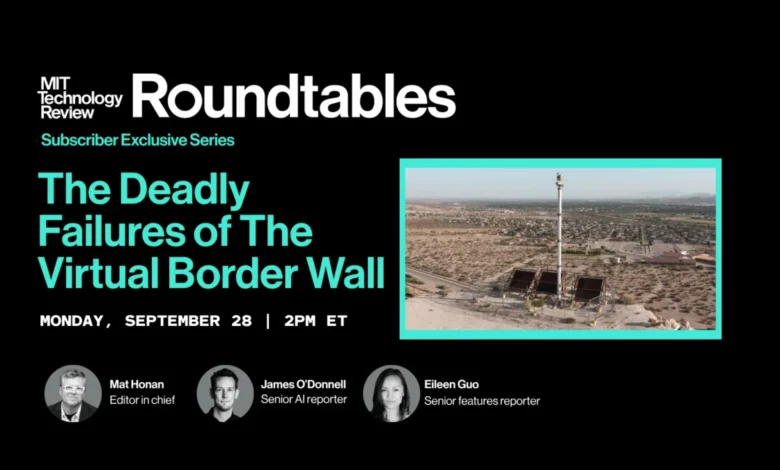
For over two decades, the United States has invested billions of dollars in the construction of a “virtual wall” along its southern border, a sprawling network of surveillance towers, high-resolution cameras, and motion sensors intended to replace or augment traditional physical fencing. Proponents of these systems—which rely on increasingly sophisticated AI-driven analytics—have long argued that the technology would provide an impenetrable layer of situational awareness, allowing Customs and Border Protection (CBP) to detect unauthorized entries in real time, apprehend those crossing, and prevent humanitarian catastrophes in the treacherous borderlands. However, a groundbreaking investigation by MIT Technology Review has cast a shadow of doubt over these promises, documenting more than 1,000 instances where individuals traversed areas under the direct watch of these towers without being apprehended, only to succumb to the elements and perish in the unforgiving landscape.
A Chronology of Technological Intervention
The push for a virtual wall began in earnest in the early 2000s, marking a strategic pivot toward "smart border" security. The timeline of this technological evolution is extensive and costly:
- 2005–2010: The SBInet Era: The Department of Homeland Security launched the Secure Border Initiative network (SBInet), a multi-billion-dollar project led by Boeing. The goal was a cohesive system of radar and cameras. The project was eventually canceled in 2011 after significant cost overruns and technical performance issues that rendered the system largely ineffective.
- 2011–2018: The Integrated Fixed Tower (IFT) Transition: Following the collapse of SBInet, CBP shifted focus toward smaller, more localized Integrated Fixed Towers. These were designed to provide 24/7 surveillance in specific rural and remote sectors.
- 2019–Present: The AI Pivot: With the rise of deep learning and computer vision, CBP began integrating AI-powered towers. These systems are designed to automatically distinguish between wildlife and human movement, alerting agents to potential border crossers in real time, supposedly reducing the reliance on human monitors to watch thousands of camera feeds simultaneously.
Despite these advancements, the investigation indicates that the fundamental objective—securing the border while ensuring safety—has not been met. In many cases, the very towers designed to save lives appear to have failed both in detecting individuals in distress and in guiding search-and-rescue teams to their locations.
The Disconnect Between Surveillance and Response
The investigation highlights a critical systemic failure: the "data-to-action" pipeline. While the towers are undoubtedly capable of capturing high-resolution imagery and identifying movement, the data often becomes a bottleneck rather than a tool for assistance.
In the desert regions of Arizona and Texas, the harsh topography creates significant blind spots. While towers are placed on elevated terrain, the rugged canyons and dense brush often obscure movement. Furthermore, the volume of alerts generated by AI systems can lead to "alarm fatigue" among border agents. When an automated system flags a potential crossing, it is not always prioritized, or it may be dismissed as a false positive, especially in regions with high animal activity or changing weather conditions that trigger sensors.
Perhaps most troubling is the finding that in some instances, individuals were identified by the surveillance technology as they entered hazardous terrain—areas known for extreme heat and dehydration—yet no intervention was launched. The investigation suggests that the technology has created a false sense of security for policymakers and the public, while failing to provide the tactical utility needed on the ground to prevent deaths.
Supporting Data and Statistical Realities
The human cost of these failures is reflected in the rising number of recovered remains in border sectors. According to data from the Missing Migrants Project and records compiled by non-governmental organizations operating in border regions, the number of deaths in the borderlands has remained consistently high, and in some years, has spiked despite the increased density of surveillance.
Data analysis from the MIT Technology Review investigation reveals:
- Over 1,000 cases where individuals were tracked by surveillance assets in the vicinity of their eventual death.
- A failure rate of automated alerts that, while technically performing as designed in terms of movement detection, failed to translate into a reduction in mortality rates.
- The persistence of death in sectors that boast the highest density of AI-powered "Smart Towers."
These figures suggest that the virtual wall is not acting as a deterrent, nor is it functioning as a life-saving mechanism. Instead, it appears to be acting as a passive observer to a humanitarian crisis, recording the movements of those in peril without triggering the necessary response to prevent the loss of life.
Official Responses and Institutional Justification
CBP and Department of Homeland Security officials have consistently defended the use of surveillance technology, emphasizing that the virtual wall provides "force multiplication." In official statements, agencies often cite the number of apprehensions facilitated by surveillance technology as evidence of its success.
However, when confronted with the evidence of deaths occurring under the watch of these systems, officials often point to the immense geographical challenges of the border. They argue that surveillance towers are tools, not autonomous agents, and that the limiting factor remains the number of boots on the ground and the time required for agents to reach remote, rugged locations after an alert is verified.
Critics, including human rights advocates and border policy analysts, argue that this justification ignores the inherent limitations of the technology. If the technology is incapable of directing a timely rescue, then labeling it a humanitarian benefit is fundamentally dishonest. There is also a concern that the focus on high-tech solutions provides political cover, allowing administrations to claim "border security" progress while ignoring the underlying realities of migration and the lethal consequences of current policies.
Fact-Based Analysis of Broader Implications
The failure of the virtual wall has profound implications for the future of border management and technological ethics.
1. The Myth of the "Clean" Solution: The investigation underscores the danger of viewing complex geopolitical and humanitarian issues through a strictly technological lens. AI and surveillance systems are frequently presented as objective, neutral tools that can solve the "border problem." The reality is that these technologies are embedded within a political framework that prioritize exclusion over humanitarian protection.
2. Resource Allocation and Accountability: Billions of taxpayer dollars have been directed toward contractors to build and maintain these towers. The lack of accountability regarding the effectiveness of these systems—specifically regarding their impact on preventing migrant deaths—raises significant questions about federal spending. If the stated goal is to save lives, the lack of performance metrics linked to humanitarian outcomes is a massive policy oversight.
3. The Escalation of Risk: There is an argument to be made that the virtual wall, by forcing migrants away from more heavily patrolled areas toward increasingly remote and dangerous regions, may inadvertently contribute to the death toll. As surveillance becomes more dense in urban or easily accessible areas, migrants move into more dangerous, unmonitored zones where their chances of survival are significantly lower.
Looking Ahead
The findings regarding the virtual wall demand a re-evaluation of how technology is deployed at the border. If the goal is to prevent the tragedy of death in the desert, the current reliance on passive surveillance appears insufficient.
Experts suggest that for technology to truly contribute to a reduction in fatalities, the focus must shift from surveillance to support. This could include the installation of emergency rescue beacons, more effective communication infrastructure for stranded individuals, and a strategy that prioritizes rapid-response search and rescue over mere detection and apprehension.
Ultimately, the MIT Technology Review investigation serves as a sober reminder that technology, no matter how advanced, cannot replace the need for clear policy objectives and a commitment to human life. As the US continues to refine its virtual wall, the disconnect between the capabilities of its hardware and the reality of the crisis on the ground remains a significant and unresolved challenge for the future of border security.
Related posts: