Amazon expands its Global Warehousing and Distribution service into European markets to streamline international logistics

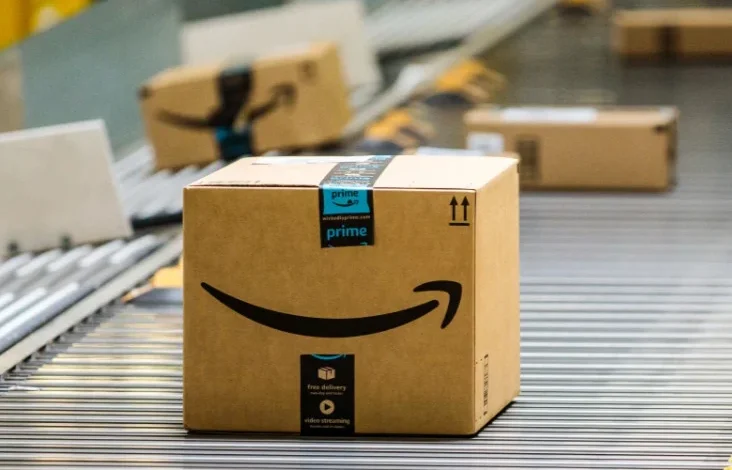
Ecommerce giant Amazon has officially announced a significant expansion of its Global Warehousing and Distribution (GWD) service, marking a major shift in how the company manages international supply chains. By the end of this year, Amazon will roll out GWD capabilities across seven additional countries, including major European hubs—Germany, France, Italy, Spain, and the United Kingdom—as well as Canada and Japan. This strategic move is designed to simplify the complexities of cross-border ecommerce by allowing third-party sellers to consolidate their inventory management into a unified, Amazon-operated logistics network.
Simplifying the Global Supply Chain
The core value proposition of Amazon’s GWD service lies in its ability to eliminate the traditional, fragmented approach to global logistics. Historically, merchants looking to sell internationally were forced to split their manufacturing output into multiple, smaller batches, shipping them to various fulfillment centers across different continents. This process often led to increased storage costs, complex inventory tracking, and longer lead times due to the inefficiencies of managing disparate stocks.
With GWD, sellers can ship a single manufacturing run to a primary facility located in proximity to their production source. For instance, a manufacturer based in Shenzhen, China, can utilize a GWD facility in the same city to house their bulk inventory. Once the stock is stored in this centralized pool, Amazon handles the replenishment into its Fulfillment by Amazon (FBA) network. Because the inventory is held in a centralized location, Amazon can dynamically route products to regional FBA centers only when consumer demand arises in those specific markets. This "pull" strategy is significantly more efficient than the traditional "push" strategy, where sellers guess regional demand and risk either stockouts or overstocking in specific geographic areas.
The Chronology of Global Expansion
The introduction of GWD into Europe, Canada, and Japan represents the second phase of a broader logistics strategy that began in the United States. When Amazon first unveiled the service, it was limited to domestic US operations, aimed at helping merchants navigate the post-pandemic supply chain crisis.
The timeline of this rollout reflects Amazon’s commitment to fortifying its infrastructure:
- Initial Launch (2022): Amazon introduced GWD in the United States, allowing domestic sellers to manage bulk storage and automated replenishment into the FBA system.
- Operational Optimization (2023): Throughout the previous year, Amazon refined the software integration, focusing on data visibility to ensure sellers could track their bulk inventory alongside their active retail stock.
- International Expansion (2024): The current announcement signals the transition from a US-centric tool to a truly global logistics ecosystem. By integrating the UK, France, Germany, Italy, Spain, Canada, and Japan, Amazon is targeting the most mature ecommerce markets outside of North America.
Operational Benefits and Cost Efficiency
For the millions of third-party sellers who contribute to over 60% of Amazon’s total retail sales, the transition to GWD offers a measurable competitive advantage. Data from the company suggests that replenishment into FBA from GWD facilities is up to five days faster than traditional third-party logistics (3PL) solutions.
Beyond the speed of delivery, the economic incentives for sellers are substantial. By storing goods in bulk at the point of origin, sellers avoid the "last-mile" storage costs associated with sending full pallets to various regional fulfillment centers prematurely. Furthermore, GWD provides a single, unified dashboard for inventory management. Sellers no longer need to reconcile stock levels across multiple spreadsheets or disparate logistics providers; they maintain one view of their entire inventory lifecycle, from the manufacturing floor to the customer’s doorstep.
Implications for the Logistics Sector
The entry of Amazon into the international warehousing space is likely to disrupt the traditional freight forwarding and 3PL industries. Small and medium-sized enterprises (SMEs) that previously relied on expensive third-party brokers to navigate the complexities of European customs and distribution now have a direct, integrated alternative.
Industry analysts observe that this move also serves as a defensive measure for Amazon. By tightening its grip on the entire value chain, the company reduces the risk of logistics bottlenecks. During periods of high demand, such as Prime Day or the holiday shopping season, Amazon’s ability to move stock autonomously between GWD and FBA centers gives it a significant edge over competitors that rely on third-party carrier capacity, which often becomes constrained or exorbitantly priced during peak periods.
The Regulatory and Economic Landscape in Europe
Expanding into the European Union presents a unique set of challenges compared to the US market. Sellers operating in Germany, France, Italy, and Spain must contend with varying Value Added Tax (VAT) regulations, regional customs requirements, and disparate labor laws.
Amazon’s GWD service attempts to mitigate these risks by acting as the primary logistics layer. By providing a standardized infrastructure, Amazon helps sellers navigate the EU’s Single Market regulations. While the company has not yet released specific data on how GWD handles country-specific customs clearance for bulk inventory, the expectation is that the service will leverage Amazon’s existing legal and logistics infrastructure to streamline the import process for merchants.
For the UK, which remains a vital market despite its post-Brexit status, the inclusion of the country in the GWD rollout is particularly important. UK-based sellers have faced significant friction in cross-border trade since 2021; GWD’s centralized storage model may provide a much-needed bridge for these merchants to continue reaching customers across the European continent without the burden of maintaining physical warehouses in every member state.
Official Stance and Market Reception
While Amazon has not provided a specific date for the exact launch in each country, the company has confirmed that all seven locations will be operational by the end of the calendar year. In recent press communications, Amazon representatives have emphasized that the primary goal is "democratizing global commerce."
"Our mission is to enable sellers of all sizes to behave like global enterprises," an Amazon spokesperson noted in a briefing. "By removing the geographic barriers to storage and replenishment, we allow our partners to focus on product development and marketing, while we handle the heavy lifting of global distribution."
Market reaction has been cautiously optimistic. While logistics providers and freight forwarders may view this as an encroachment on their business, the seller community has largely welcomed the news. For many, the cost of international expansion has historically been prohibitive; the prospect of a single, integrated service that reduces storage overhead is viewed as a significant boon for profitability.
Analyzing the Long-Term Strategic Impact
The broader implications of this expansion go beyond mere convenience. As Amazon continues to scale its "Supply Chain by Amazon" initiative—the umbrella program that houses GWD—it is effectively building an end-to-end global trade network that rivals traditional global logistics companies.
By controlling the entire flow of goods, from the factory in Shenzhen to the customer in London or Paris, Amazon achieves two things:
- Increased Dependence: Sellers who move their supply chains into the Amazon ecosystem are less likely to migrate to competitors, as the integration of their inventory data into Amazon’s systems creates high "switching costs."
- Optimized Fulfillment: By positioning inventory closer to predicted demand, Amazon reduces the carbon footprint of its logistics network and lowers the cost-per-shipment, a critical metric for maintaining its retail margins in an era of rising fuel and labor costs.
Looking Ahead: The Future of Cross-Border Trade
As the rollout progresses through the final months of the year, the industry will be watching closely to see how effectively Amazon manages the operational complexity of these new facilities. The success of the European and Japanese expansion will likely serve as a blueprint for further growth into emerging markets in Southeast Asia and Latin America.
For the modern ecommerce entrepreneur, the world is becoming smaller. The barriers to entry for international trade, which were once reserved for massive corporations with dedicated logistics departments, are being systematically dismantled. Whether this consolidation of power will lead to further market dominance for Amazon or foster a new generation of truly global small businesses remains the central question. However, one thing is certain: with the introduction of GWD into Europe, the infrastructure of global retail is undergoing a permanent transformation.
By the time the calendar turns to the new year, the retail landscape will feature a more streamlined, automated, and centralized approach to international commerce, solidifying Amazon’s position not just as a marketplace, but as the essential backbone of the modern global supply chain.