React Native 0.86 Official Release Brings Android 15 Edge-to-Edge Support and Signals a New Era for the Framework

The release of React Native 0.86 marks a significant milestone in the evolution of one of the world’s most popular cross-platform development frameworks. With the official rollout today, the core team has prioritized stability, architectural alignment with the web, and seamless integration with the latest Android operating system requirements. This update is particularly notable for being the second consecutive release to feature no user-facing breaking changes, a strategic shift that underscores the foundation’s commitment to developer productivity and long-term project maintainability.
A Historic Transition to the React Foundation
Perhaps the most consequential development accompanying this release is the migration of the React Native repository. Previously housed under the Meta (formerly Facebook) GitHub organization, the project—alongside the React library, the Metro bundler, the Yoga layout engine, and the official documentation website—has officially migrated to the independent react organization.
This move is more than a administrative change; it is the physical manifestation of React Native’s transition into the stewardship of the React Foundation. Established to ensure the long-term viability and neutrality of the ecosystem, the Foundation aims to provide a robust, governance-driven environment that invites broader participation from the open-source community. For developers, the transition is seamless. GitHub’s automated redirection protocols ensure that all existing URLs, open issues, and pull requests remain accessible without requiring manual intervention from contributors or project maintainers.
Advancing Android 15 Compatibility
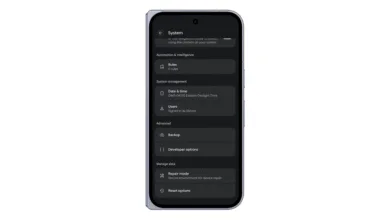
As Google pushes forward with its latest Android iteration, React Native 0.86 provides critical infrastructure to support the platform’s evolving design language. Android 15 has introduced more rigorous requirements for edge-to-edge display rendering, which dictates how application content interacts with the system status and navigation bars.
Prior to this release, developers often faced hurdles when the operating system enforced edge-to-edge rendering without explicit configuration in the project’s Gradle files. Version 0.86 resolves these inconsistencies by shipping comprehensive, built-in fixes that ensure application layouts remain consistent regardless of OS-level overrides. By automating these layout adjustments, the framework reduces the "configuration drift" that often plagues developers targeting multiple Android API levels, allowing teams to maintain a modern, immersive aesthetic across the diverse Android device ecosystem without extensive manual code adjustments.
Enhancing the Developer Experience with DevTools
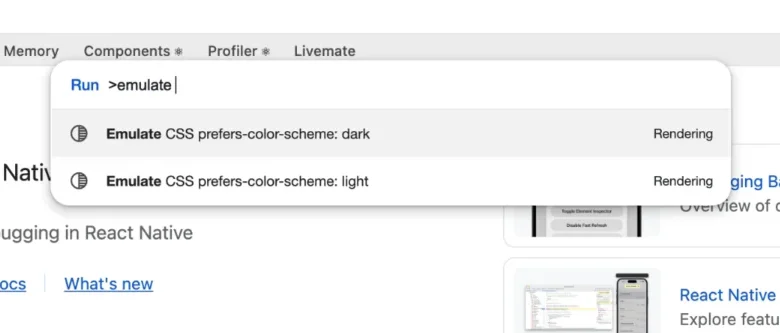
The React Native DevTools suite has also received a significant quality-of-life upgrade in this version. The introduction of light/dark mode emulation via Emulation.setEmulatedMedia allows developers to stress-test their interface’s theme-switching logic directly within the development environment.
Previously, testing theme variations required toggling system-wide device settings, a tedious process that disrupted the development flow. With the new command palette integration—accessible via cmd or ctrl + shift + P—developers can now force a specific color scheme on the fly. This emulation is designed to behave exactly like its counterpart in browser-based web development tools, resetting automatically once the DevTools session is disconnected. This feature is expected to reduce testing times significantly for applications with complex, theme-dependent styling requirements.
The Philosophy of Stability: No Breaking Changes
The decision to maintain a zero-breaking-change policy for the second release cycle represents a departure from the rapid, sometimes disruptive, iteration cycles of the framework’s earlier years. By prioritizing backward compatibility, the maintainers are lowering the barrier to entry for teams looking to stay current with the latest performance improvements and security patches.
Industry analysis suggests that this strategy is aimed at "enterprise-grade" adoption. Large-scale organizations often struggle with the technical debt associated with frequent framework upgrades. By guaranteeing that a project running on version 0.85 can transition to 0.86 without modifying application-level code, the React Native team is effectively incentivizing continuous updates, which in turn leads to a healthier, more secure ecosystem for all users.

Architectural Improvements and JSI Expansion
Under the hood, version 0.86 continues the trend of aligning the React Native runtime with web standards. The inclusion of new JavaScript Interface (JSI) APIs is a particularly technical but vital advancement. JSI serves as the bridge between the JavaScript engine and the native layer, and the expansion of these capabilities allows for more efficient communication between the two environments. By enriching this interface, the team is enabling developers to build more complex native modules that operate with lower overhead and higher performance, specifically in memory-intensive scenarios or high-frequency data streaming.
Chronology of the 0.86 Development Cycle
The development cycle for 0.86 was characterized by intense collaborative effort, involving over 596 distinct commits contributed by a community of 97 developers. The process began with the identification of core pain points in the Android 15 beta releases, followed by a rigorous testing phase to ensure that the removal of legacy dependencies would not negatively impact performance.
Following the release of 0.83, the maintainers shifted their focus toward "invisible" improvements—optimizations to the rendering pipeline, better accessibility hooks, and refined networking protocols for Android. The result is a release that, while perhaps lacking in "flashy" new UI components, offers significant improvements in reliability and standard compliance.
Broader Implications for the Ecosystem
The move to the React Foundation and the emphasis on predictable release cadences signal that React Native has matured into a stable, long-term industry standard. With the framework now being managed by an independent body, stakeholders can expect a more transparent roadmap. The community-led governance model also mitigates the risk of sudden strategic shifts that can occur when a single corporation drives the entire direction of an open-source project.
Furthermore, the alignment with web specifications—specifically regarding layout engines and runtime behaviors—suggests a future where the gap between web development and native mobile development continues to narrow. This "write once, run everywhere" vision is now more attainable than ever, as the framework increasingly treats the native environment as a high-performance target for standard web-based programming paradigms.
Upgrade Path and Support Policy
With the release of 0.86, the project has officially transitioned version 0.83 to "unsupported" status. Teams currently relying on 0.83 or older versions are strongly encouraged to utilize the React Native Upgrade Helper, a community-maintained tool that provides a clear diff of necessary configuration changes.
For new projects, the initialization command has been updated to reflect the latest stable version:
npx @react-native-community/cli@latest init MyProject --version latest
For those operating within the Expo ecosystem, React Native 0.86 is currently being rolled out via the expo@canary channels, providing a pathway for developers to integrate these latest features into existing Expo-managed workflows.
Looking Ahead
The success of version 0.86 serves as a bellwether for the future of the framework. By balancing high-impact features like Android edge-to-edge support with the disciplined management of breaking changes, the React Native maintainers have provided a blueprint for sustainable open-source development. As the React Foundation begins to take a more active role in the stewardship of the code, the community can expect further refinements in infrastructure, performance, and accessibility.
The integration of 97 contributors into this release is a testament to the continued vitality of the community. As the ecosystem continues to grow, the focus will likely remain on reducing the complexity of the native-to-JS bridge and ensuring that the developer experience remains as fluid and intuitive as possible. In a landscape where cross-platform frameworks compete for dominance, React Native’s latest release demonstrates that its greatest strength lies not just in its performance, but in its commitment to the thousands of developers who rely on it for their professional livelihoods.