Meta and Google Collaborate on Jetpack Compose Migration to Build AI-Native Android Infrastructure for Instagram Direct

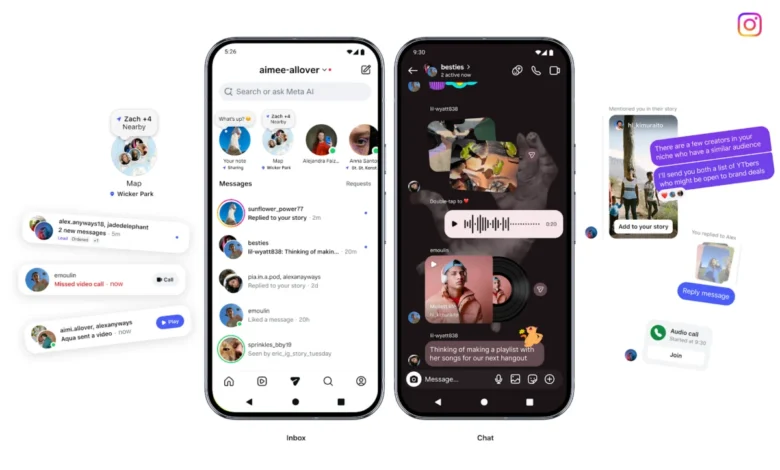
The engineering teams at Meta and Google have announced the successful completion of a massive infrastructure overhaul for Instagram Direct, transitioning one of the world’s most heavily utilized communication surfaces from the legacy Android View system to Jetpack Compose. Authored jointly by Pavlo Stavytskyi, Software Engineer at Meta, and Rebecca Franks, Developer Relations Engineer at Google, the technical case study details a multi-year engineering collaboration. Far beyond a simple user interface facelift, the migration focused on redesigning Instagram Direct into an AI-native codebase, resulting in a 50 percent smaller footprint and significant performance enhancements that have retroactively improved the broader Android developer ecosystem.
Background Context and Scale of the Challenge
.jpg)
Instagram Direct handles billions of messages daily, serving as a core engagement pillar for the platform. For years, the application relied on the legacy Android View system. While the team of engineers had squeezed every possible micro-optimization out of the imperative architecture, maintaining it created substantial technical debt and operational overhead. This friction became increasingly acute as the software industry pivoted toward declarative user interfaces and AI-assisted coding tools.
Migrating a system of this magnitude presented extraordinary logistical challenges. Individual UI components within Instagram Direct render in over 160 distinct state permutations, and a single conversation screen manages more than 200 unique message types. Consequently, the transition required a careful, gradual rollout. Millions of users send messages on the platform every second, meaning the re-architecture had to occur seamlessly in the background without causing disruptions or user-facing performance regressions.
Chronology and Migration Strategy

The migration project was executed through an iterative, multi-phase strategy designed to balance ongoing feature development with foundational refactoring. Initially, the Instagram engineering team utilized an incremental approach, co-locating Compose components alongside legacy code within traditional View hierarchies. However, engineers quickly discovered that mixing declarative and imperative paradigms introduced unintended pitfalls, particularly when utilizing AI coding assistants. AI tools operating in mixed environments frequently generated mutable states dispatched outside primary UI states, leading to elusive bugs and unexpected memory leaks during RecyclerView re-bindings.
To overcome these roadblocks, Meta transitioned toward building a strictly AI-native UI architecture. The team established rigorous structural rules: all Compose UI logic was restricted to constructor parameters, stripping it of access to mutable class members or implicit states. This standardization made the code structurally predictable and easier for AI language models to parse.
Engineers split the migration process into two distinct operational stages for each screen. First, a lead engineer established the foundational architecture and resolved complex edge cases. Subsequently, broader engineering teams deployed the standardized UI components to production. This workflow allowed the organization to execute the transition in record time while maintaining continuous product updates.

Performance Metrics and Quantitative Results
The collaboration between Meta and Google yielded remarkable quantitative improvements in both developer velocity and runtime performance. By shifting Instagram Direct to Jetpack Compose, the engineering team achieved a 50 percent reduction in total UI code volume.
Internal data analysis comparing AI agent sessions operating on Compose UI versus the legacy Android View system revealed striking efficiency gains:

- AI agent execution time decreased by 35 percent.
- Engineer-to-agent interactive exchanges dropped by 32 percent.
- Token generation costs per task fell by 33 percent.
Furthermore, Meta analyzed code change risk scores—a metric evaluating overall code quality and incident probability—to measure how gracefully the frameworks handle complex codebases. When a file’s accumulated risk score doubles, code implemented in Android Views suffers a 30 percent drop in AI agent resource efficiency per landed character. In contrast, files built using Jetpack Compose experienced only a 9 percent drop in efficiency under the same stress conditions.
Joint Engineering Innovations and Official Responses
Because Instagram maintains a zero-tolerance policy for performance regressions, the partnership between Meta and Google extended deep into framework-level optimizations. Google engineers worked alongside Meta specialists to develop new architectural capabilities within Jetpack Compose to match or exceed legacy benchmarks.

Among the most significant outcomes of this cooperation were the introduction of pausable composition and advanced visibility tracking APIs. Pausable composition, enabled by default in Compose 1.10, allows expensive lazy-list items to be composed incrementally across multiple frames, effectively eliminating UI jank. When paired with the LazyLayoutCacheWindow API—introduced in Compose 1.9—off-screen items are prepared and retained within a pixel-based band around the viewport, facilitating smooth, high-speed flings. Internal testing at Meta revealed that combining pausable composition with a one-viewport LazyLayoutCacheWindow reduced large frame drops per minute (LFDs/m) by approximately 13 percent compared to standard Compose implementations.
Additionally, the introduction of the onVisibilityChanged API in Compose 1.9.0 provided large-scale surfaces with a reliable, standardized mechanism to track when a composable is genuinely visible on screen. This replaced hundreds of custom, hand-rolled visibility logging systems previously maintained across the Instagram codebase. Startup performance was further accelerated through the deployment of Baseline Profiles, which pre-compile hot code paths upon application installation to ensure immediate responsiveness.
Broader Impact and Industry Implications

The successful migration of Instagram Direct signals a major milestone for the Android development community. By demonstrating that declarative UI frameworks can be structurally optimized for AI-driven development workflows, Meta and Google have established a new paradigm for scaling large consumer applications.
Statements from the collaborating parties emphasize that the benefits extend far beyond Meta’s internal pipelines. The performance enhancements, caching mechanics, and architectural guardrails developed during the Instagram migration have been integrated directly into the official Jetpack Compose library, permanently upgrading the toolkit for millions of global Android developers. As declarative UI adoption accelerates across the industry, the lessons learned from Instagram Direct provide a blueprint for modernizing legacy applications while simultaneously preparing codebases for the future of AI-assisted software engineering.