Automating Knowledge Graph Population: Extracting Entities and Triples from Unstructured Text with an LLM

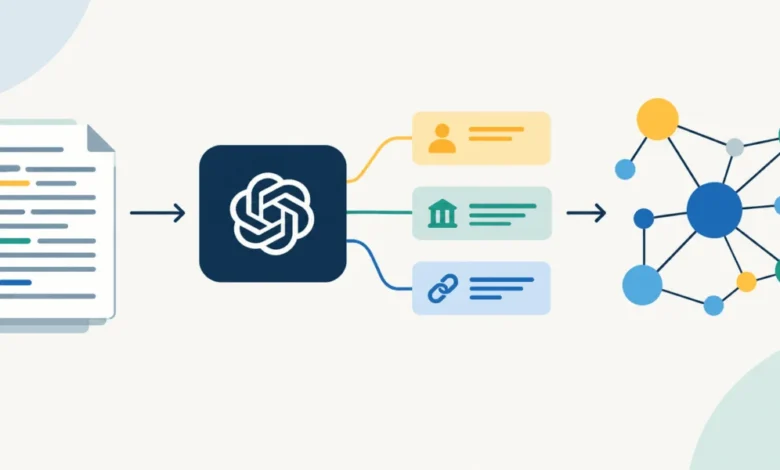
In the rapidly evolving landscape of artificial intelligence, the transition from standard vector-based information retrieval to deterministic, graph-based architectures represents a significant milestone in mitigating the persistent challenge of model hallucinations. As organizations increasingly rely on Retrieval-Augmented Generation (RAG) systems to provide grounded, fact-based answers, the demand for structured data has never been higher. By leveraging local Large Language Models (LLMs) via platforms like Ollama, developers can now automatically transform vast repositories of unstructured text—such as Wikipedia entries or technical documentation—into structured knowledge graphs defined by SPOC (Subject-Predicate-Object-Context) quads. This process, which facilitates the creation of a "ground-truth" layer, bridges the gap between raw, noisy data and the high-precision requirements of enterprise-grade AI applications.
The Evolution of Graph-Based Retrieval
Traditional RAG systems typically utilize vector databases, which store text embeddings that capture semantic similarity. While effective for surfacing relevant documents, these systems often struggle with complex, multi-hop reasoning and the factual accuracy required for high-stakes environments. The integration of a hierarchical, graph-based architecture introduces a deterministic layer that allows for explicit fact verification.
Central to this architecture is the Quadstore, a lightweight Python-based database designed to store information in a quadruplet format. By appending a fourth dimension—the context—to the traditional Subject-Predicate-Object (SPO) triple, developers can track the provenance of a fact. For example, the assertion that "LeBron James plays for the Lakers" becomes a SPOC quad: ("LeBron James", "plays_for", "Lakers", "NBA_2023_Roster"). This context-aware structure allows systems to resolve conflicts, such as when an entity changes status or when contradictory information exists across different sources.
Preparing the Technical Infrastructure
The workflow for automated knowledge extraction is designed to be hardware-agnostic, functioning effectively in cloud-based development environments like Google Colab or local Python workstations. To begin, engineers must ensure the local execution environment is configured to run the Ollama inference server. Using the Llama 3.2 model—a highly efficient, open-weight model—developers can perform robust extraction tasks without the latency or privacy concerns associated with cloud-hosted proprietary APIs.
In a standard deployment, the Ollama server is initiated as a background process, ensuring that the model is ready to receive requests in a strict JSON format. This strictness is not merely a stylistic choice; it is a functional requirement. By enforcing JSON-only output, developers can automate the parsing of extracted facts into database-ready structures. This is typically achieved using Python’s subprocess module, which manages the lifecycle of the local server, followed by the installation of specialized libraries such as wikipedia for data gathering and requests for interfacing with the LLM API.
Constructing the Knowledge Extraction Pipeline
The process of populating a knowledge graph from raw text involves several distinct stages. First, the system must ingest the source text, which may include encyclopedic entries, technical manuals, or news archives. By setting the auto_suggest parameter to False when using the Wikipedia API, developers ensure that the system targets the intended subject without falling victim to ambiguous search redirects.
Once the text is isolated, the extraction engine serves as the analytical heart of the pipeline. The LLM is provided with a system prompt that mandates the extraction of atomic facts formatted as a JSON object. This prompt is critical: it must define the expected schema (subject, predicate, object) and provide examples to guide the model’s reasoning. By setting the model’s temperature to 0.0, developers ensure that the extraction process is as deterministic as possible, reducing the risk of generative variance that could lead to inconsistent graph schemas.
A typical extraction function for this workflow involves:
- Payload Configuration: Defining the model parameters and the prompt structure to ensure consistent JSON formatting.
- Post-Processing: Parsing the response to handle potential edge cases, such as the LLM using non-standard key names or adding superfluous conversational text.
- Normalization: Converting all extracted keys to a standardized case to ensure consistency in the Quadstore.
- Context Injection: Attaching the
context_label(e.g., the source document title) to every fact, thereby establishing a provenance trail for each data point.
Empirical Results and Data Integrity
When tested on historical figures, such as Alan Turing, the system demonstrates remarkable efficacy. From two paragraphs of source text, the model can typically extract over a dozen discrete, accurate facts. These facts represent the foundation of the knowledge graph. For instance, the system might extract:
- (Alan Mathison Turing, "was born in", "London", "Wikipedia_Alan_Turing")
- (Alan Mathison Turing, "graduated from", "King’s College, Cambridge", "Wikipedia_Alan_Turing")
The ability to extract these relationships at scale allows for the rapid construction of enterprise knowledge graphs. Once the extraction is complete, these quads are pushed to the QuadStore object, where they are stored in a list structure. This list serves as the primary index for the Graph-RAG system, allowing for targeted queries—such as retrieving all known facts about a specific subject or identifying all objects associated with a particular predicate.
Implications for AI Reliability
The broader implications of this technology are significant. By shifting the burden of fact-checking from the LLM’s internal parameters to an external, verifiable knowledge graph, developers can drastically reduce hallucination rates. When the RAG system performs a search, it no longer relies solely on the probability of token generation. Instead, it queries the Quadstore for validated facts, providing the LLM with a structured "context window" that acts as a guardrail.
This deterministic approach to retrieval is essential for industries where accuracy is paramount, such as healthcare, legal services, and finance. For instance, in a medical context, an AI assistant would not be left to "guess" the interactions between two drugs. Instead, it would be forced to retrieve the specific, verified facts stored within the graph. If a fact is absent from the graph, the system can be configured to decline an answer rather than hallucinating, thereby preserving the integrity of the user experience.
Challenges and Future Directions
While the current framework is robust, it is not without challenges. LLM-based extraction is sensitive to the quality of the source text and the sophistication of the prompt. Complex, multi-layered sentences often present difficulties for smaller models, necessitating iterative prompt engineering. Furthermore, the task of entity resolution—ensuring that "Turing" and "Alan Turing" are treated as the same node in the graph—remains an ongoing area of research.
Future iterations of this pipeline are expected to incorporate more advanced natural language processing (NLP) techniques, such as coreference resolution and relationship extraction, to further refine the quality of the quads. Additionally, as local models continue to increase in capability, the ability to perform these tasks on edge devices will become increasingly feasible, potentially decentralizing the power of knowledge graph construction and making high-quality RAG systems accessible to a wider range of developers and organizations.
Conclusion
The convergence of local LLM deployment and graph-based data storage represents a paradigm shift in how information is synthesized and retrieved. By automating the population of knowledge graphs with SPOC quads, developers can create systems that are not only more accurate but also more transparent and trustworthy. This methodology provides a clear roadmap for organizations seeking to harness the power of AI while maintaining strict control over the facts and context that drive their decision-making processes. As the ecosystem matures, the ability to turn unstructured data into structured knowledge will become a foundational skill for any entity aiming to build reliable, scalable, and deterministic intelligent systems.