Introducing Amazon ECS Gateway: A New Era for Simplified Container Ingress Networking at Scale

Managing containerized applications at massive scale on Amazon Elastic Container Service (ECS) has long been a complex balancing act for platform engineering teams. While the agility of containers allows developers to deploy services rapidly, the underlying networking infrastructure—specifically ingress management—has frequently emerged as a significant operational bottleneck. Today, Amazon Web Services (AWS) is addressing these complexities with the launch of Amazon ECS Gateway, a new account-level resource designed to automate and streamline the configuration of ingress networking for containerized workloads.
The Ingress Bottleneck in Modern Cloud Architectures
For years, platform teams operating on AWS have faced a repetitive and resource-intensive task: every time a new microservice is introduced, it requires the manual or scripted provisioning of an Application Load Balancer (ALB), the management of AWS Certificate Manager (ACM) certificates, the configuration of AWS WAF web access control lists, and the precise orchestration of security groups.
As an organization grows from dozens to hundreds of services, the sheer volume of these resources creates a phenomenon known as configuration drift. When these components are not perfectly synchronized, it leads to deployment delays, increased security vulnerabilities, and inflated infrastructure costs. The traditional "one load balancer per service" model, while simple for small setups, becomes unsustainable at enterprise scale, leading to fragmented infrastructure that is difficult to audit and maintain.

Chronology of Infrastructure Evolution
The introduction of ECS Gateway marks a significant pivot in the lifecycle of AWS container management. Historically, ECS users were required to build their own ingress abstractions—often relying on complex Terraform modules or CloudFormation templates to manage the lifecycle of ALBs and their associated routing rules.
In early 2024, industry trends indicated that platform teams were spending nearly 40% of their operational time on "day-two" networking tasks rather than feature development. Following this internal and external feedback, the development of ECS Gateway was prioritized to shift the burden of infrastructure management from the user to the AWS platform itself. By consolidating the provisioning process, AWS has essentially commoditized the "glue" code that previously required custom engineering.
Understanding the Architecture of ECS Gateway
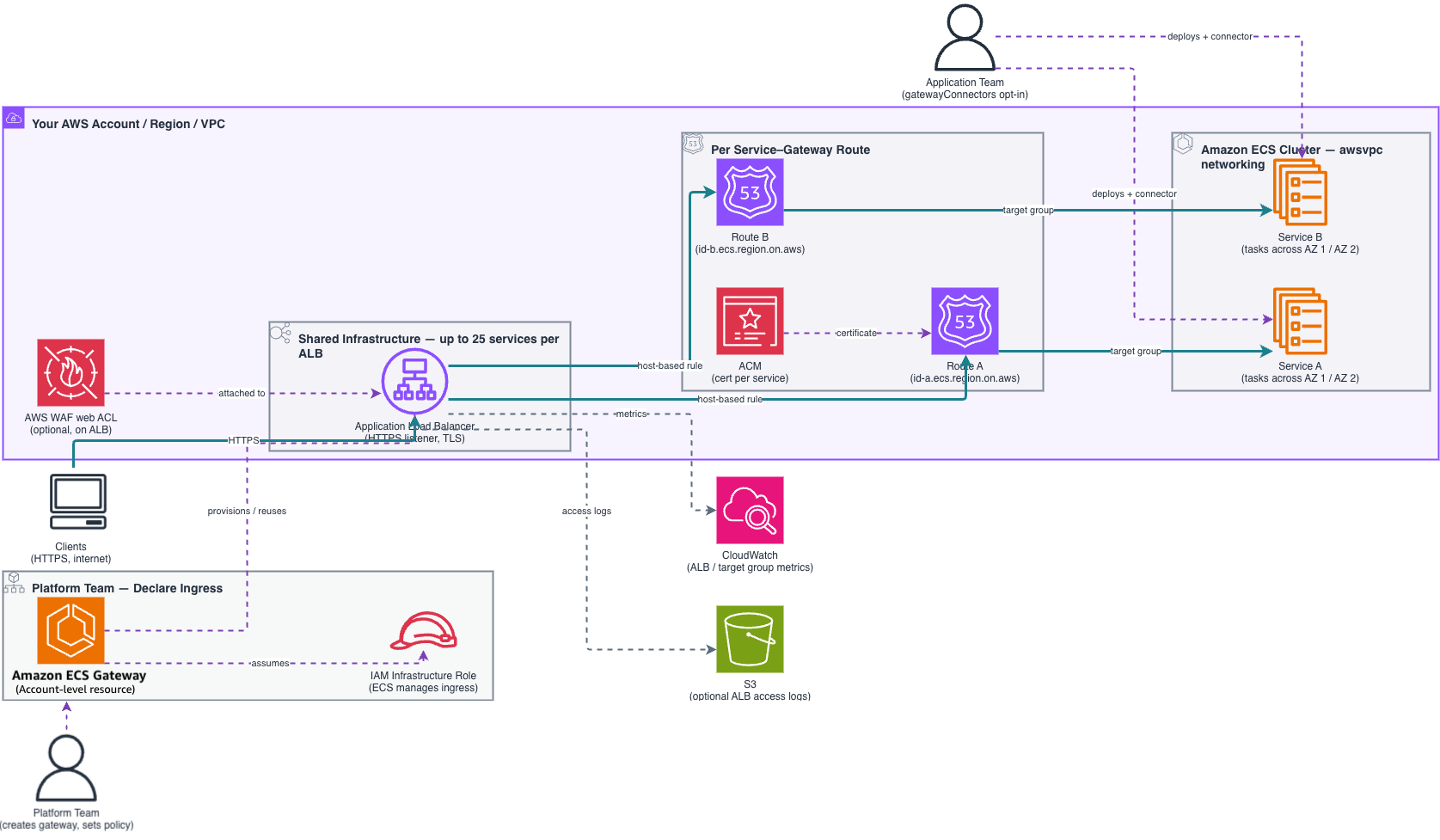
ECS Gateway functions as an account-level resource that acts as an intelligent controller for ingress traffic. It introduces a clear separation of responsibilities: platform teams manage the gateway configuration, while application teams simply define their service connection requirements.
One of the most significant technical advancements in this release is the ability to share a single Application Load Balancer across up to 25 different services. By utilizing host-based routing, ECS Gateway allows teams to consolidate their infrastructure, significantly reducing the overhead of managing dozens of distinct ALBs. The service manages the full lifecycle of these assets—provisioning them when demand peaks and decommissioning them when services are scaled down or deleted.

Technical Implementation and Operational Control
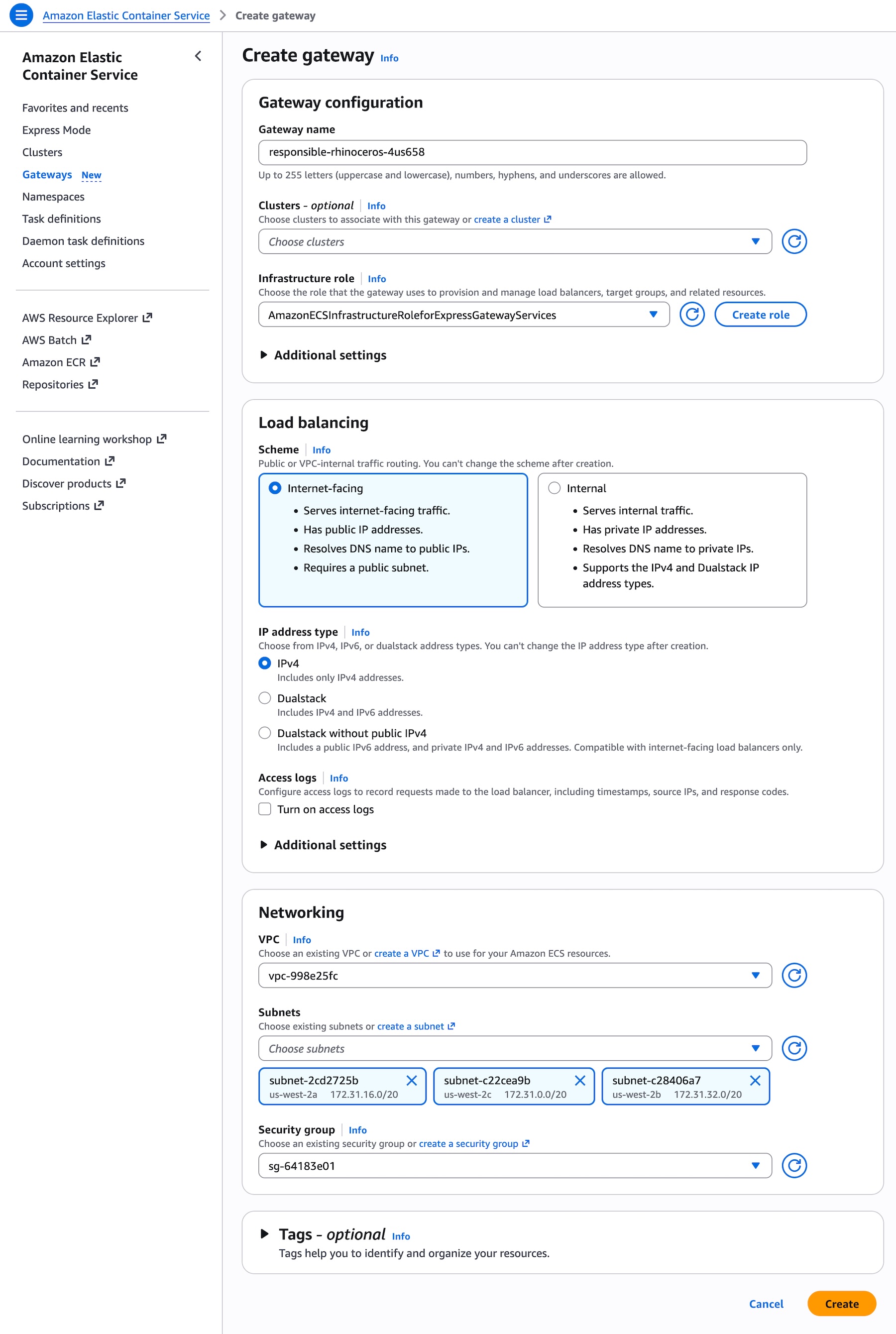
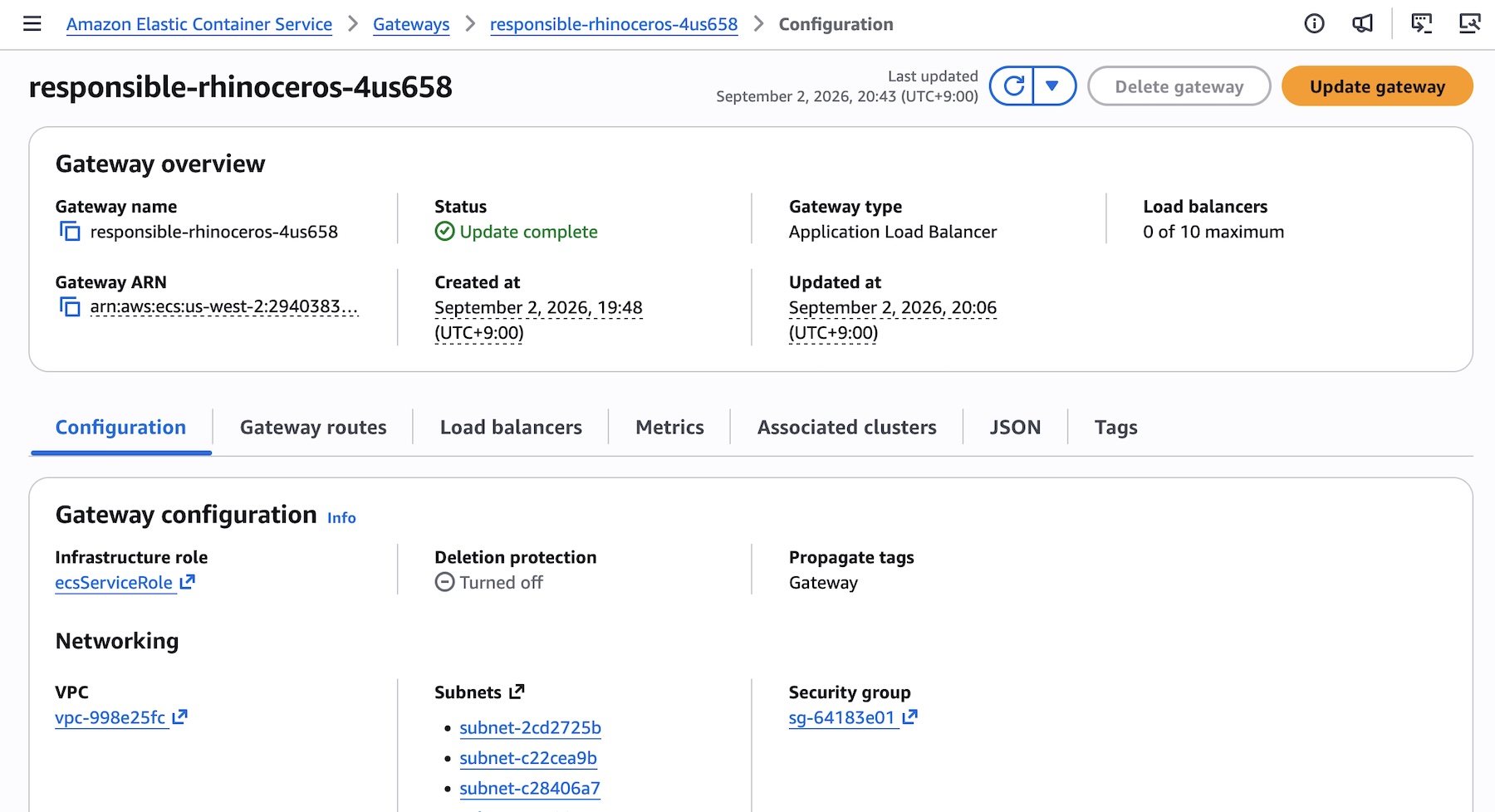
For platform engineers, the implementation process is designed to be seamless. Upon creating a gateway, a platform team defines an infrastructure role. This IAM role grants the ECS service the necessary permissions to provision and manage network resources—such as load balancers, security groups, and certificates—directly within the customer’s account.
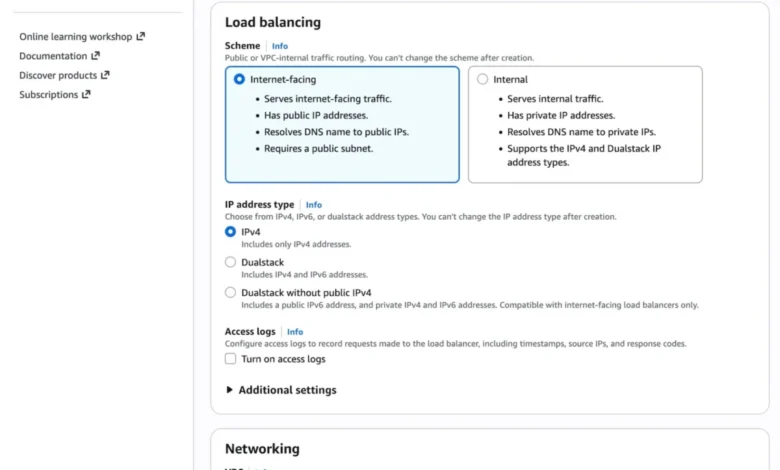
The creation process is flexible, supporting both public and VPC-internal traffic routing. Once the gateway is established, it can be associated with up to 10,000 ECS clusters, providing an unprecedented level of scalability. A key feature of this design is the many-to-many relationship; a single cluster can support up to five different gateway associations. This allows organizations to segment traffic by sensitivity or environment—for example, assigning a "Public" gateway for external-facing web services and a "Private" gateway for internal-only backend APIs on the same cluster.
For developers, the integration is equally straightforward. When defining a service via the AWS CLI or the ECS console, a new gateway-connectors parameter is utilized. This connector acts as a request for the gateway to handle the networking, allowing the service to automatically receive a unique DNS hostname and a secured endpoint without the developer needing to interact with the ALB or WAF layers directly.
Data-Driven Efficiency and Cost Optimization
Early benchmarking suggests that the implementation of ECS Gateway can reduce service deployment times by up to 60%. By automating the creation of listener rules, target groups, and certificate associations, the potential for human error is drastically minimized.
From a cost perspective, the consolidation of services onto shared ALBs provides a more efficient utilization of AWS resources. By reducing the number of idle or underutilized load balancers, enterprises can see a marked improvement in their cloud spend efficiency. Furthermore, the automated cleanup process ensures that once a service is terminated, the associated networking components are de-provisioned, preventing the "orphan resource" syndrome that often plagues long-running AWS accounts.
Analysis of Implications for DevOps
The release of ECS Gateway signals a broader shift in the "Platform Engineering" paradigm. By providing native, managed ingress, AWS is effectively narrowing the gap between managed Kubernetes services (like Amazon EKS) and ECS. While EKS has long relied on Ingress Controllers (like NGINX or ALB Ingress Controller), ECS users have historically lacked a native, equivalent mechanism.
This move is likely to solidify ECS as the preferred choice for organizations that prioritize operational simplicity and speed over the granular, often overwhelming, configuration options of Kubernetes. By abstracting the networking layer, AWS is enabling smaller teams to operate at the same scale as large, dedicated SRE (Site Reliability Engineering) departments.
Security and Compliance Benefits
Security is baked into the architecture of ECS Gateway. Because the infrastructure is managed by the ECS service itself, it adheres to established best practices, such as the principle of least privilege, for security group rules. When a service connects to the gateway, ECS automatically configures the security groups to allow traffic only from the ALB to the service’s tasks, closing potential gaps that occur during manual configuration.
Furthermore, the integration with AWS WAF ensures that every service routed through the gateway can have web ACLs applied at the edge, providing a consistent security posture across an entire fleet of containers. This centralized management makes it significantly easier for compliance teams to audit ingress traffic and verify that all services are properly protected by WAF and encrypted with ACM certificates.
Future-Proofing and Compatibility
AWS has ensured that the adoption of ECS Gateway is non-disruptive. Organizations with existing services that utilize traditional load balancers can adopt the gateway incrementally. By using the UpdateService API to add a gateway connector, teams can run both networking paths in parallel. This allows for rigorous testing and validation of the gateway-managed traffic before the legacy ALB configuration is retired.
For those leveraging AI-assisted development tools, AWS has also integrated support for ECS Gateway into the AWS MCP (Model Context Protocol) Server. This allows developers to use natural language prompts in their IDEs to provision gateways and associate services, further lowering the barrier to entry for complex network configurations.
Conclusion and Availability
Amazon ECS Gateway is available effective immediately across all commercial AWS Regions where ECS is supported. There is no additional premium for the gateway service itself; users continue to pay only for the underlying resources—ALBs, certificates, and data transfer—that are provisioned in their accounts.
As cloud architectures continue to grow in complexity, the ability to manage infrastructure as a service-level abstraction rather than a collection of disparate components is becoming a competitive necessity. With this release, AWS has provided a robust, scalable, and secure framework that allows engineering teams to focus on building applications rather than wrestling with the complexities of ingress networking. Organizations are encouraged to review the updated Amazon ECS documentation and begin the migration of their ingress workflows to the new gateway model to capitalize on these operational efficiencies.