Walmart and Symbotic Deepen Partnership with a Massive $6 Billion Supply Chain and Robotics Expansion

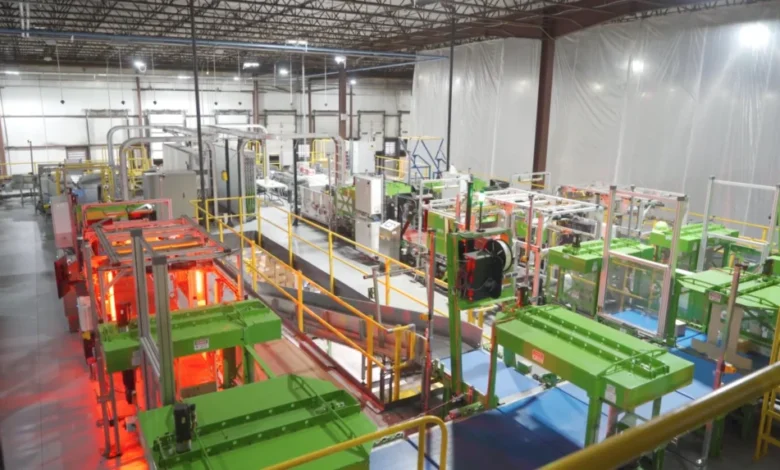
Walmart Inc. and warehouse automation specialist Symbotic Inc. have officially announced a monumental $6 billion expansion of their commercial agreement, marking a profound escalation in retail logistics automation. Unveiled on October 29, the strategic investment arrives on the heels of Symbotic’s acquisition of Walmart’s proprietary robotics business. This multi-billion-dollar commitment will see Symbotic’s cutting-edge automation technology deployed across 25 of Walmart’s regional distribution centers throughout the United States.
The expanded collaboration is designed to fundamentally upgrade Walmart’s global supply chain infrastructure. By integrating Symbotic’s advanced software and hardware platforms, the retail titan aims to enhance upstream e-commerce inventory management, significantly expand internal storage capacities, and streamline the overall flow of merchandise. As consumer expectations for rapid delivery times continue to surge across North America, retail giants are under intense pressure to re-engineer their fulfillment networks. Walmart—ranked No. 2 in Digital Commerce 360’s Top 1000 Database of largest online retailers and No. 37 in the AI Commerce Rankings—is leveraging this technological overhaul to maintain its competitive edge in an increasingly automated retail landscape.
A Decade-Long Evolution: The Chronology of a Transformative Partnership
The roots of the Walmart-Symbotic relationship stretch back more than a decade, evolving from a modest initial trial of a single product into a comprehensive, end-to-end supply chain alliance. Over the years, the partnership has progressively scaled, embedding Symbotic’s sophisticated warehouse automation systems deeper into Walmart’s operational core, including fulfillment centers such as the strategic facility in Stockton, California.
The milestone agreement announced in late October represents the culmination of years of iterative testing and operational success. The timeline of this collaboration highlights a deliberate, phased approach to scaling automation:
- Early Phase (Over a Decade Ago): Walmart initiates its working relationship with Symbotic by testing a single product within its supply chain network, establishing a foundational baseline of operational trust.
- Scaling Up: Over subsequent years, Walmart expands the use of Symbotic’s robotics across multiple regional facilities, validating the technology’s capability to handle complex inventory and high-volume throughput.
- January 2025: Symbotic officially acquires Walmart’s internal robotics business, a strategic maneuver solidifying the technological alignment between the two corporations.
- October 29, 2025: Both companies announce a massive $6 billion commercial expansion, introducing Symbotic technology to 25 additional U.S. regional distribution centers, alongside a $125 million R&D funding commitment detailed in Securities and Exchange Commission filings.
The Technological Architecture Driving Walmart’s Fulfillment
At the heart of this multi-billion-dollar expansion is Symbotic’s suite of proprietary hardware and software solutions, engineered to resolve some of the most persistent bottlenecks in modern warehousing. Among the core technologies being deployed are BreakPack systems, which specialize in handling small orders and mixed-inventory pallets with high precision, and SymMicro, a solution tailored for micro-fulfillment operations tied directly to e-commerce orders.
Furthermore, Symbotic’s proprietary artificial intelligence and machine learning software orchestrate the entire ecosystem. The platform coordinates autonomous mobile robots (AMRs) and high-speed robotic arms to store, retrieve, and sequence products with minimal human intervention. This optimization drastically reduces the physical strain on warehouse workers, minimizes picking errors, and drastically accelerates throughput times from the loading dock to the outbound shipping lane.
In tandem with the commercial rollout, an SEC filing submitted on October 29 revealed a targeted research and development agreement. Walmart has committed $125 million specifically to fund a joint development program focused on next-generation racking technology, advanced picking mechanisms, innovative process flows, and enhanced inventory management capabilities. This forward-looking investment ensures that the infrastructure being deployed today can adapt to the shifting demands of tomorrow’s retail ecosystem.
Leadership Perspectives on the Strategic Alliance
Executives from both organizations have emphasized that the expanded agreement is rooted in a shared vision of efficiency, scalability, and technological innovation.
"At Walmart, we’re focused on bringing more items to more customers and members, faster than ever," said Rob Montgomery, executive vice president for Walmart U.S. supply chain operations. "Our investments in the physical and digital supply chain help us serve them however they choose to shop, whether in stores, at the curbside or at home."
Montgomery further noted that the long-standing collaboration has yielded tangible operational dividends, noting that the expanded framework will directly optimize e-commerce fulfillment. "Our work with Symbotic over the years, including this expanded agreement, helps us improve service, grow capacity, simplify work for our associates and lower costs," he added.
From the technology provider’s perspective, the agreement underscores Symbotic’s transition from a niche robotics vendor to an indispensable enterprise partner.
"Our partnership with Walmart started with a single product over a decade ago, and now we offer a full end-to-end solution to help power Walmart’s growth across its supply chain for years to come," said Rick Cohen, chairman and CEO of Symbotic. "This expanded agreement reflects the strength of that collaboration—a partnership defined by trust and shared ambition."
Broader Market Implications and Industry Impact
The $6 billion commitment between Walmart and Symbotic carries significant implications for the broader logistics, retail, and supply chain technology sectors. As consumer demand for rapid, omnichannel fulfillment accelerates, traditional warehousing models are increasingly viewed as obsolete. Companies that fail to modernize their distribution networks risk facing prohibitive labor costs, inventory inaccuracies, and lagging delivery timelines.
By integrating advanced robotics and artificial intelligence deep into its regional distribution network, Walmart is setting a new benchmark for supply chain efficiency. The initiative not only addresses persistent labor shortages within the warehousing sector but also enhances the retailer’s capacity to manage peak seasonal surges, flash sales, and complex e-commerce order fulfillment.
Moreover, the heavy financial backing of research and development initiatives—such as the $125 million allocated for next-generation racking and picking technology—demonstrates that industry leaders are looking beyond immediate operational fixes. They are actively shaping the future of autonomous logistics. As these 25 regional distribution centers come online with Symbotic’s full suite of capabilities, the resulting cost reductions and operational efficiencies will likely compel competing retailers to expedite their own automation investments, permanently altering the competitive landscape of North American retail commerce.