AWS Weekly Roundup: Generative AI in Agriculture and the New Era of Security Automation

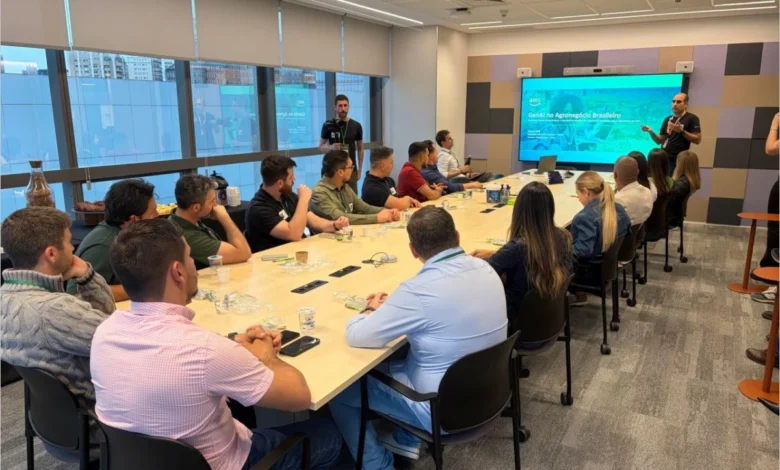
The integration of generative artificial intelligence into traditional industries like Brazilian agribusiness represents a critical shift in how digital infrastructure is delivered to remote, high-stakes operational environments. During a recent leadership session at the Amazon Web Services (AWS) office in São Paulo, the discourse centered not on the theoretical viability of AI, but on the pragmatic delivery of information to stakeholders who operate in the field. For professionals managing vast agricultural operations, the primary interface is often voice-driven, necessitated by the reality of constant mobility. Responding to this demand for seamless, multi-lingual human-machine interaction, AWS has expanded the capabilities of its Amazon Polly generative engine, introducing 14 new voices, including two specialized in Brazilian Portuguese. This development underscores a broader industry trend where the "last mile" of AI deployment is defined by accessibility and context-aware communication rather than raw computational power alone.
The Shrinking Window of Vulnerability: A Security Paradigm Shift
While the potential for AI in traditional sectors captures the imagination, the past week in cloud security has been dominated by a sobering reality: the acceleration of cyber-threat exploitation. AWS has officially moved its Continuum service for code vulnerabilities into general availability, marking a fundamental change in how enterprises approach security remediation.
Traditionally, vulnerability management has been a reactive, labor-intensive process: scanners identify risks, provide a list of vulnerabilities, and security teams manually prioritize them. AWS Continuum redefines this by constructing a comprehensive context graph that links code repositories directly to the AWS environment. By reproducing exploitable findings within an isolated sandbox and providing proof-of-concept code, the system replaces abstract severity labels with empirical evidence. The service ranks issues based on their proximity to business-critical systems and generates actionable pull requests, requiring human verification before deployment—a balance of automation and oversight that maintains security integrity while increasing operational velocity.
The urgency behind this release is supported by recent telemetry data. On October 17, Amazon Threat Intelligence identified an active exploitation attempt involving PHP2Shell via MadPot sensors—a full four days before the official public disclosure of the underlying vulnerabilities (CVE-2026-109618 and CVE-2026-109619). By the time the embargo lifted on October 21 at 14:00 UTC, proof-of-concept exploits were already circulating, with active exploitation detected as early as 02:00 UTC. This timeline demonstrates that the industry standard of patch management—often measured in days—is no longer sufficient. Organizations that wait for official disclosure dates to begin investigations are effectively operating in a window that has already been compromised. AWS has concurrently provided mitigation strategies via its Web Application Firewall (WAF) to address these specific CVEs, emphasizing that modern security must prioritize the earliest known point of exploitation.

Architectural Efficiency: The Rise of Amazon ECS Gateway
In an effort to streamline service exposure, AWS has introduced the Amazon ECS Gateway. This architecture decouples the management of network infrastructure from application development, allowing platform teams to define centralized gateways that handle complex requirements such as TLS termination, security groups, and WAF web ACLs. Application developers simply opt in by connecting their services to the gateway.
From an economic perspective, this architecture optimizes resource consumption significantly. A single Application Load Balancer (ALB) can support up to 25 services, with the gateway capable of associating with as many as 10,000 clusters. By automating the provisioning and decommissioning of load balancers based on real-time demand, organizations can reduce the overhead associated with managing network entry points. This transition can be implemented incrementally, allowing teams to migrate existing services without interrupting traffic or necessitating a full infrastructure overhaul.
Advancements in Machine Learning and Model Customization
The landscape of machine learning continues to evolve with a focus on both performance and ease of use. The recent upgrade to Amazon Polly’s generative engine, which now features 57 voices across 11 languages, demonstrates the maturation of synthetic speech. By adding Hindi and Finnish to the roster, and refining the naturalness of existing voices like the Brazilian Portuguese "Leo" and "Carolina," AWS is lowering the barrier for global enterprise communication.
Simultaneously, the introduction of "TorchNeuron" in public beta signals a major shift in hardware flexibility. As an open-source PyTorch backend, TorchNeuron allows developers to transition models to AWS Trainium instances by changing a single line of configuration (.to('neuron')) rather than rewriting code. This integration supports eager execution and torch.compile, ensuring that high-performance hardware does not result in vendor lock-in. This move is supported by the release of AWS Neuron 2.33, which provides the necessary drivers and compilers to maximize the throughput of Trainium2 and Trainium3 instances.
Furthermore, Amazon SageMaker AI has introduced new training session APIs that abstract away the complexity of GPU management. Developers can now focus on the post-training loop—customizing loss functions and reward signals—while the service handles the underlying infrastructure, including distributed execution and fault recovery. This model is particularly attractive for teams looking to fine-tune large language models (LLMs) without the capital expenditure or technical burden of managing high-end GPU clusters.

Enhancing Reliability with Structured Outputs
A significant technical hurdle in LLM deployment has been the unreliable nature of free-form text generation when machine-readable output is required. To address this, AWS has enabled structured outputs for Anthropic’s Claude models on Amazon Bedrock. By enforcing schema-compliant JSON, the platform eliminates the need for custom parsing, complex retry logic, or fragile post-processing steps. This functionality is expected to have a high impact on high-reliability industries such as finance and healthcare, where automated tasks—such as extracting specific data fields from financial statements or parsing clinical documentation—require deterministic results.
Operational Migrations and Data Resilience
Data migration remains a cornerstone of cloud adoption, and recent updates to Amazon ElastiCache Serverless for Valkey highlight a focus on zero-downtime transitions. By enabling online migration from self-managed Valkey or Redis OSS on Amazon EC2 to the managed serverless environment, AWS is removing the friction often associated with upgrading legacy data stores. The ability to execute a cutover without dropping connections or returning errors to the client provides a significant boost to operational stability.
The practical application of these migration tools is evidenced by the recent work of U.S. Bank, which successfully migrated 119 TB of data from Oracle Exadata to Amazon RDS for Oracle. The project utilized a pipeline involving Oracle XTTS, AWS DataSync, and Amazon EFS, achieving a baseline copy in roughly seven days with cutovers averaging four hours per database. This case study serves as a benchmark for large-scale enterprise migrations, proving that bandwidth-capped connections can still facilitate complex data transfers without data loss.
Looking Ahead: Community and Knowledge Sharing
As the cloud ecosystem prepares for the upcoming AWS re:Invent conference, scheduled for November 30 to December 4 in Las Vegas, the focus remains on equipping architects and developers with the tools for the next generation of cloud computing. With over 2,200 sessions planned, the event will likely serve as the venue for further announcements regarding the intersection of generative AI and traditional infrastructure.
Additionally, the AWS Community Day Brasil Norte in Belém, taking place on October 31, underscores the company’s commitment to regional growth and knowledge sharing. As the industry continues to move toward more autonomous, secure, and performant architectures, the convergence of security intelligence, hardware flexibility, and simplified management remains the defining narrative of the current cloud cycle. The transition from manual, reactive processes to automated, evidence-based systems is not merely a technical upgrade—it is a necessary adaptation to an environment where the window of vulnerability is increasingly measured in hours, and the demand for seamless human-machine interaction is the primary driver of digital transformation.