Surrey Researchers Propose Superfluid Helium Qubit Design to Tackle Quantum Computing’s Biggest Error Challenge

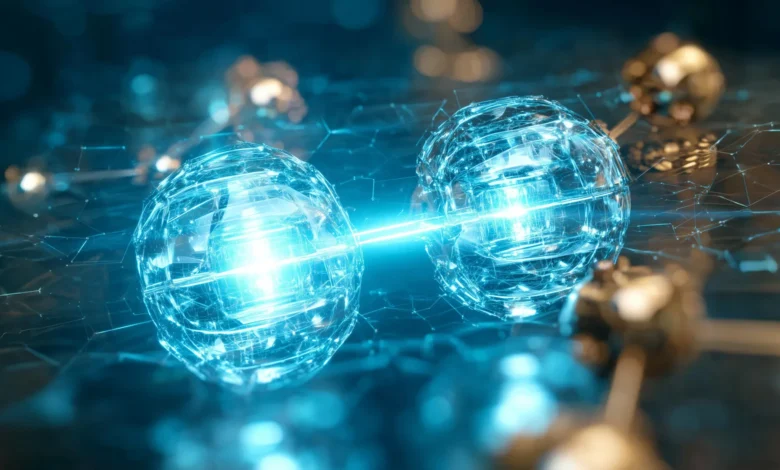
The global race to build scalable, fault-tolerant quantum computers has encountered a persistent bottleneck: environmental noise. As systems scale from dozens of physical qubits to the thousands or millions required for industrial-grade applications, maintaining coherence and keeping error rates sufficiently low remains one of the most formidable hurdles in modern physics. Now, a team of researchers at the University of Surrey has introduced a radical blueprint that could redefine how quantum processors handle environmental interference. By harnessing the peculiar, frictionless properties of superfluid helium-3, the Surrey researchers have designed a novel architecture—the Superfluid Helium Oscillator Quantum (SHOQ) device—that promises theoretical error rates up to 100 times lower than today’s leading hardware standards.
Published in the journal npj Quantum Information, the study details a collaborative effort between the University of Surrey’s Quantum Sciences Group and Professor Jens Koch of Northwestern University, a co-inventor of the transmon qubit, which serves as a foundational building block for many current superconducting quantum computers. While the physics community has long recognized the unusual quantum mechanics of liquid helium, this latest research represents the first time scientists have successfully synthesized these principles into a concrete, microfluidic architecture capable of functioning as a viable quantum bit.
The Achilles’ Heel of Modern Quantum Computing: Noise and Decoherence
To understand the significance of the Surrey proposal, one must examine the vulnerabilities inherent in contemporary quantum architectures. Traditional digital computers process information using bits that represent either a zero or a one. Quantum computers, by contrast, utilize qubits, which can exist in a superposition of both states simultaneously. This fundamental difference allows quantum machines to evaluate complex computational spaces concurrently, offering exponential speedups for specialized problems in cryptography, molecular modeling, and materials science.
However, qubits are notoriously fragile. Their superpositional states rely on delicate quantum mechanical phenomena that are easily disrupted by external stimuli. Leading quantum hardware platforms, developed by industry giants such as IBM, Google, and numerous academic institutions, predominantly rely on superconducting circuits. While these circuits can be fabricated using established semiconductor manufacturing techniques, they possess a critical weakness: their reliance on electrical charge and magnetic flux makes them intensely sensitive to electromagnetic interference.
Stray electric fields, microscopic fluctuations in substrate materials, thermal noise, and ambient electromagnetic radiation can all induce decoherence—the premature collapse of a qubit’s quantum state. This environmental chatter acts much like the static electricity that causes synthetic clothing to cling or hair to stand on end. To combat these errors, engineers must implement massive overheads in quantum error correction (QEC), dedicating dozens or even hundreds of physical qubits to protect a single logical qubit. Consequently, scaling up processor sizes while managing error budgets has become the central engineering bottleneck of the quantum era.
Enter the SHOQ Device: Charge-Neutral Quantum Mechanics
The breakthrough proposed by the University of Surrey centers on a shift away from charged electronic circuits toward a charge-neutral medium: superfluid helium-3. Helium-3 is a rare isotope of helium characterized by an odd number of nucleons, causing it to behave as a fermion. When cooled to temperatures near absolute zero, these atoms pair up and undergo a phase transition into a superfluid—a liquid that exhibits zero viscosity and can flow without energy dissipation.
Crucially, because superfluid helium carries no net electric charge, it is fundamentally immune to the stray electrical fields and electromagnetic noise that plague superconducting circuits. By designing a microfluidic cavity that confines this fluid, the Surrey research team engineered a quantum oscillator where mechanical and hydrodynamic states can be manipulated to encode quantum information.
According to theoretical models and extensive mathematical simulations conducted by the team, the SHOQ device could achieve error rates approximately two orders of magnitude lower than conventional superconducting qubits. This dramatic reduction stems directly from the decoupling of the qubit’s quantum state from external electromagnetic fluctuations. By removing the primary channel through which environmental noise corrupts data, the architecture circumvents one of the most debilitating limitations of current hardware paradigms.
Chronology and Collaboration: Bridging Cryogenics and Circuit Design
The conceptualization of the SHOQ device did not occur in a vacuum; it represents the culmination of years of foundational research in low-temperature physics, fluid dynamics, and quantum information science.
The historical timeline of low-temperature quantum research traces back through decades of investigations into liquid helium, long prized by physicists for its superfluid and superfluidity-related phenomena. However, applying these macroscopic quantum states to the microscopic domain of quantum computing remained an elusive theoretical challenge.
The turning point for the Surrey team arrived through interdisciplinary synthesis. Dr. Priya Sharma, a Daphne Jackson Fellow in Hybrid Quantum Systems at the University of Surrey’s School of Mathematics and Physics and the lead author of the study, recognized that recent advancements in microfluidic fabrication could allow precise control over superfluid helium on microscopic scales.
Collaborating with Dr. Eran Ginossar, Associate Professor in the Department of Physics and Advanced Technology Institute at Surrey, and Professor Jens Koch of Northwestern University, the team spent months formulating the exact mathematical parameters required to translate superfluid dynamics into quantum computational operations. Professor Koch’s deep expertise in superconducting circuits proved vital in ensuring that the proposed helium-based device could theoretically interface with existing quantum architectures rather than requiring an entirely isolated ecosystem.
Hybrid Integration: A Complementary Role in Future Quantum Systems
Rather than advocating for an immediate, wholesale replacement of established hardware platforms, the Surrey researchers envision a collaborative future where superfluid qubits work in tandem with superconducting circuits. The semiconductor and computing industries have long relied on heterogeneous integration—using different components optimized for specific tasks, such as central processing units (CPUs) paired with graphics processing units (GPUs). A similar paradigm could govern the evolution of quantum computers.
In this envisioned hybrid framework, different qubit technologies would be deployed according to their operational strengths. Superconducting qubits, known for their rapid gate speeds and compatibility with microwave control signals, could continue to handle high-speed logical processing and active calculation tasks. Meanwhile, the SHOQ device could be integrated into the broader system to fulfill a secondary, highly specialized role: quantum memory.
Because superfluid qubits exhibit exceptionally low predicted error rates and high isolation from electromagnetic noise, they are uniquely suited for storing fragile quantum information over extended durations without suffering rapid decoherence. In such a configuration, the superfluid memory module would securely hold state data while other sections of the quantum processor execute rapid algorithmic operations, thereby mitigating cumulative errors across the entire architecture.
Dr. Ginossar emphasized the pragmatic philosophy driving this approach: "We don’t necessarily need one type of qubit to do everything. Combining different quantum technologies could allow us to take advantage of the strengths of each. Superfluid helium gives us a fundamentally different type of quantum hardware to explore. If the predicted performance can be demonstrated experimentally, it could eventually work alongside existing superconducting technologies as part of a larger quantum system."
Economic and Strategic Implications for the Quantum Industry
The implications of the Surrey proposal extend far beyond academic theory, touching upon commercial viability, supply chain economics, and the global geopolitical race for quantum supremacy.
Currently, building fault-tolerant quantum computers requires massive capital investments, driven largely by the sheer scale of the dilution refrigerators and error-correction hardware needed to stabilize noisy qubits. If error rates can be reduced by a factor of 100 at the physical hardware level, the computational overhead required for error correction drops precipitously. This reduction could significantly lower the physical footprint, energy consumption, and financial cost of scaling quantum processors to commercial utility.
Furthermore, the materials science requirements of working with helium-3 introduce distinct strategic considerations. While helium-3 is rare on Earth—often recovered as a byproduct of tritium decay from nuclear weapons programs or imported via specialized gas suppliers—the quantities required for microfluidic quantum devices are exceedingly small, rendering supply constraints manageable compared to macroeconomic mineral dependencies.
Next Steps: From Mathematical Models to Physical Prototypes
With the theoretical groundwork established and published, the University of Surrey team is transitioning from theoretical physics to experimental engineering. The immediate objective is the design and fabrication of a physical prototype to test whether the mathematical predictions of the SHOQ device hold true in a laboratory environment.
This next phase of research is bolstered by financial and institutional support, including an IAA Commercialisation Fellowship awarded to Dr. Priya Sharma, which aims to accelerate the transition of university research into practical technology development.
Building and operating the prototype will present formidable engineering hurdles. The device must operate within extreme cryogenic environments, reaching temperatures near absolute zero to maintain the superfluid state of helium-3. However, the research team notes that these ultra-low temperature conditions are already routinely achieved in various low-temperature physics laboratories worldwide, including previous experimental setups involving superfluid helium managed by academic and national institutions.
If the experimental phase successfully validates the predicted performance metrics, the SHOQ device could transition from a theoretical proposal into a cornerstone technology for the next generation of fault-tolerant quantum computers. As the quantum computing industry searches for pathways past the noise barrier, the quiet, frictionless flow of superfluid helium may ultimately provide the stability the field has long awaited.
Related posts: