The Evolution of Agentic AI Architecture and the Rise of Specialized Swarms by Mid-2026

The landscape of artificial intelligence has undergone a fundamental transformation by mid-2026, moving away from the monolithic, brute-force orchestration that characterized the early generative AI era. Only a year ago, the dominant paradigm for building AI agents relied on complex, hand-crafted "Reasoning and Acting" (ReAct) loops. Engineers spent significant resources fighting brittle prompt chains, attempting to force single, massive language models to simultaneously manage planning, tool execution, and long-term context. Today, that approach has been largely superseded by a more modular, efficient, and resilient architecture: the agentic swarm.
In this new era, the role of the AI engineer has pivoted from prompt engineering to infrastructure design. As foundation models have integrated "System 2" thinking—the ability to deliberate, self-correct, and reason through hidden tokens before generating output—the external scaffolding once required to simulate intelligence has become redundant. Instead of building the "brain" of the agent, developers are now focused on building the "nervous system" and the "environment" in which specialized agents communicate and operate.
The Decline of External Orchestration Loops
The primary shift defining 2026 is the transition away from external orchestration frameworks. In the previous development cycle (2023–2024), patterns like "Plan-and-Execute" and "Reflexion" were necessary to overcome the inherent limitations of autoregressive models. These patterns utilized external code to force a model to critique its own work and iterate. However, the current generation of foundation models now handles test-time compute natively.
Modern models generate hidden reasoning tokens that allow them to explore multiple solution branches and self-correct internally. This internal "cognitive loop" means that using external libraries to force step-by-step reflection often adds unnecessary latency and token overhead. Industry data suggests that by mid-2026, latency in agentic workflows has decreased by nearly 40% for teams that have transitioned to native reasoning architectures. The orchestration layer has consequently evolved to focus on high-level routing, state management, and environment execution rather than micromanaging the model’s thought process.
The Rise of Agent Swarms and Microservices
As models have become more capable of independent reasoning, the architectural focus has shifted toward specialization. Attaching dozens of tools to a single large model has proven to be a bottleneck, leading to "context fatigue" and increased error rates. In response, production teams have adopted "agentic swarms"—a collection of smaller, highly specialized agents that function as microservices.
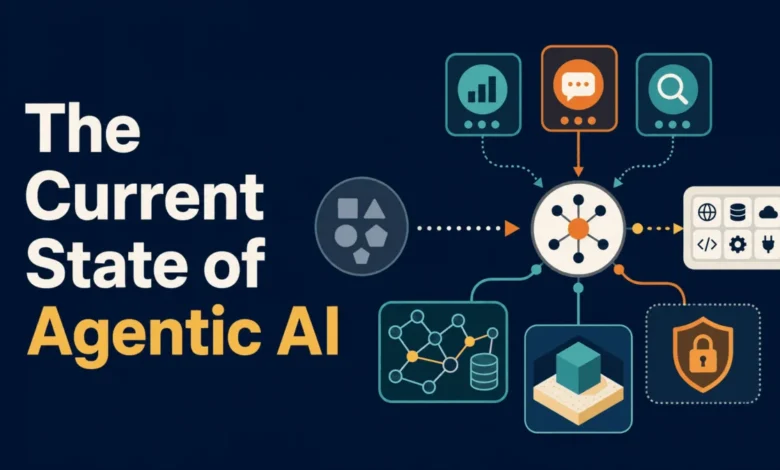
In a typical swarm architecture, a "Triage Agent" serves as the entry point, routing requests to specialist nodes. For example, a financial analysis swarm might consist of a Triage Agent, a SQL-specific Data Fetcher, a Python-based Analyst, and a Report Synthesizer. This decomposition ensures that each agent operates within a lean context window, using only the tools and instructions relevant to its specific task.
The benefits of this modularity are three-fold:
- Scalability: Individual agents can be upgraded or replaced without disrupting the entire system.
- Cost Efficiency: Simpler tasks can be routed to smaller, cheaper models (such as current-generation small language models or specialized distilled models), while larger models are reserved for complex routing and final synthesis.
- Testability: Developers can run isolated unit tests on a "Data Fetcher" agent’s ability to write SQL without needing to simulate the entire analysis pipeline.
Chronology of the Agentic Evolution
To understand the current state of mid-2026, it is necessary to look at the timeline of the preceding three years:
- Late 2023: The emergence of autonomous agent experiments like AutoGPT and BabyAGI demonstrated the potential for self-directed AI but highlighted the instability of long-chain reasoning.
- 2024: The "Framework War" occurred, with libraries like LangChain, LlamaIndex, and CrewAI attempting to provide the scaffolding for complex agentic workflows. Tool-calling became a standard feature in major LLM APIs.
- 2025: A pivotal year marked by the introduction of "Native Reasoning" models and the Model Context Protocol (MCP). These innovations began to move the "thinking" inside the model and standardized how agents connected to external data.
- Mid-2026: The maturation of swarm architectures. Enterprise adoption has moved from experimental "chatbots" to autonomous workflows that handle end-to-end business processes with minimal human intervention.
Standardization through the Model Context Protocol (MCP)
A major hurdle in the early development of agents was the lack of a universal standard for tool integration. Prior to 2025, integrating an agent with a database or a third-party API required writing custom schemas and handling varying JSON formats. This created significant technical debt and integration friction.
The adoption of the Model Context Protocol (MCP) has been described by industry analysts as the "USB-C moment" for AI. MCP acts as a universal adapter between AI models and data sources. Instead of hardcoding API keys and custom logic into an agent’s environment, agents now connect to isolated MCP servers that automatically expose available tools and resources. This separation of concerns allows for more secure and modular integrations. For instance, a GitHub MCP server or a PostgreSQL MCP server can be plugged into any swarm without the need for bespoke wrapper code.
Memory Graphs and Context Engineering
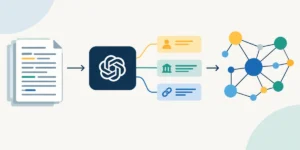
While individual agents in a swarm are often stateless per call to maintain efficiency, the system as a whole requires a "long-term memory" to be effective. The industry has moved away from simple vector database retrieval-augmented generation (RAG) toward sophisticated memory graphs.
Using graph databases like Neo4j, modern agentic systems maintain a persistent record of facts, preferences, and past execution histories. When a swarm completes a task, a specialized "Memory Agent" operates asynchronously to extract relevant information and update the graph. This allows the system to "learn" from its successes and failures over time.
"We are moving from an era of prompt engineering to an era of context engineering," says one lead architect at a major Silicon Valley AI lab. "The goal is no longer to write the perfect instruction, but to provide the agent with the most relevant, high-fidelity slice of the system’s total knowledge at the exact moment it needs it."
Security Implications and the Threat of AIjacking
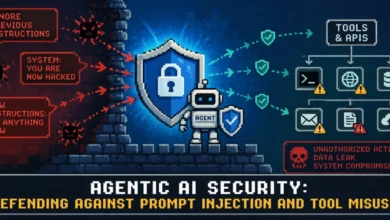
The transition to multi-agent swarms and universal protocols has significantly expanded the attack surface for enterprise AI. The primary concern in mid-2026 is "AIjacking" or indirect prompt injection. In a swarm architecture, this threat is particularly potent because it allows for lateral movement.
If a "Reader Agent" encounters a malicious instruction hidden in an external email, it could potentially pass that instruction to a "Database Agent" with higher privileges. To combat this, security frameworks are now focusing on three defensive pillars:
- Sandboxed Execution: Tools are executed in isolated, ephemeral environments (like WebAssembly or secure containers) to prevent system-level breaches.
- Handoff Verification: Every time an agent transfers control to another node, the system performs a security check to ensure the context hasn’t been corrupted by adversarial instructions.
- Human-in-the-Loop (HITL) Triggers: For high-stakes actions—such as processing a wire transfer or deleting a database—the architecture requires explicit human approval, regardless of the agent’s confidence level.
Impact and Future Outlook
The shift to specialized swarms is fundamentally changing the economics of AI implementation. Organizations are finding that they can achieve higher performance with a cluster of smaller models than they could with a single, massive "frontier" model. This has led to a surge in demand for "Agentic Architects"—professionals who specialize in designing the topology and communication protocols of these multi-agent systems.
Furthermore, the standardization provided by MCP and similar protocols has lowered the barrier to entry for small and medium-sized enterprises. They no longer need a massive team of machine learning engineers to build custom integrations; they can simply "plug and play" with standardized agent modules.
As we look toward the latter half of 2026, the focus is expected to shift toward "Cross-Organization Swarms," where agents from different companies can securely collaborate and negotiate through standardized protocols. While challenges regarding data privacy and cross-border regulation remain, the architectural foundation—modular, reasoning-native, and standardized—is now firmly in place. The era of the monolithic AI is over; the era of the swarm has begun.
Related posts: