Telkom Indonesia Accelerates Digital Sovereignty Through NeutraDC Hyperscale Expansion to Meet Surging Artificial Intelligence Demand

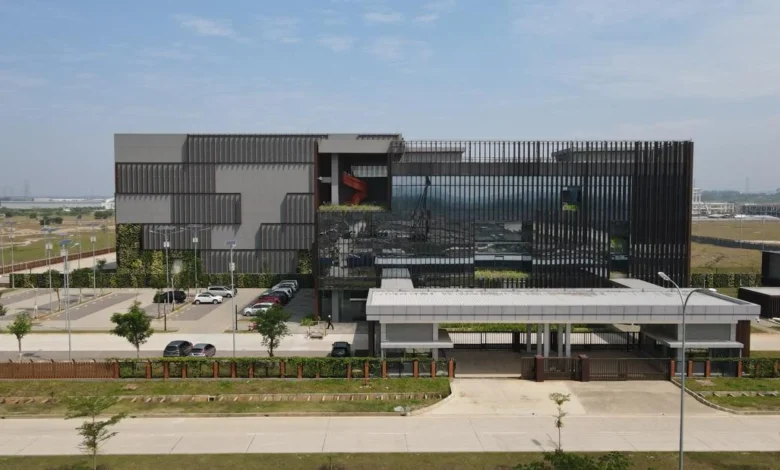
The telecommunications landscape in Southeast Asia is undergoing a seismic shift, characterized by an unprecedented appetite for high-density computing power. PT Telkom Indonesia (Persero) Tbk, through its data center subsidiary NeutraDC, has officially confirmed that its Hyperscale Data Center (HDC) in Cikarang, West Java, has reached full capacity as of the fourth quarter of 2026. This milestone marks a critical juncture for Indonesia’s digital infrastructure, as the facility—boasting an IT load of 21.5 megawatts (MW)—now hosts a full suite of client operations. With the Cikarang site fully subscribed, Telkom has unveiled an aggressive roadmap to scale its data center footprint to 400 MW, with a long-term strategic ambition of reaching 1 gigawatt (GW) across Indonesia and key Southeast Asian markets.
The Catalyst: The AI Infrastructure Revolution
The rapid transition to full occupancy at the NeutraDC Cikarang facility is not merely a testament to Telkom’s market reach but a direct reflection of the global and local pivot toward Artificial Intelligence (AI) and Machine Learning (ML) workloads. Traditional enterprise data centers, designed primarily for storage and standard cloud services, are increasingly ill-equipped to handle the intensive thermal and electrical demands of modern AI training clusters.
AI-driven applications require high-density racks that can support Graphics Processing Units (GPUs) and specialized AI chips, which generate significantly more heat and require higher power density per square foot. According to industry analysts, the demand for "AI-ready" infrastructure is expected to grow at a compound annual growth rate (CAGR) of over 20% in the Asia-Pacific region through 2030. Telkom’s strategic focus on the Cikarang facility has allowed them to capture early-mover advantage, providing the necessary compute density that hyperscalers and enterprise clients require to integrate generative AI into their service offerings.
Chronology of NeutraDC’s Strategic Ascent
The evolution of NeutraDC into a regional powerhouse follows a calculated timeline of investment and infrastructure development.
- The Foundation Phase (2020-2022): Telkom began consolidating its data center assets under the NeutraDC brand, aiming to streamline operations and provide carrier-neutral services that could attract global cloud service providers (CSPs).
- The Cikarang Inauguration (2023-2024): The JKT-1 facility in Cikarang was launched as the flagship hyperscale project, designed to meet Tier III and Tier IV standards. Its construction focused on modularity and high-speed connectivity to major internet exchange points in Jakarta.
- The Scaling Phase (2025): Throughout 2025, NeutraDC saw a surge in demand from financial institutions, e-commerce giants, and government entities, accelerating the absorption of the facility’s 21.5 MW capacity.
- Full Capacity Achievement (Q4 2026): The facility reached its operational zenith, with all IT load allocated to clients, signaling the need for immediate site expansion and new greenfield developments.
Strategic Realignment: The Role of Danantara Indonesia
As NeutraDC looks to scale toward its 400 MW and 1 GW targets, the company has entered a new phase of strategic planning involving the state-owned investment management agency, Danantara Indonesia. This partnership is designed to navigate the complexities of large-scale infrastructure development, specifically regarding site acquisition and power provisioning.
The collaboration involves a rigorous feasibility study of various industrial estates across Indonesia. The criteria for these new sites are stringent: they must offer proximity to high-capacity power grids, robust fiber-optic backbone connectivity, and physical resilience against climate-related risks. By aligning with Danantara, NeutraDC aims to de-risk its expansion plans and ensure that its future facilities are located in zones that can support the intensive electrical requirements of 100+ MW campuses.
Leadership Perspective: Beyond Capacity
Rakhmad Tunggal Afifuddin, CEO of NeutraDC Group, emphasizes that the company’s success is not measured solely in megawatts, but in the qualitative nature of the infrastructure provided. "Terisinya seluruh kapasitas Gedung 1 Cikarang menunjukkan kebutuhan pasar terhadap infrastruktur digital yang terus berkembang," Afifuddin stated. "Bagi NeutraDC, ini bukan hanya tentang menambah kapasitas, tetapi juga memastikan infrastruktur yang kami bangun relevan dengan kebutuhan pelanggan dan perkembangan teknologi ke depan."
This philosophy underscores a shift in how data centers are marketed. Today, clients demand integrated solutions. Consequently, NeutraDC has segmented its business into three core pillars to cater to a diverse client base:
- Neutra Colocation: Providing the physical foundation, high-security space, and power infrastructure for clients to deploy their own hardware.
- Neutra Compute: A high-performance computing (HPC) service specifically designed for AI workloads, providing the underlying processing power for complex data analytics.
- Neutra Connect: Providing low-latency, high-bandwidth interconnections that link clients to global cloud ecosystems and Telkom’s extensive subsea and terrestrial cable network.
Broader Economic and Industrial Implications
The implications of NeutraDC’s expansion extend far beyond Telkom’s balance sheet. For Indonesia, the availability of hyperscale data centers is a prerequisite for achieving the "Golden Indonesia 2045" vision, which relies heavily on digital transformation.
1. Data Sovereignty and Local Processing
By housing data locally in hyperscale facilities, Indonesia reduces its reliance on data processing centers in neighboring hubs like Singapore. This ensures that sensitive data remains within national borders, complying with evolving data residency regulations and enhancing national cybersecurity.
2. Energy Efficiency and Sustainability
The expansion plans are being scrutinized through the lens of environmental, social, and governance (ESG) metrics. Large data centers are significant consumers of electricity. NeutraDC is under pressure to incorporate renewable energy sources, such as solar or geothermal power, into its energy mix. The company has stated that efficiency is a priority in its new development plans, acknowledging that modern infrastructure must be as sustainable as it is powerful.
3. The Multiplier Effect
The development of a 1 GW capacity pipeline will likely trigger significant foreign direct investment (FDI). Hyperscalers—including the likes of Google, Microsoft, and Amazon—are more likely to expand their cloud service footprints in countries that can provide reliable, high-capacity, and scalable data center infrastructure. NeutraDC acts as the primary "enabler" for these global entities to establish a firm presence in the Indonesian market.
Future Outlook: The Path to 1 GW
Looking ahead, the path to 1 GW is fraught with both opportunities and challenges. The primary bottleneck for data center expansion in Indonesia remains the availability of reliable, green energy. While the government has pledged to transition toward cleaner energy, the integration of these sources into the industrial grid requires significant time and investment.
NeutraDC’s strategy to leverage the TelkomGroup ecosystem is a significant advantage. By utilizing existing land banks and utility relationships, they can accelerate development cycles. However, the competition is intensifying. Regional players and global data center REITs are aggressively seeking land in West Java and other industrial corridors, potentially driving up costs.
In conclusion, the full operational status of the NeutraDC Cikarang facility is a milestone that marks Indonesia’s maturity as a digital hub. With a clear focus on AI-ready infrastructure and a long-term roadmap that stretches toward the 1 GW milestone, NeutraDC is positioning itself as the backbone of the Indonesian digital economy. As the company transitions from a single-facility operator to a multi-campus regional provider, its ability to balance rapid scaling with sustainable, high-performance engineering will be the defining factor in its success in the coming decade.
Related posts: