Android Developer Summit Unveils Next-Generation AI Agent Tools and Connected Apps Platform for Intelligent Ecosystem Integration

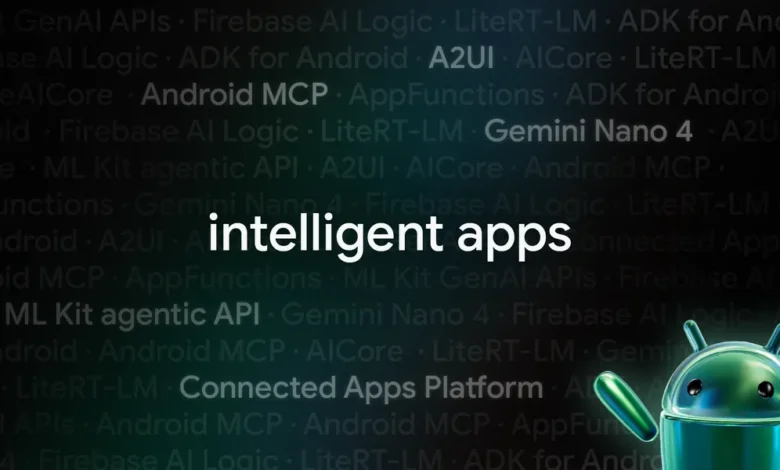
The modern computing landscape is undergoing a profound paradigm shift, moving away from traditional, manual application navigation toward high-level, goal-oriented user interactions. As artificial intelligence evolves from simple conversational chatbots into autonomous digital assistants, users increasingly expect intelligent agents—such as Google’s Gemini—to seamlessly execute complex, multi-step workflows across disparate applications on their personal devices. In response to this transformative demand, Google used its recent Android Developer Summit keynote to unveil a comprehensive suite of developer tools, system foundations, and advanced APIs designed to help software engineers build highly intelligent, agentic applications across the entire Android ecosystem, spanning smartphones, wearables, extended reality (XR) glasses, smart televisions, and connected automobiles.
This sweeping announcement introduces sophisticated mechanisms for on-device and hybrid AI execution, a standardized tool-calling framework built upon the Model Context Protocol (MCP), and a brand-new Connected Apps Platform aimed at bridging the gap between local applications and cloud-based intelligence. By providing developers with granular control over how their software interfaces with the Android intelligence system, Google is laying the groundwork for a deeply integrated, highly proactive ecosystem where applications can anticipate user intent and automate tasks securely.
Connecting with the Android Intelligence System via Modern Standards
At the core of Google’s new developer initiative is the Android intelligence system—a robust architectural foundation engineered to protect user privacy while securely connecting on-device and cloud-based AI agents with installed applications. To achieve a balance between powerful automation and strict security, Google has adopted the Model Context Protocol (MCP), an emerging open standard designed to streamline how AI models interact with local data sources and software tools.
Leveraging this standard, the company introduced Android MCP, powered by the new AppFunctions Jetpack library. This unified tool-calling framework acts as a native bridge, allowing AI agents to communicate directly with application functions on the local device. While remote MCP servers provide broad, cross-platform reach over cloud networks, Android MCP serves as the recommended native solution for scenarios requiring stringent end-to-end encryption, sensitive local device data handling, real-time sensor integration, or offline execution where no server endpoint is available.
Industry analysts note that adopting an open protocol like MCP significantly reduces the fragmentation traditionally associated with cross-app AI integrations. By standardizing how applications expose their internal capabilities to AI agents, developers can write interoperable code that functions seamlessly across diverse hardware form factors without rewriting core logic for each individual device category.
Empowering On-Device Workflows with ML Kit GenAI and Gemini Nano 4
As edge computing hardware becomes increasingly capable, developers are shifting a larger share of machine learning workloads directly onto consumer hardware to minimize latency, reduce bandwidth costs, and enhance privacy. To facilitate this architectural shift, Google is expanding its ML Kit GenAI APIs to support advanced agentic workflows powered by the latest capabilities of Gemini Nano 4, including native function calling.
The updated ML Kit framework provides developers with two primary integration pathways: direct model access via the Prompt API and the newly introduced Agentic API. The Agentic API is designed to shoulder the heavy lifting of agent orchestration by automatically executing functions, maintaining conversation history, managing multi-step loops, and enforcing built-in safety guardrails. To demonstrate these capabilities in a practical environment, Google released the Jetpacker code sample on GitHub, providing engineers with a fully functioning blueprint for building localized booking and task-management assistants.
For enterprise workloads that transcend the computational limits of mobile silicon, Google offers a hybrid processing model through Firebase AI Logic. This service allows developers to intelligently route tasks between lightweight, on-device inference using Gemini Nano and heavyweight cloud computation using advanced models like Gemini 4. To help organizations manage operational overhead and safeguard production environments against abuse, Firebase integrates AppCheck, new server-side prompt templates, and customizable spend caps.
Complementing these backend and on-device improvements, Google also introduced the alpha release of the Jetpack Compose A2UI renderer. As demonstrated during the summit’s keynote presentation of a live booking assistant, this tool enables AI agents to "speak UI" by streaming rich, interactive native Compose layouts directly from a lightweight JSON protocol, fundamentally altering how dynamic interfaces are generated on the fly.
Bridging Gemini and Search Through the Connected Apps Platform
Beyond localized device interactions, user behavior across major search and discovery platforms is rapidly transitioning from passive information retrieval to active task execution. To capitalize on this high-intent user base, Google announced the Connected Apps Platform, a unified framework that connects third-party Android applications directly to Google Search and Gemini experiences.
The Connected Apps Platform combines the native execution power of Android MCP with the cross-platform capabilities of remote MCP servers, enabling developers to expose their application functionality directly within Google’s broader digital surface area. Developers can begin prototyping and testing these integrations locally using Gemini Apps Developer Mode. Meanwhile, Google has opened a preview waitlist for production-ready applications within supported categories, with broader, self-service access scheduled to roll out in subsequent phases.
Software architects observing the platform launch emphasize its potential to alter digital discovery. Rather than relying solely on traditional search engine optimization (SEO) to drive traffic to web pages or standalone app stores, developers participating in the Connected Apps Platform can have their applications directly invoked by AI agents to fulfill user requests in real time—turning passive searchers into active customers within seconds.
Chronology of Android AI Integration and Ecosystem Evolution
The introduction of the Android intelligence system and agentic developer tools represents the culmination of a multi-year strategic roadmap focused on embedding artificial intelligence deeply into the operating system’s core architecture.
- Early 2023: Google initiates early developer previews for on-device machine learning capabilities, laying the groundwork for lightweight edge models capable of running efficiently on mobile hardware.
- Late 2023 to Mid-2024: The rollout of Gemini Nano establishes a reliable on-device foundation for privacy-focused tasks, prompting developers to experiment with local text summarization and smart reply features.
- Late 2024: Google introduces advanced function-calling features to edge models, shifting developer interest from simple text generation to active tool usage and programmatic task execution.
- Android Developer Summit (Current Event): Google formally unveils the Android intelligence system, Android MCP via the AppFunctions library, ML Kit Agentic APIs, and the Connected Apps Platform, marking the official transition from conversational AI to fully autonomous multi-app agents.
Strategic Implications and Industry Outlook
The rollout of these developer tools carries significant implications for the mobile software development industry. By providing standardized frameworks for agentic workflows, Google is lowering the technical barrier to entry for building context-aware applications. Developers no longer need to construct proprietary natural language understanding pipelines or complex orchestration loops from scratch; instead, they can leverage native Jetpack libraries and ML Kit APIs to transform passive applications into active participants in an interconnected AI ecosystem.
However, industry experts also point out emerging challenges, particularly regarding security, resource consumption, and user trust. As AI agents gain the autonomy to execute transactions, modify local device settings, and transfer data between applications, maintaining rigorous security guardrails—such as those enforced by Firebase App Check and local execution constraints—will be paramount. Furthermore, balancing the battery and thermal overhead of continuous on-device inference will require developers to exercise careful optimization when deploying agentic workflows on mobile silicon.
As the preview programs for the Connected Apps Platform expand and the A2UI renderer matures into a stable release, the mobile development community stands on the precipice of a new era. Applications are rapidly evolving from static digital silos into dynamic, collaborative nodes within a vast, intelligent network—redefining the fundamental relationship between human users, operating systems, and software applications.
Related posts: