Nvidia Faces Uncertain Future as CEO Jensen Huang Admits to Personal Scandal Amidst National Security Scrutiny

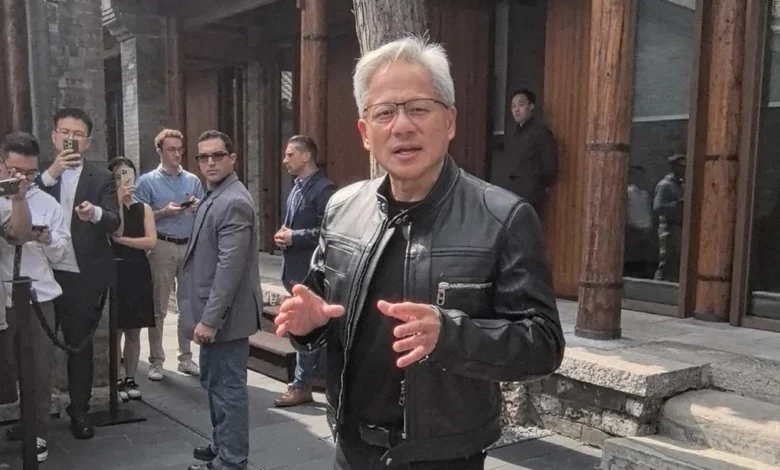
Jakarta – The technology sector and global financial markets are reeling following a stunning admission by Nvidia Corporation CEO Jensen Huang regarding an extramarital affair with an individual identified as a suspected Chinese intelligence operative. The revelation has sent shockwaves through Silicon Valley, precipitating a significant decline in Nvidia’s market valuation and casting a shadow over the company’s leadership structure, which has long been synonymous with the 63-year-old executive.
As Nvidia grapples with the fallout, the company’s stock experienced a sharp downturn, shedding more than 4% of its value in a single trading session—a decline that occurred despite a broader rally in the equities market. The discrepancy highlights the high sensitivity of investors to the governance risks now surrounding the semiconductor giant, which serves as the primary engine behind the global artificial intelligence (AI) boom.
A Leadership Crisis at the Heart of the AI Revolution
Jensen Huang’s influence on Nvidia is absolute. Since co-founding the company in 1993, he has transformed it from a niche graphics card manufacturer into the world’s most valuable chipmaker, with a market capitalization that has frequently rivaled the largest entities in human history. However, this centralized power structure is now being viewed as a systemic vulnerability.
Unlike other tech titans that have established clear succession pipelines or dual-leadership models, Nvidia operates under a structure where Huang is effectively the sole public face and operational anchor. Analysts from Melius Research have noted that the lack of a defined successor is a primary concern, particularly as the market had previously operated under the assumption that Huang would remain at the helm for at least another decade.
Stacy Rasgon, a prominent analyst at Bernstein, characterized the situation as a "founder-centric" dependency. Huang is deeply embedded in the day-to-day operations of the firm, managing a sprawling organization with a direct-reporting structure that includes nearly 60 executives. His presence is not merely administrative; he serves as the chief diplomat for Nvidia, navigating complex geopolitical landscapes, engaging with heads of state, and representing the company at every major industry forum.
The Chronology of a Corporate Storm
The scandal emerged following internal compliance reports and subsequent investigative inquiries that forced the disclosure of Huang’s personal conduct. While Nvidia has officially stated that Huang will continue to lead the company while an independent review is conducted by the board of directors, the political pressure is mounting rapidly.
- The Disclosure: Jensen Huang formally disclosed the nature of his relationship with an individual suspected of links to Chinese intelligence services to the Nvidia board.
- Market Reaction: Upon the news breaking, Nvidia shares saw immediate selling pressure, reflecting investor anxiety regarding potential regulatory or national security fallout.
- Congressional Interest: High-ranking members of the U.S. Congress, particularly within the Democratic caucus, have signaled their intent to launch a formal inquiry into the matter. Given Nvidia’s role in supplying AI chips that are subject to strict U.S. export controls, the potential for a security breach is a matter of national importance.
- Board Review: The Nvidia board of directors has convened to assess the legal and ethical implications of the affair, though no timeline for the conclusion of this investigation has been established.
Governance Structures and Ownership Paradox
A critical point of analysis for market observers is the contrast between Huang’s outsized influence and his relatively limited equity stake. Unlike Mark Zuckerberg at Meta or Elon Musk at SpaceX, who hold significant voting control through dual-class stock structures, Huang’s direct ownership of Nvidia is limited to slightly more than 3% of the outstanding shares.
Furthermore, Huang is one of 11 members of the board of directors, and the company currently operates without an independent chairman. This structure, which functioned efficiently during years of unprecedented growth, is now being scrutinized for its lack of oversight mechanisms. Because Huang is not explicitly designated as an "indispensable person" in the company’s risk-factor filings, some legal experts suggest that the path toward his potential removal—should the investigation uncover a breach of fiduciary duty or security protocols—is legally feasible, albeit operationally catastrophic.
Geopolitical Implications and Regulatory Risk
Nvidia occupies a central position in the ongoing technological rivalry between the United States and China. As the primary provider of H100 and Blackwell-series GPUs—chips essential for training large language models—Nvidia is at the forefront of AI policy. Huang’s personal ties to U.S. political figures, including his documented rapport with President Donald Trump, have previously served as a bridge between the tech industry and the White House.
The current scandal threatens to disrupt these relationships. If the suspected intelligence links are proven, it could trigger a series of regulatory actions, including potential investigations by the Committee on Foreign Investment in the United States (CFIUS) or stricter enforcement of existing export licenses.
Timm Schulze-Melander of Rothschild & Co. Redburn noted that while a resignation is not a foregone conclusion, the gravity of the allegations necessitates a thorough vetting process. "The board is in a delicate position," Schulze-Melander wrote. "They must balance the necessity of ethical governance with the reality that Jensen Huang’s leadership is currently inseparable from the company’s market-leading position."
Institutional Reactions and Future Outlook
The broader analyst community remains divided on whether the company can sustain its current trajectory without Huang. While Nvidia boasts a deep bench of executive talent capable of managing the firm’s engineering, manufacturing, and supply chain functions, the "Jensen factor" is considered irreplaceable.
In a statement provided to institutional clients, analysts suggested that while Nvidia’s operational machinery is robust, the company faces a period of extreme volatility. "Jensen is a singular figure whose energy and vision have been the catalyst for the AI era," the analysts noted. "Replacing that vision, especially during a period of intense regulatory scrutiny, would be the most significant challenge in the company’s thirty-year history."
As the board continues its investigation, the focus has shifted toward the potential for a broader restructuring of corporate governance. This could include the appointment of a Lead Independent Director, the drafting of formal succession protocols, and an expansion of the board’s oversight role.
Conclusion
The situation at Nvidia serves as a case study for the risks associated with "key-person dependency" in the modern corporate era. As the company prepares for its next quarterly earnings call, the primary concern for investors will be less about revenue growth and more about the stability of the executive suite. Whether Huang remains the face of the company or whether the board opts for a transition of leadership, Nvidia stands at a crossroads. For now, the world’s most important chipmaker is navigating its most precarious chapter, balancing the demands of national security with the requirements of maintaining investor confidence in an industry that shows no signs of slowing down.