Modernizing Data Lakes: Amazon S3 Tables Launches Managed Migration for Apache Hive to Apache Iceberg

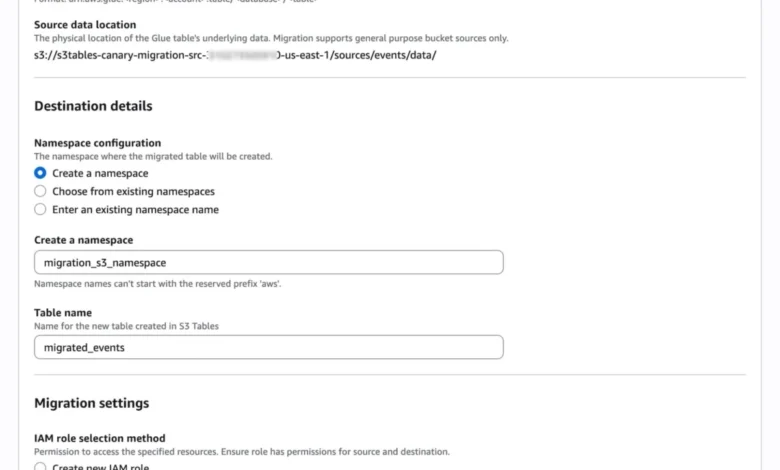
The landscape of data architecture is undergoing a significant transformation as enterprises shift away from legacy table formats toward more agile, open-standard solutions. Amazon Web Services (AWS) has announced the release of a managed migration service for Amazon S3 Tables, specifically designed to transition Apache Hive tables to the Apache Iceberg format. This development addresses a long-standing pain point for data engineers: the labor-intensive, high-risk process of migrating petabyte-scale data lakes without incurring excessive downtime or operational complexity.
The Evolution of Data Lake Standards
For over a decade, Apache Hive has served as the bedrock of data lake operations, providing a structured way to organize and query data stored in object storage. However, as data volumes have expanded into the petabyte range, the limitations of Hive—such as slow schema evolution and the lack of robust ACID (Atomicity, Consistency, Isolation, Durability) transactions—have become increasingly apparent.
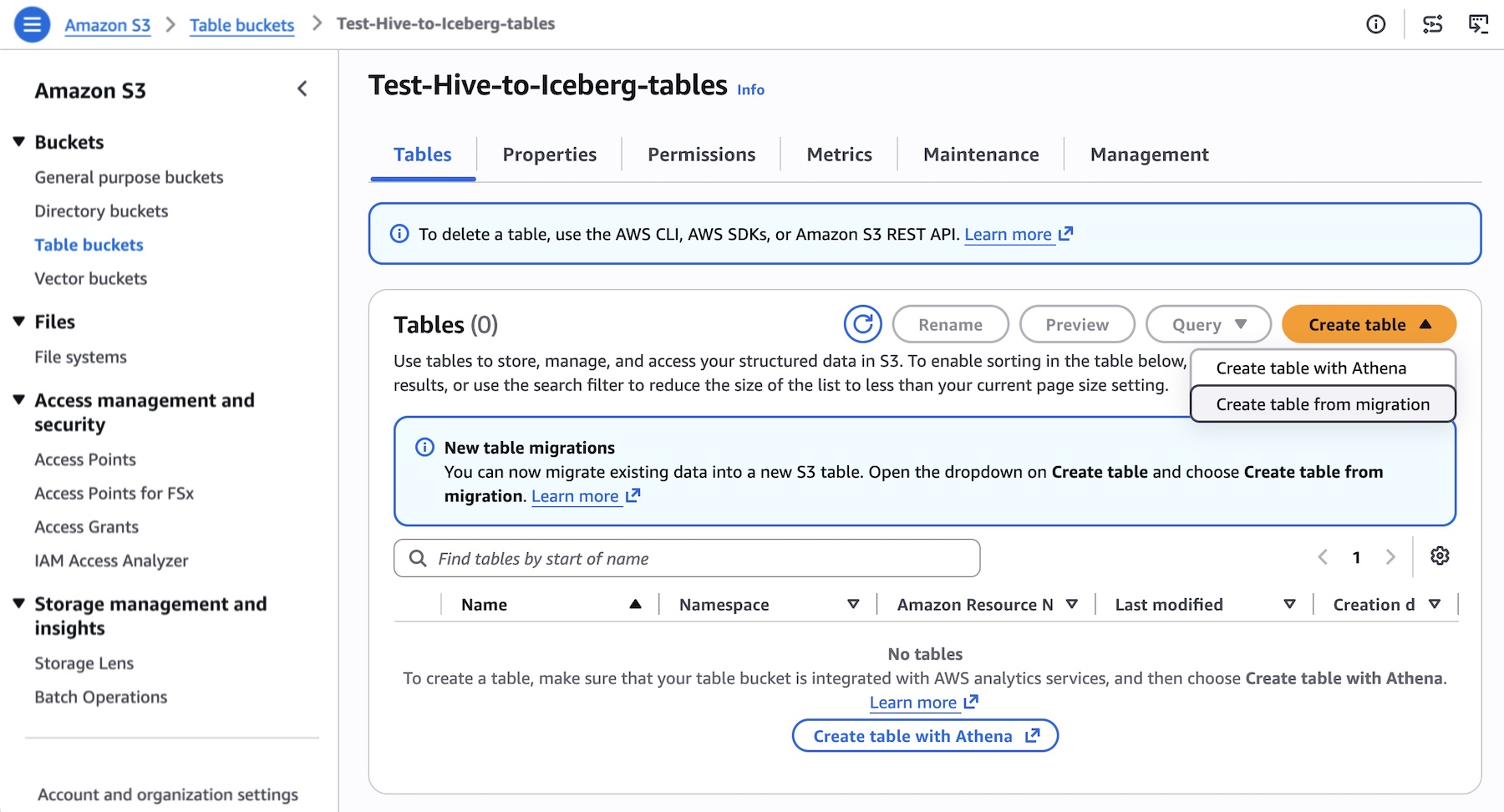
Apache Iceberg emerged as the industry response to these challenges. By introducing a table format that supports hidden partitioning, time-travel queries, and high-performance schema evolution, Iceberg has become the de facto standard for modern analytics. Despite its benefits, the path to migration has historically been fraught with difficulty. Engineering teams previously had to dedicate weeks, if not months, to building custom pipelines, managing complex data type conversions, and ensuring that no data was lost during the transition. The new S3 Tables managed migration feature aims to turn this months-long project into an API-driven, automated operation.

A Streamlined Migration Workflow
The technical architecture of this new service is designed to minimize risk while maximizing operational efficiency. The migration process begins with a comprehensive validation phase. When a user initiates a migration request, S3 Tables perform a deep scan of the source data in Amazon S3, registered within the AWS Glue Data Catalog. This scan generates a compatibility report that identifies potential conflicts in data types or file formats before any actual data is moved.
Crucially, the service allows for iterative synchronization. Organizations can continue to perform write operations on their source Hive tables while the migration is underway. By utilizing the sync-table-migration command, users can incrementally update the destination Iceberg table, ensuring that the target remains current with the source. This architecture effectively eliminates the need for prolonged maintenance windows; the final "cutover" is reduced to a brief window, significantly decreasing the impact on production analytics workloads.
Economic and Operational Implications
From a cost-management perspective, the service is structured to be highly competitive. AWS has stated that customers are charged only for the volume of data copied, with no additional fees for the actual conversion process from Hive to Iceberg. Furthermore, the migration preserves the existing storage tiers of the source objects; if data is currently housed in S3 Intelligent-Tiering, it remains in that tier throughout the process, preventing unexpected spikes in storage costs.
This focus on cost-efficiency is a deliberate strategy to encourage the adoption of S3 Tables. By bundling features such as automatic maintenance, compaction, and file recompression, AWS is effectively offloading the "undifferentiated heavy lifting" of database administration. Organizations that previously struggled with the overhead of maintaining Hive partitions can now delegate these tasks to the managed service, allowing data teams to focus on generating insights rather than maintaining infrastructure.

Timeline and Technical Integration
The rollout of this feature follows a broader trend of AWS integrating its storage services more deeply with AI and analytics platforms. The integration with Amazon Athena and Amazon SageMaker Unified Studio suggests that AWS is positioning S3 Tables as the primary storage layer for generative AI pipelines. By enabling seamless migration to Iceberg, AWS ensures that these AI tools can immediately query, transform, and utilize data that was previously locked in legacy Hive formats.
For teams heavily reliant on automation, the inclusion of the Agent Toolkit for AWS is a notable addition. By utilizing coding agents—such as the migrating-hive-tables-to-s3-tables skill—engineers can now orchestrate complex migrations using natural language prompts and predefined safety guardrails. This integration reduces the barrier to entry for smaller teams that may lack the specialized expertise required to manage Iceberg table versions and metadata logs manually.
Strategic Impact on Enterprise Analytics
The shift to Iceberg is more than a technical upgrade; it is a strategic move toward vendor neutrality and interoperability. Because Iceberg is an open standard, data stored in this format is not locked into a single query engine. This provides enterprises with the flexibility to use Amazon Athena, Trino, Spark, or other Iceberg-compatible engines as their analytical needs evolve.
Industry analysts have noted that this managed service effectively lowers the "switching cost" for companies stuck in technical debt. The ability to perform a risk-mitigated migration, supported by compatibility reports and automated rollback capabilities, provides a level of assurance that was previously unavailable. For large enterprises, this means they can modernize their data architecture incrementally, migrating one department or workload at a time rather than pursuing a risky "all-or-nothing" migration strategy.
Regional Availability and Future Outlook
As of the current release, the managed migration service is available in several key AWS regions, including US East (N. Virginia, Ohio), US West (Oregon), Asia Pacific (Mumbai, Singapore, Sydney, Tokyo), and Europe (Frankfurt, Ireland, Stockholm). While the service currently supports AWS Glue-registered Hive tables in Parquet format, the roadmap for expansion will likely include broader support for different file formats and cross-account migration capabilities.
The release of this tool highlights a shift in AWS’s philosophy: moving from offering raw infrastructure building blocks to providing high-level, opinionated services that solve specific lifecycle problems. By handling the complexities of schema mapping, file compaction, and snapshot management, AWS is signaling that the era of manual data lake management is coming to a close.
Conclusion: The Path Forward
The introduction of managed migration for S3 Tables represents a pivotal moment for data engineering teams. By removing the technical barriers to migrating to Apache Iceberg, AWS is accelerating the industry-wide move toward modernized, performant, and cost-efficient data lakes.
For organizations currently managing massive, legacy Hive-based data lakes, the decision to migrate is no longer a question of whether it is beneficial, but rather when it should be executed. With the automation provided by S3 Tables, the risks associated with such a transition—namely data corruption, prolonged downtime, and high engineering labor costs—have been significantly mitigated. As companies continue to integrate large-scale data into AI and machine learning models, the ability to rely on a high-performance, open-standard storage format will become a prerequisite for success. The tools to facilitate this transition are now firmly in the hands of the practitioners, marking a new chapter in the lifecycle of the modern cloud data lake.