Gap Inc. Lowers Full-Year Outlook as Warm Weather and Brand Struggles Offset Q3 Growth

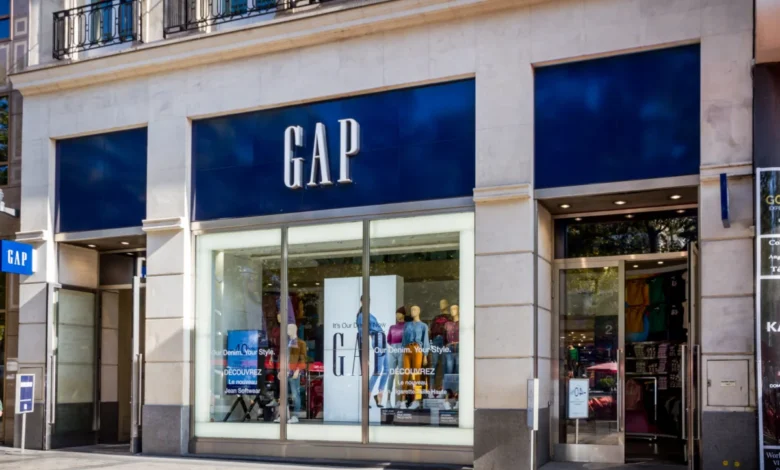
Gap Inc. reported its fiscal third-quarter 2026 financial results, revealing a complex retail landscape marked by a stellar turnaround for its namesake brand, expanding digital and AI initiatives, but challenged by unseasonably warm weather and steep declines at its Athleta and Banana Republic divisions. For the quarter ended October 31, 2026, the retail conglomerate posted net sales of $4.01 billion, representing a 2% increase compared to the same period in the previous year. Net income saw a substantial jump to $311 million, up from $236 million a year earlier, while adjusted earnings per share rose 32% to $0.82.
Despite these positive figures and strong quarterly momentum in its core Gap and Old Navy banners, executive leadership chose to lower the company’s full-year outlook. The decision reflects a slower-than-anticipated start to the holiday shopping season, compounded by unseasonably warm autumn temperatures that temporarily suppressed consumer demand for heavy fall and winter apparel.
Financial Performance and Digital Commerce Expansion
The company’s revenue growth during the third quarter was largely propelled by its digital operations. Online sales climbed 3% year-over-year, comfortably outpacing the modest 1% growth recorded across its physical store fleet. E-commerce continued to serve as a critical pillar for the enterprise, accounting for 40% of total quarterly revenue—an exact match to its digital revenue share from the previous year.
CEO Richard Dickson highlighted the company’s commanding position as the largest specialty apparel e-commerce business in the United States. Over the past twelve months, Gap Inc.’s digital storefronts have accumulated approximately 1.6 billion consumer visits. To capitalize on this massive digital footprint, the retailer has heavily invested in next-generation commerce technologies. In October 2026, Gap Inc. introduced advanced artificial intelligence shopping capabilities, including conversational product-discovery tools designed to streamline the user experience for Old Navy and Banana Republic shoppers. Furthermore, the company partnered with Alta Daily, a styling application that integrates Gap merchandise directly into AI-generated outfit recommendations.
These digital innovations complement high-profile marketing collaborations aimed at driving traffic to online channels. A notable back-to-school campaign featuring YouTube personality MrBeast generated an astounding 1.4 billion global impressions, driving a 20% spike in traffic to Old Navy’s children’s wear department. A subsequent autumn marketing push featuring music artist Cardi B similarly boosted visibility for the brand’s core denim and cardigan collections.
Divergent Brand Trajectories Across the Portfolio
Performance across Gap Inc.’s four major operating banners varied significantly during the third quarter, illustrating a bifurcated recovery process.
The namesake Gap brand continued its remarkable multi-year revitalization, delivering its twelfth consecutive quarter of comparable sales growth. Net sales for the Gap banner surged 11% year-over-year to $1.06 billion, propelled by strong consumer demand for denim and fleece products. Comparable sales rose 9%, proving that the brand’s ongoing stylistic and operational repositioning continues to resonate with modern shoppers. Physical store revitalization has played a role here as well; Gap plans to remodel 35 retail locations this year, converting roughly a quarter of its North American specialty fleet into a high-performing new store format that features superior traffic and higher average unit retail metrics.
Old Navy, which remains the company’s largest revenue driver, showed stabilization following a difficult second quarter. Net sales at Old Navy ticked up 1% to $2.27 billion, representing more than half of the entire corporation’s quarterly income. Comparable sales were flat, an improvement over the 4% decline registered in Q2. Leadership credited more focused marketing campaigns, improved pricing structures centered on value, and strong fall assortments in denim, activewear, and knits for the stabilization. Leadership stability has also been established following the appointment of Michael Francis as Old Navy’s president and CEO in November, transitioning from his previous role as chief customer officer.
Conversely, Banana Republic and Athleta faced headwinds. Banana Republic reported a 3% decline in both net sales and comparable sales. Executive leadership attributed the setback to two main factors: an inventory assortment that was overly weighted toward heavy cold-weather categories such as sweaters and outerwear just as an unseasonably warm October gripped key regional markets, and a misstep in capturing the right fashion and color trends within the women’s assortment.
Athleta encountered the most severe challenges within the portfolio. Net sales for the activewear brand fell 14% year-over-year to $220 million, while comparable sales dropped 15%. Acknowledging that recent efforts to modernize Athleta’s product lines and marketing had failed to keep pace with intensifying market competition, CEO Richard Dickson announced that the company has initiated a comprehensive strategic review of the activewear business. This leadership transition will see Ashley Kechter take the helm as Athleta’s president and CEO effective December 14, 2026. Kechter, most recently the global president of Vuori, brings deep institutional knowledge from her prior leadership roles across Gap Inc.’s other brands.
Diversification Beyond Traditional Apparel
In an effort to capture incremental revenue and expand customer wallet share, Gap Inc. is strategically branching out into new product categories, including beauty, accessories, and licensed merchandise.
During the third quarter, Old Navy rolled out a curated beauty assortment nationwide. Early data indicates that consumers who purchase beauty products tend to spend more across the store, resulting in larger shopping baskets and higher average transaction values compared to traditional apparel-only shoppers.
Accessories are also proving to be a lucrative growth vector. In September 2026, the Gap brand debuted its inaugural handbag collection. Several styles, including the popular Five Pocket Tote, experienced immediate sell-outs, forcing the retailer to scramble for supplementary inventory. Management plans to introduce additional handbag variations for the holiday season and aims to scale similar accessories offerings at Banana Republic and Old Navy throughout 2027, though executives noted these new categories will not materially impact financial results in the immediate fiscal year.
Licensing partnerships have added another layer of resilience. Old Navy’s collaboration with Fanatics has shown strong cross-shopping behavior; more than 60% of consumers who purchased Fanatics licensed goods also added core apparel items to their carts, resulting in transaction values well above the brand’s standard average.
Tariff Relief and Lowered Full-Year Guidance
Despite pockets of robust performance and operational improvements, external macroeconomic pressures and a sluggish start to the holiday shopping period prompted Gap Inc. to adjust its full-year expectations. The company now projects that fiscal 2026 net sales will remain roughly flat compared to the previous year, walking back its earlier forecasts of 1% to 1.5% growth. To stimulate consumer demand amidst warm weather conditions, Old Navy leaned into promotional pricing, while Athleta increased discounting to clear out slower-moving inventory.
On the regulatory front, however, the retailer received positive financial relief. Lower-than-previously-assumed U.S. tariff rates are projected to add approximately $46 million to Gap Inc.’s operating profit for the year, softening the blow of other rising costs. Additionally, the company recorded a significant $420 million year-to-date adjustment to the cost of goods sold, stemming from the recovery of tariffs previously imposed under the International Emergency Economic Powers Act (IEEPA), alongside $21 million in related interest income. The enterprise closed out the third quarter with a healthy inventory position of $2.3 billion, representing a 6% reduction year-over-year that demonstrates tighter supply chain management and disciplined inventory control.
As Gap Inc. navigates the remainder of the fiscal year, executive leadership remains focused on scaling its high-performing digital channels, completing the revitalization of its physical store fleet, and executing structural turnarounds for struggling divisions like Athleta to secure sustainable, long-term growth.