The Illusion of Biological Mirroring: New York University Study Reveals Deep Divergences Between Artificial Intelligence and the Human Visual Cortex

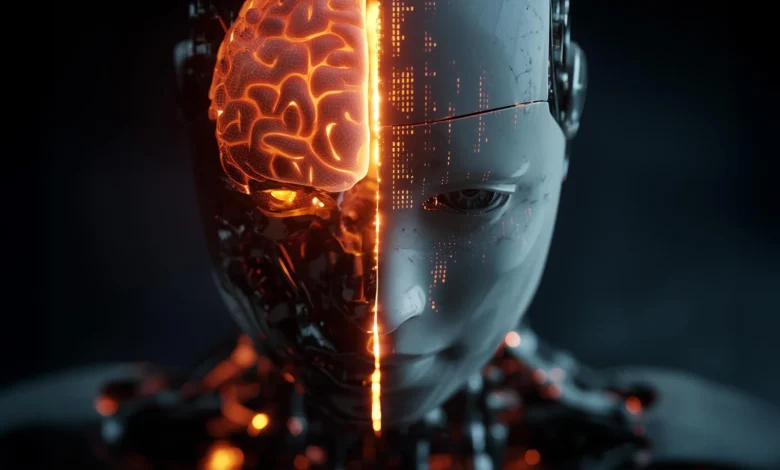
The intersection of neuroscience and artificial intelligence has long rested on a foundational, yet increasingly controversial, assumption: that artificial neural networks (ANNs) process visual information in a manner fundamentally akin to the human brain. For more than a decade, computational neuroscientists have championed these deep learning models as digital proxies for the primate visual system, relying on their unprecedented capacity to predict neural responses when subjects process complex imagery. However, groundbreaking research emerging from York University challenges this core tenet, revealing a profound and previously unrecognized asymmetry in how artificial intelligence and biological neural networks operate.
Published in Nature Machine Intelligence, the study demonstrates that while AI models can successfully forecast the firing patterns of biological neurons, recorded brain activity is significantly less capable of predicting the internal structural mechanics of the models. This methodological revelation exposes a critical vulnerability in modern computational neuroscience, suggesting that today’s leading AI systems achieve brain-like output through radically alien internal mechanisms.
The Main Facts and the Core Discovery
Led by Kohitij Kar, an assistant professor and Canada Research Chair in Visual Neuroscience at York University’s Centre for Vision Research and Centre for Integrative and Applied Neuroscience, the research team set out to interrogate the nature of the relationship between artificial and biological vision. Traditionally, the validation of brain-like AI has been a one-way street. Researchers present visual stimuli to both human or animal subjects and computer models, measuring whether the algorithmic architecture can accurately project the anticipated neuronal firing rates in visual processing regions such as the inferior temporal cortex.
While these forward-prediction metrics have routinely yielded high correlation scores, Kar and his co-author, York Postdoctoral Fellow Sabine Muzellec—a trainee in the university’s Connected Minds program—questioned the logical symmetry of this paradigm. The team reasoned that if artificial neural networks truly operate as functional equivalents to biological brains, the relationship should be reciprocal. If an algorithm mimics a brain, analyzing the brain’s response should theoretically allow researchers to predict the internal states of the algorithm with equal fidelity.
To test this hypothesis, the researchers developed a novel diagnostic framework termed "reverse predictivity testing." This method evaluates bidirectional similarities that conventional, unidirectional evaluations systematically overlook. By applying this rigorous metric across an expansive battery of visual inputs, the York team uncovered a stark structural disconnect. Although the artificial models excelled at predicting neural activity, biological neural responses performed poorly when tasked with predicting the internal hidden layers and features of the AI models. Interestingly, control comparisons between neurons from distinct biological brains yielded no such asymmetry, confirming that the failure of reverse predictability is unique to the human-to-machine interface.
Background Context and the Evolution of Brain-Machine Metaphors
The reliance on artificial neural networks within neuroscience stems from the inherent complexity of the central nervous system. Processing visual stimuli—such as recognizing a moving object, interpreting depth, or parsing complex foreground-background dynamics—is computationally demanding, even if it feels effortless to the human observer. Over the past fifteen years, as deep learning architectures scaled in depth and parameter size, neuroscientists adopted these systems as tractable models to study sensory perception.
The convergence of machine learning and neuroscience birthed computational neuro-aesthetics and predictive coding models, allowing researchers to simulate how the brain constructs perceptual reality. These models became indispensable tools, guiding experimental design, decoding functional magnetic resonance imaging (fMRI) data, and offering structural hypotheses for cortical processing.
However, this growing reliance carried an unverified corollary: the assumption that predictive accuracy regarding output equals a shared underlying computational logic. The York University study directly challenges this orthodoxy, suggesting that current AI systems are master mimics rather than authentic digital replicas. They solve visual recognition challenges by deploying mathematical shortcuts and internal optimizations that the mammalian brain has never evolved to use.
Experimental Design and Methodology
To arrive at these conclusions, the York research team constructed a comprehensive empirical testbed designed to challenge both biological and artificial visual processors. The evaluation utilized an expansive dataset comprising 1,320 natural photographs alongside realistic synthetic imagery. These images featured 10 distinct, highly familiar semantic categories: bears, elephants, human faces, apples, cars, dogs, chairs, airplanes, birds, and zebras. To ensure robustness, these subjects were embedded within a wide array of variable contexts, ranging from complex natural ecosystems to cluttered indoor and outdoor architectural settings.
Furthermore, the researchers introduced 300 out-of-distribution variations of the same fundamental subjects. These included stylized representations such as minimalist outlines, hand-drawn sketches, simplified vector graphics, and various abstract artistic interpretations. By testing how both primate electrophysiology and deep neural networks responded to these transformations, the team could isolate instances where superficial behavioral accuracy masked deep structural divergences.
Official Responses and Expert Analysis
The implications of this methodological shift extend far beyond basic cognitive science, prompting reactions from across the multidisciplinary research community.
"Artificial intelligence systems are often described as ‘brain-like’ because they can predict activity in parts of the brain that help us recognize objects," explains Professor Kar. "Until now, scientists mostly tested this in one direction. They asked whether AI models can predict brain activity. Our findings suggest that today’s AI systems solve visual tasks partly using internal strategies that the brain may not use."
Dr. Sabine Muzellec emphasized the diagnostic utility of the team’s new framework, highlighting its role in keeping the field scientifically rigorous. "Our findings challenge how similar current AI systems really are with the primate brain. We show that models that were previously thought to be brain-like rely on internal components that the brain does not appear to use. We provide a well-vetted diagnostic metric for the field," Muzellec stated.
The researchers note a vital nuance: the specific sub-components of AI models that do manage to align with biological neural activity are consistently better at predicting actual human behavioral performance. This indicates that while the holistic internal architecture diverges significantly, isolated functional intersections do exist and can be leveraged.
Broader Impact and Clinical Implications
The realization that advanced AI architectures rely on non-biological computational strategies carries profound implications for clinical research and applied neuroscience. Artificial intelligence is increasingly integrated into neuroimaging analysis, neurological disorder diagnostics, and the formulation of therapeutic interventions for conditions such as autism spectrum disorder and post-traumatic stress disorder (PTSD).
Many of these clinical applications are built upon computational baselines derived from neurotypical brain models. If the underlying AI systems process information through fundamentally aberrant pathways, the conclusions drawn from their simulations risk being fundamentally flawed. Researchers operating under the assumption of structural equivalence could misinterpret algorithmic artifacts as biological phenomena, leading to misdirected clinical hypotheses or compromised experimental frameworks.
Moreover, the concerns raised by the York University study are not isolated to the visual system. Similar deep learning frameworks are routinely deployed to model auditory processing, linguistic syntax, speech generation, and motor control pathways. If the reverse-predictivity vulnerability identified in visual ANNs is mirrored across sensory modalities, a wide swath of contemporary computational neuroscience may require a thorough re-evaluation of its foundational models.
A Roadmap for the Future: Building Biologically Faithful AI
Rather than advocating for the abandonment of artificial neural networks in brain research, the York University study offers a constructive path forward. The identification of a quantifiable gap between biological and artificial processing provides engineers and neuroscientists with a diagnostic roadmap to build more reliable, verifiably brain-like architectures.
By utilizing the reverse-predictivity framework, researchers can systematically filter out models that achieve high performance via non-biological shortcuts, focusing instead on optimizing networks whose internal feature representations genuinely mirror human cortical mechanisms. This refinement is considered particularly crucial for specialized research initiatives, such as the York-led autism research program, which relies on accurate computational baselines of neurotypical perceptual processing to understand atypical neurodevelopment.
To facilitate this transition across the global scientific community, the research team has released a publicly accessible testing toolkit via the Python Package Index (PyPi). This open-source resource, designated as the reverse-pred project, enables AI developers and neuroscientists alike to evaluate their proprietary models, isolate structural discrepancies, and guide the iterative improvement of next-generation algorithms.
As artificial intelligence continues its rapid integration into the life sciences, the work from York University serves as both a cautionary tale and a technical bridge. It underscores the reality that mimicking the external behavior of the human mind is a far cry from truly replicating its inner workings—and provides the precise tools necessary to close that gap.