The Evolution of Agentic AI How NVIDIA is Redefining Machine Intelligence Through Continuous Post-Training and the Vera Rubin Platform

The landscape of artificial intelligence is undergoing a fundamental shift, moving away from static generative models toward dynamic, goal-oriented "agentic" systems. This transition is characterized by a move from simple next-token prediction to complex, multi-step reasoning and autonomous problem-solving. Central to this evolution is the transformation of the post-training phase from a final finishing step into a continuous, iterative cycle. As environments shift, edge cases emerge, and tools evolve, the traditional boundaries between training and deployment are blurring. In this new era, NVIDIA has introduced a pivotal metric—intelligence per dollar—as the primary driver of value for AI factories, supported by the upcoming Vera Rubin platform and the current Blackwell architecture.
The Shift from Generative to Agentic AI
To understand the current trajectory of AI development, one must look at the distinction between a generative model and an agentic model. A traditional generative model responds to a prompt based on the patterns it learned during its initial training. In contrast, an agentic model is given a goal. Much like a professional athlete who must continuously refine their skills between games to adapt to new opponents, an agentic AI must plan its actions, utilize various digital tools, and recover from unforeseen errors mid-run.
This shift necessitates a change in how models are refined. While pre-training provides a model with linguistic fluency and a broad base of knowledge, it does not inherently grant the model "intelligence" in the sense of reasoning or specialized task execution. Intelligence, in the context of modern AI, is built during the post-training phase. This is where a model learns to write functional code, navigate complex file structures, and use search engines to verify facts. Because the environments in which these agents operate—such as a corporation’s private codebase or a live web environment—are constantly changing, the post-training process can no longer be a one-time event.
The Continuous Post-Training Loop
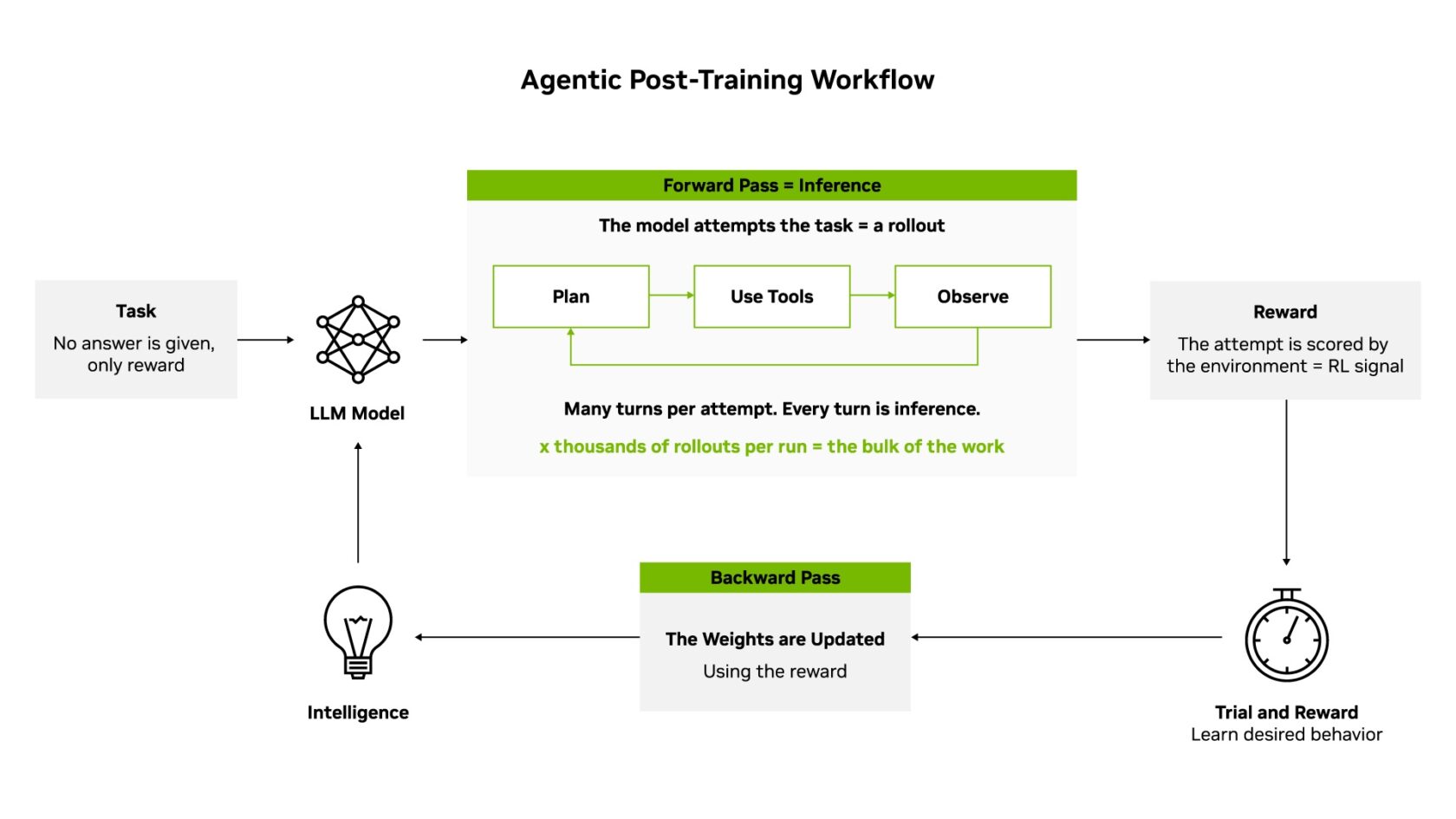
The agentic era introduces a new compute pattern: the continuous post-training loop. In this cycle, models are deployed into production, where they encounter new "edge cases"—problems or scenarios that were not present in the original training data. These production-level challenges are looped back into the post-training phase. This ensures that the model’s weights are updated to reflect the most current tools, policies, and environmental shifts.
Technically, this process relies heavily on Reinforcement Learning (RL). Unlike supervised learning, where a model is given an "answer key," RL allows a model to learn from rewards. When tasked with a problem, the model generates an attempt (the forward pass). This attempt is then scored by a reward model or a verifiable outcome, such as whether a piece of code passes a unit test. The resulting lesson is then used to update the model’s weights (the backward pass).
This loop is incredibly compute-intensive. Scaling it requires an orchestration of thousands of parallel environments generating "rollouts"—simulated sequences of actions and outcomes. NVIDIA has addressed this orchestration challenge through its NeMo open libraries. Specifically, NeMo Gym provides the training environments, while NeMo RL handles distributed post-training, turning what was once bespoke research code into scalable, repeatable infrastructure.
Redefining Value: Intelligence per Dollar vs. Cost per Token
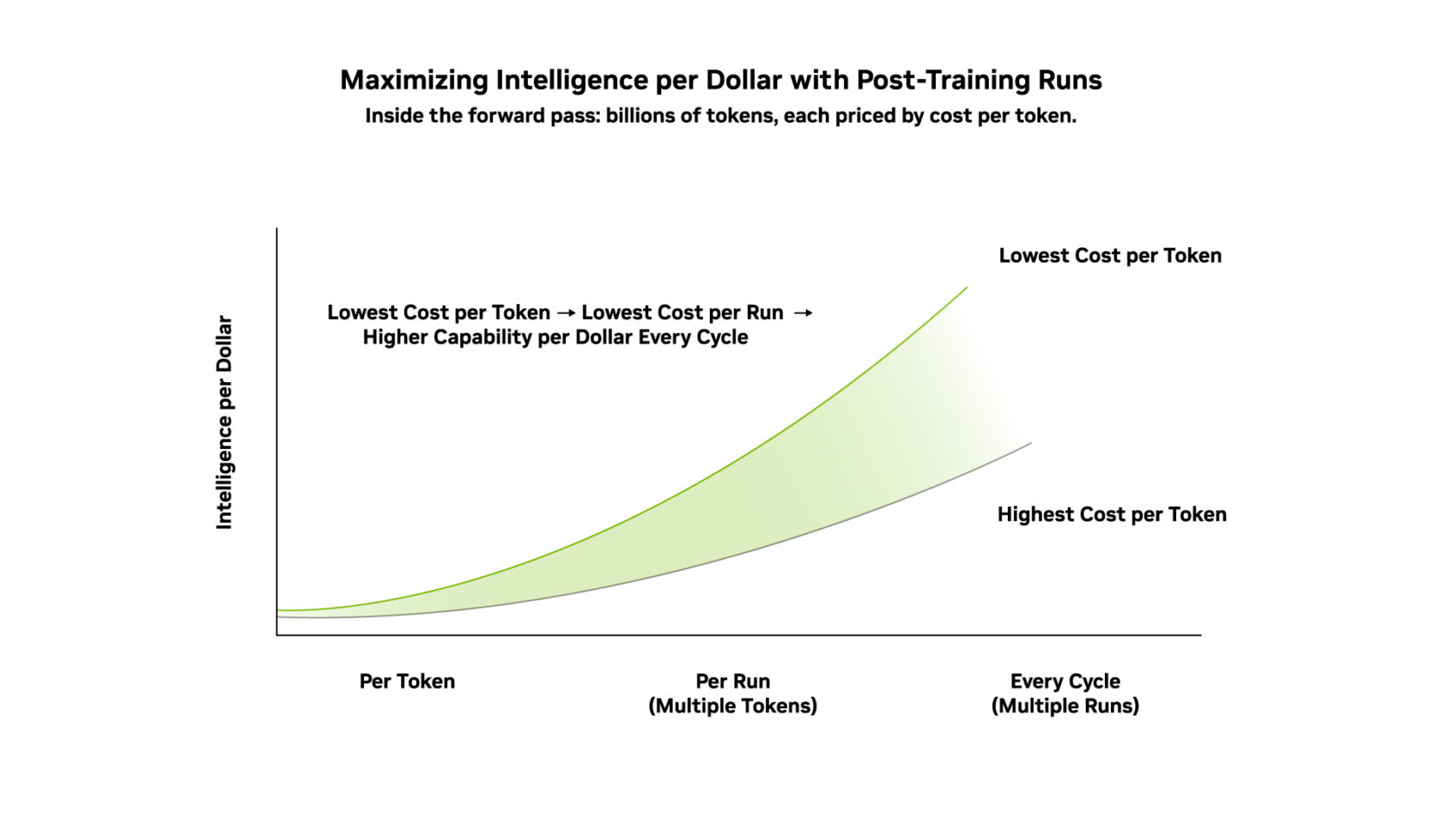
For years, the industry has focused on "cost per token" as the primary metric for AI efficiency. This metric measures the operational cost of inference—the price of delivering one million tokens to a user. However, as AI models become more complex, NVIDIA argues that cost per token is no longer sufficient on its own. Instead, the focus is shifting to "intelligence per dollar."
Intelligence per dollar is a higher-level metric that accounts for the value of the intelligence being served. If inference is the revenue engine, post-training is the multiplier. A model that is 10% more intelligent may be able to solve tasks that a less capable model cannot, thereby making every token it serves significantly more valuable.
The two metrics are nested. Improvements in hardware and software that lower the cost per token also lower the cost of building intelligence. Conversely, every point of intelligence added during post-training raises the utility—and thus the economic value—of the inference factory’s output. In essence, cost per token measures operating yield, while intelligence per dollar measures the return on investment for model capability.
Benchmarking Intelligence: Nemotron 3 Ultra
A primary example of this philosophy in action is the NVIDIA Nemotron 3 Ultra. This model is a 550-billion-parameter Mixture-of-Experts (MoE) model that utilizes open weights and a fully disclosed post-training recipe. By running its post-training on NeMo RL, the model has achieved significant benchmarks in reasoning and autonomy.
On the SWE-bench (Software Engineering Benchmark) verified test, Nemotron 3 Ultra scored 71.7%. This means the model successfully produced working fixes for roughly seven out of ten real-world software bugs sourced from open-source projects. Each fix was checked against the project’s own internal tests, providing a verifiable measure of the model’s ability to act as an autonomous agent. This level of performance is a direct result of the intensive, RL-driven post-training cycles that prioritize reasoning over mere pattern matching.
Hardware Evolution: From Blackwell to Vera Rubin
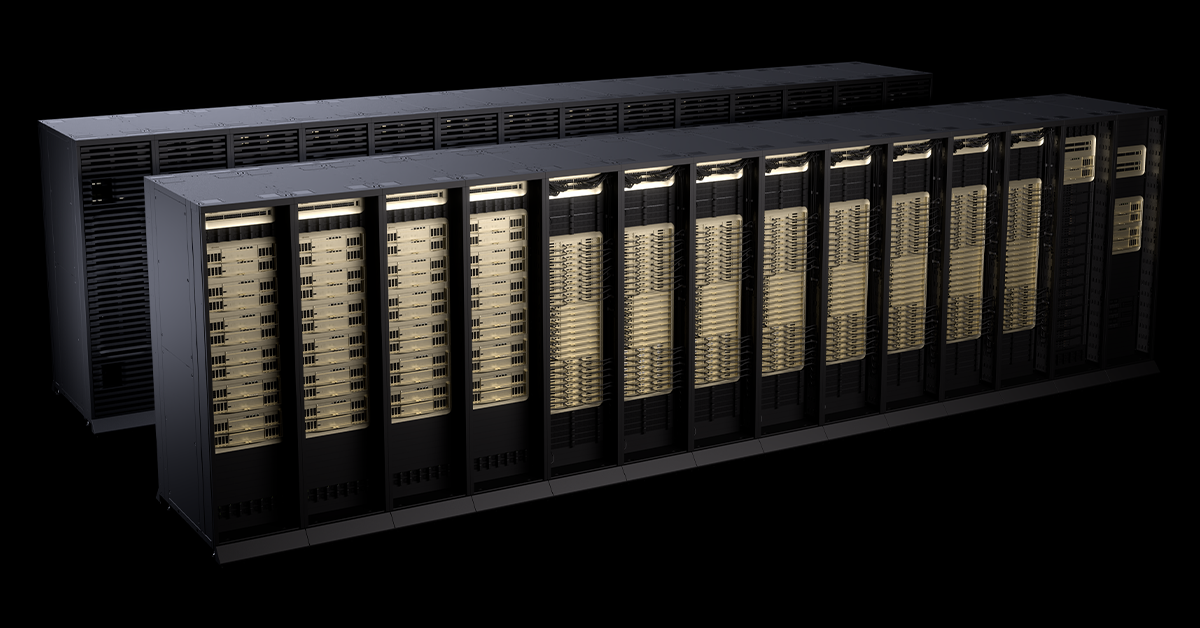
The economic viability of continuous post-training depends on the underlying hardware architecture. The NVIDIA Blackwell platform was designed to lower the cost of these runs, making frequent updates sustainable for large-scale deployments. However, the roadmap for AI infrastructure is accelerating.
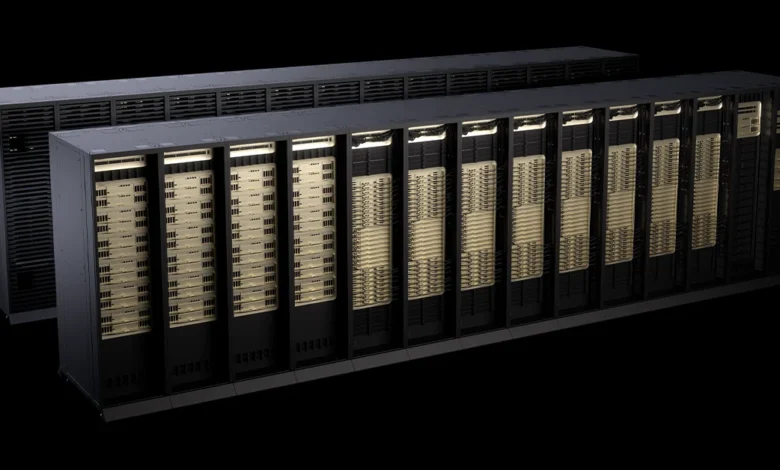
The upcoming NVIDIA Vera Rubin platform is designed to extend this trajectory. Named after the pioneering astronomer, the Rubin platform is engineered to maximize intelligence per dollar across the most demanding workloads. According to NVIDIA, the Vera Rubin platform can train the largest models using only one-fourth of the GPUs required by the Blackwell generation.
Rubin is codesigned from the ground up to handle the agentic post-training load. This includes support for more simultaneous environments, a higher volume of rollouts per run, and the ability to maintain post-training cycles that never stop. By integrating the Vera CPU, the platform enables low-latency, energy-efficient reinforcement learning, which is critical for the "sandbox" environments where agents test their theories before deployment.

Industry Adoption and Ecosystem Integration
Several key players in the AI industry are already integrating these post-training workflows into their operations. Their experiences provide a glimpse into the future of agentic AI infrastructure.
Prime Intellect, an AI decentralized training and research lab, has been continuously post-training frontier models on NVIDIA Blackwell. Using NVIDIA Dynamo for inference orchestration, Prime Intellect has optimized its sandbox infrastructure for the Vera CPU. Their internal benchmarks indicate that the Vera architecture delivers an average of 30% greater throughput per CPU compared to alternative x86 architectures when running realistic RL sandbox workloads. This efficiency allows for faster iteration loops and more robust model scaling.
Perplexity, the AI-powered search engine, utilizes an asynchronous RL post-training stack. Their system runs across hundreds of NVIDIA GPUs, utilizing a Remote Direct Memory Access (RDMA)-based weight transfer engine. This technology allows Perplexity to sync weights for trillion-parameter models between training and inference nodes in under two seconds. This rapid synchronization is essential for maintaining a "live" model that can adapt to the fast-paced nature of global information.
Together AI has also embraced this shift by offering post-training as a service. Their platform supports supervised fine-tuning, RL, and Direct Preference Optimization (DPO) via a feature-rich API and SDK. By running on NVIDIA’s optimized kernel libraries, Together AI provides the infrastructure for businesses to build and maintain their own intelligent agents without needing to manage the underlying hardware complexities.
Broader Implications for the AI Industry
The transition to agentic AI and continuous post-training has profound implications for the global economy and the tech industry. As AI "factories" become the standard for enterprise operations, the focus will move from simply "having an AI" to "how fast can the AI learn?"
The ability to update models in real-time based on production data creates a competitive advantage for companies that can maintain the fastest learning loops. This reduces the "intelligence decay" that occurs when a static model becomes outdated as its environment changes. Furthermore, the move toward open-weight models with verifiable post-training recipes, such as Nemotron 3 Ultra, suggests a future where transparency and performance go hand-in-hand.
In conclusion, the era of agentic AI is redefining the requirements for both software and hardware. By shifting the focus to intelligence per dollar and embracing continuous post-training, NVIDIA and its partners are building the infrastructure necessary for truly autonomous digital agents. The transition from the Blackwell platform to Vera Rubin represents more than just a performance boost; it marks a shift toward a world where machine intelligence is not just a tool, but a continuously evolving participant in the global digital ecosystem.
Related posts: