Allegro Surges as International Expansion and Operational Efficiency Drive Preliminary Second Quarter Growth Beyond Forecasts

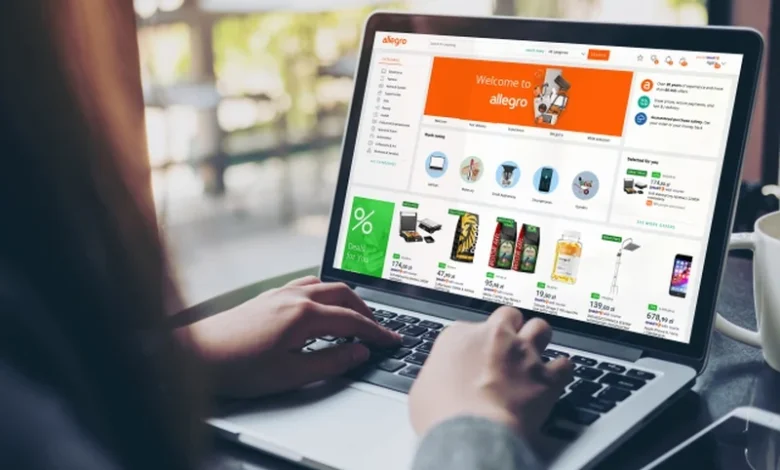
Allegro, the leading e-commerce platform in Poland and a dominant force in the Central and Eastern European (CEE) digital economy, has released its preliminary financial results for the second quarter and the first half of 2026, showcasing a period of significant growth and strategic realignment. The Group reported a robust increase in its gross merchandise value (GMV), fueled largely by an aggressive and successful expansion into international markets. According to the preliminary data, the Group’s total GMV grew by 13.7 percent in the first half of 2026 compared to the same period in 2025. This growth was markedly accelerated by the performance of its international segment, which saw a staggering GMV increase of 64.8 percent during the first six months of the year.
The release of these preliminary results precedes a planned stock buyback program on the Warsaw Stock Exchange (WSE), a move that signals management’s confidence in the company’s long-term value and operational trajectory. As the company prepares to consolidate its market position, the latest figures suggest that Allegro is not only maintaining its dominance in its home market of Poland but is also successfully exporting its ecosystem-based business model to neighboring nations.
Detailed Financial Performance in the Second Quarter
The second quarter of 2026 served as a pivotal period for Allegro, characterized by double-digit growth across multiple key performance indicators. In Poland, the company’s core market, GMV increased by 12 percent year-on-year. While the Polish market is reaching a stage of maturity, this steady growth highlights the resilience of consumer demand and the effectiveness of Allegro’s loyalty programs.
However, the most striking figures emerged from the Group’s international operations. In the second quarter alone, the international segment’s GMV surged by 82.4 percent compared to the second quarter of 2025. This rapid acceleration in cross-border trade and local operations in new territories contributed to a consolidated GMV growth of 14.4 percent for the entire Group during the three-month period.
Financial health was further evidenced by the Group’s adjusted EBITDA (Earnings Before Interest, Taxes, Depreciation, and Amortization). In the first half of 2026, the Group’s adjusted EBITDA improved by 16.9 percent, while the Polish adjusted EBITDA grew by 14.6 percent. These figures exceeded the company’s previously published guidance ranges, suggesting that the Group’s efforts to streamline operations and enhance efficiency are yielding results faster than analysts had anticipated.
The scale of Allegro’s operations remains vast. In 2025, the company achieved a revenue growth of 17.4 percent in Poland, with domestic revenue exceeding 3.2 billion Polish złoty (approximately 740 million euros). On a Group-wide level, the total revenue for the year reached nearly 70 billion Polish złoty (approximately 16.2 billion euros), underscoring Allegro’s role as a major pillar of the European e-commerce sector.
Strategic Divestments and Portfolio Streamlining
The strong financial results for the first half of 2026 follow a series of strategic decisions aimed at optimizing the Group’s portfolio. At the beginning of the year, Allegro announced the sale of its subsidiaries in Slovenia and Croatia. These entities, which were part of the Mall Group acquisition, were deemed non-core to the Group’s immediate focus on high-growth, high-efficiency markets.
By divesting these operations, Allegro has been able to reduce operational complexity and reallocate capital toward its more promising ventures in the Czech Republic, Slovakia, and Hungary. This "streamlining" strategy was designed to improve the Group’s overall margin profile and ensure that management resources were not spread too thin across territories with lower immediate return on investment. The divestiture is seen by market analysts as a disciplined move to prioritize profitability and scalable growth over mere geographic footprint.
Logistics Evolution and the Arvato Partnership
A critical component of Allegro’s recent success has been its heavy investment in logistics and fulfillment infrastructure. In early July 2026, the company announced a major partnership with Arvato, a global leader in supply chain management and logistics services. Under this agreement, Arvato will manage Allegro’s fulfillment services, providing the backbone for the "Allegro One" logistics brand.
This partnership is designed to enhance the speed and reliability of deliveries, which are crucial factors in maintaining customer loyalty in a competitive landscape. By outsourcing complex fulfillment operations to a specialized partner like Arvato, Allegro can focus on its core strengths: marketplace technology, vendor relations, and customer experience. This move is expected to further improve operational efficiency and lower the per-parcel cost of delivery, contributing to the improved EBITDA margins reported in the preliminary results.
International Expansion: The "Marketplace of Choice" Strategy
Allegro’s international strategy is currently focused on replicating its Polish success in the Czech Republic, Slovakia, and Hungary. The 82.4 percent growth in international GMV in Q2 2026 is a direct validation of this approach. The company has focused on localizing its platform, ensuring that payment methods, delivery options, and customer support are tailored to the specific needs of consumers in each of these nations.
Marcin Kuśmierz, CEO of Allegro, emphasized that the company is striving to become the "marketplace of choice" in these regions. The growth dynamic suggests that the Allegro brand is successfully gaining traction against both local incumbents and global competitors. The strategy relies heavily on the "Allegro Smart!" loyalty program, which has been rolled out in these new markets to encourage repeat purchases through free shipping and exclusive deals.
The company noted that the growth in its international business validates its strategy of consistent execution. By offering a wide selection of products from both Polish and local sellers, Allegro provides a value proposition that is difficult for smaller, local e-commerce sites to match, while offering a more localized feel than global giants like Amazon.
Impact of the "Smart! Week" Campaign and Competitive Landscape
The robust performance in the Polish market during the second quarter was significantly bolstered by the "Smart! Week" campaign. This annual promotional event, similar to Amazon’s Prime Day, drove a surge in transaction volume and new user acquisitions. The campaign’s success reflects steady consumer demand in Poland, despite broader macroeconomic fluctuations in the European Union.
Furthermore, Allegro’s leadership pointed to a "visible weakening of visits growth" at some of its major competitors. While the company did not name specific rivals, the e-commerce landscape in Poland has become increasingly crowded with the entry of Amazon.pl and the aggressive expansion of Chinese platforms like Temu and Shein. Allegro’s ability to grow its GMV by 12 percent in Poland suggests that its "moat"—built on deep local integration, a massive merchant base, and superior logistics—remains formidable.
Technological Innovation and AI Integration
Beyond logistics and geographic expansion, Allegro is betting heavily on technology to drive future growth. The company has entered into a large-scale partnership with OpenAI to integrate advanced artificial intelligence into its platform. This investment in AI is aimed at several key areas:
- Personalization: Improving product recommendations for millions of users to increase conversion rates.
- Search Optimization: Enhancing the search functionality to help users find specific items among hundreds of millions of listings.
- Merchant Tools: Providing sellers with AI-driven insights on pricing, inventory management, and customer trends.
- Customer Service: Utilizing AI chatbots and automated systems to resolve inquiries faster and more accurately.
Marcin Kuśmierz stated that maintaining "robust growth momentum" is intrinsically linked to improving operational efficiency through AI. By automating routine tasks and providing better data-driven insights, Allegro aims to become more customer- and partner-centric, ensuring that the marketplace remains the most efficient venue for both buyers and sellers.
Stock Buyback and Investor Confidence
The release of these preliminary results serves as a precursor to Allegro’s stock buyback program on the Warsaw Stock Exchange. Share buybacks are often viewed by the market as a sign that a company believes its stock is undervalued and that it has sufficient excess cash to return value to shareholders.
For Allegro, this move is likely intended to stabilize and support its share price, which has seen volatility since its record-breaking IPO in 2020. By demonstrating that the company is exceeding its guidance and growing its international footprint at an exponential rate, management is making a strong case to institutional and retail investors. The buyback, combined with the news of exceeding EBITDA forecasts, is expected to be received positively by the financial community.
Analysis of Implications and Future Outlook
The preliminary H1 2026 results suggest that Allegro is successfully transitioning from a domestic champion to a regional powerhouse. The massive 64.8 percent growth in international GMV for the first half of the year indicates that the acquisition of Mall Group and the subsequent integration efforts are finally paying off in a significant way.
However, challenges remain. The e-commerce sector is highly sensitive to consumer sentiment and disposable income, both of which are influenced by inflation and interest rates. Additionally, while Allegro has successfully divested from Slovenia and Croatia to focus on "core" international markets, it must continue to prove that it can achieve Polish-level margins in the Czech Republic, Slovakia, and Hungary—markets where competition for logistics and talent is fierce.
The Group has announced that it will update its full-year estimates and publish confirmed results in the coming weeks. If the current momentum persists, Allegro is well-positioned to end 2026 with record-breaking figures, further cementing its status as the leading marketplace in Central Europe. The combination of AI integration, a refined logistics network through Arvato, and a disciplined approach to geographic expansion provides a solid foundation for the company’s next chapter of growth.