Google Unveils Jetpacker Demo App to Streamline Generative AI Integration for Android Developers

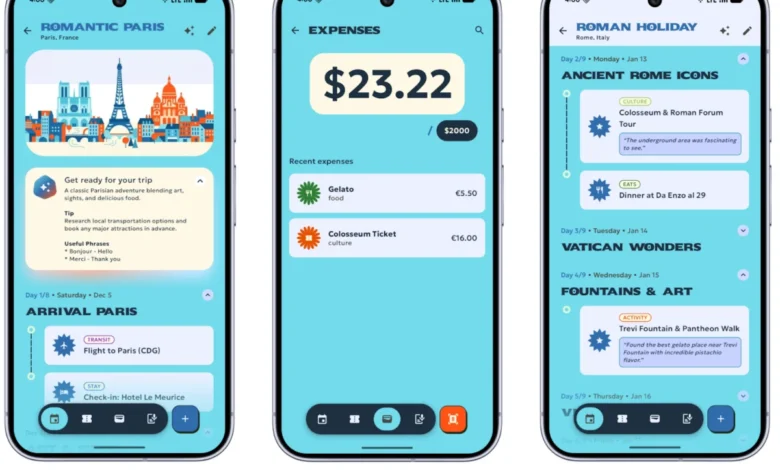
Google’s Android Developer Relations team has officially introduced Jetpacker, a comprehensive technical showcase application designed to provide developers with a blueprint for integrating generative artificial intelligence (GenAI) into mobile ecosystems. Announced by Jolanda Verhoef, Senior Developer Relations Engineer at Google, the project marks a significant step in transitioning Android development from traditional functional programming toward a future defined by personalized, intelligent, and agentic user experiences. The release includes a multi-part technical blog series and an open-source repository on GitHub, aimed at demystifying the complexities of model selection, API implementation, and architectural decision-making in the burgeoning field of mobile AI.
Navigating the Complexity of Mobile Generative AI
The integration of GenAI into mobile applications has historically presented a steep learning curve for developers. This process requires navigating a fragmented landscape of Large Language Models (LLMs), diverse API structures, and critical architectural trade-offs between on-device and cloud-based processing. Jetpacker serves as a reference implementation, built from the ground up using modern Android development standards, including the Material UI design system and the Antigravity framework.
The primary goal of the Jetpacker initiative is to demonstrate how a standard mobile application—in this case, a travel planner—can be transformed through three distinct stages of AI evolution. By moving from a basic utility to an intelligent assistant and eventually to an autonomous agent, Google aims to show that GenAI is not merely an add-on feature but a fundamental shift in how software interacts with users. The app allows users to manage trip itineraries, explore destinations, and organize travel details through a unified, AI-enhanced interface.

On-Device Intelligence: Prioritizing Privacy and Efficiency
One of the central pillars of the Jetpacker showcase is its focus on on-device inference. As consumer concerns regarding data privacy and security reach all-time highs, Google is advocating for a "privacy-first" approach where sensitive information is processed locally on the hardware. By utilizing models like Gemini Nano and the ML Kit GenAI APIs, Jetpacker demonstrates three specific use cases for local processing:
- Itinerary Summarization: Distilling complex travel plans into digestible overviews without transmitting data to external servers.
- Expense Management: Parsing receipts and financial data locally, ensuring that user spending habits remain confidential.
- Voice Note Processing: Converting spoken memos into structured data using the device’s local Neural Processing Unit (NPU).
The technical advantage of this approach extends beyond privacy. On-device inference eliminates the recurring costs associated with cloud API calls and ensures that AI features remain functional in environments with poor or non-existent internet connectivity—a critical requirement for a travel-focused application. Furthermore, local processing significantly reduces latency, providing a more responsive user experience that does not depend on network round-trip times.
The Hybrid Model: Balancing World Knowledge and Resource Constraints
While on-device models offer privacy and speed, they are often limited by the physical constraints of mobile hardware, such as RAM and thermal limits. To address more complex tasks, Jetpacker utilizes cloud and hybrid inference strategies. This approach is essential for features requiring "world knowledge"—data that is too vast to be stored locally—or a larger "context window" for processing extensive documents.
In the Jetpacker demo, cloud-based reasoning is employed for a "Museum Assistant" feature. This tool utilizes "web grounding," a process where the AI model verifies its answers against real-time data from the internet or specific databases like Google Maps. This ensures that information regarding museum hours, exhibits, or historical facts is accurate and up-to-date.

The "hybrid" aspect of the architecture allows the application to dynamically choose between local and cloud models at runtime. For example, when a user drafts a restaurant review, the app can utilize an on-device model if the hardware is capable, or seamlessly switch to a cloud model if the device is a budget-tier unit with limited processing power. This strategy allows developers to support a wide range of Android devices while optimizing for both cost and performance.
Deep System Integration via AppFunctions API
A significant innovation highlighted in the Jetpacker project is the integration of AI features directly into the Android operating system. Rather than confining intelligence to the app’s internal sandbox, Google is encouraging the use of the AppFunctions API. This allows the app’s core capabilities to be surfaced as system-level functions that can be triggered by the OS’s broader intelligence layers.
This integration means that a user might eventually be able to interact with Jetpacker’s travel data through system-wide assistants or shortcuts, without even opening the application. By exposing these "intent-based" functions, developers can make their apps more discoverable and useful within the broader Android ecosystem, aligning with Google’s vision of a more interconnected and proactive mobile experience.
The Shift Toward Agentic Workflows
Perhaps the most forward-looking aspect of the Jetpacker project is its exploration of "agenticness." Unlike traditional AI features that respond to a single prompt, an agentic system operates with a degree of autonomy to achieve a specific goal. This involves an orchestration loop where the model can reason about a task, select the necessary tools (such as calling an external API or checking a calendar), and adapt its path based on the results it receives.

The Jetpacker demo includes a "Booking Assistant" powered by the A2UI and ADK (Agent Development Kit) frameworks. This assistant can automate end-to-end booking workflows, such as searching for flights and initiating reservations. Crucially, the system is designed to keep the user "in the loop," presenting several in-progress options and requiring final confirmation before completing a transaction. This multi-agentic system typically runs in the cloud, with the Android app acting as a sophisticated front-end that manages the user interaction and state visualization.
Technical Chronology and Development Roadmap
The development of Jetpacker follows a strategic timeline aimed at providing continuous education to the developer community. The project was initially showcased at Google I/O 2024 as a technical proof-of-concept. Following the initial reveal, Google has rolled out a detailed documentation schedule:
- Phase 1: Introduction of the high-level architecture and the "Jetpacker" vision.
- Phase 2: Deep-dive into ML Kit and Gemini Nano for on-device implementation.
- Phase 3: Exploration of Firebase AI Logic for cloud grounding and hybrid reasoning.
- Phase 4: Implementation of system-level integration using the AppFunctions API.
- Phase 5 (Upcoming): Comprehensive guide to building agentic workflows with A2UI.
By releasing the code as open-source, Google is inviting the global developer community to audit the implementation, fork the repository, and adapt the patterns for their own commercial or experimental projects.
Industry Implications and Market Context
The release of Jetpacker comes at a time when the mobile industry is pivoting toward "AI-first" hardware. Companies like Qualcomm, MediaTek, and Google itself (via its Tensor chips) are increasingly prioritizing AI accelerators in their silicon. However, hardware capability is only half of the equation; without a robust software framework and clear developer guidelines, these hardware advancements remain underutilized.

Industry analysts suggest that Google’s push for on-device and hybrid AI is a strategic move to maintain Android’s competitive edge against Apple’s "Apple Intelligence" initiative. By providing a clear, open-source path for developers, Google is lowering the barrier to entry for high-quality AI integration, potentially leading to a surge in intelligent apps on the Play Store.
The emphasis on "agentic" workflows also signals a shift in the app economy. If apps begin to function as agents that can communicate with one another through system APIs, the traditional "grid of icons" interface of mobile phones may eventually give way to a more fluid, intent-driven user interface.
Conclusion and Resources
The Jetpacker project represents more than just a demo app; it is a pedagogical tool designed to steer the Android ecosystem toward a new standard of software intelligence. By addressing the practicalities of cost, privacy, and performance, Google is providing a realistic framework for developers to move beyond the hype of Generative AI and into the realm of functional, value-driven implementation.
Developers interested in exploring the Jetpacker project can access the full source code on the official Android AI samples GitHub repository. The accompanying blog series, authored by the Android Developer Relations team, provides the necessary theoretical background to complement the practical code examples. As the industry continues to evolve, these resources are expected to serve as a foundational reference for the next generation of mobile application development.