UC San Diego Engineers Develop High-Efficiency Hybrid Piezoelectric Chip to Revolutionize Data Center Power Conversion for Next-Generation GPUs

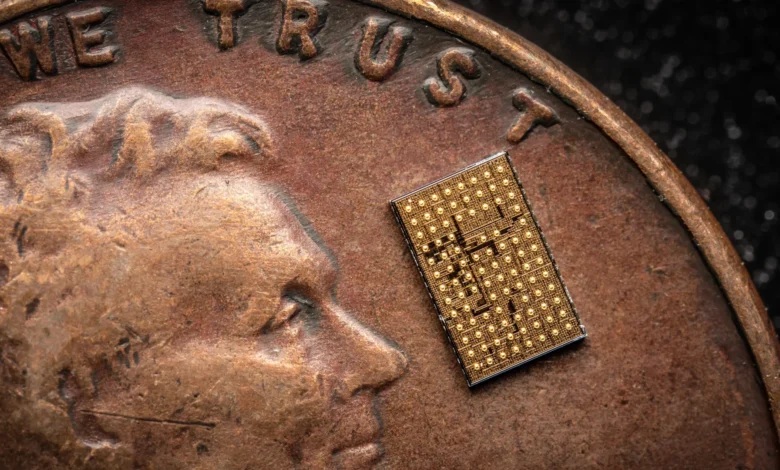
As the global appetite for artificial intelligence and cloud computing continues to accelerate, the infrastructure supporting these technologies is facing an unprecedented energy crisis. Data centers, the physical backbone of the digital world, are consuming vast amounts of electricity, with a significant portion of that energy lost during the complex process of power conversion. Addressing this critical inefficiency, a team of engineers at the University of California San Diego has unveiled a breakthrough chip design that promises to transform how power is delivered to high-performance computing hardware, such as Graphics Processing Units (GPUs).
The research, recently published in the journal Nature Communications, details a novel hybrid DC-DC converter that utilizes piezoelectric resonators instead of traditional magnetic components. This shift in fundamental architecture allows for a more compact, efficient, and high-capacity power delivery system, potentially solving one of the most persistent bottlenecks in modern electronics design: the efficient step-down of high-voltage electricity to the low-voltage levels required by advanced microprocessors.
The Growing Challenge of Data Center Energy Management
To understand the significance of the UC San Diego innovation, one must first look at the current state of data center power distribution. For decades, many data centers operated on a 12-volt distribution architecture. However, as the power demands of GPUs—the primary engines for AI training and inference—have skyrocketed, the industry has transitioned toward a 48-volt standard.
The move to 48 volts is driven by basic physics: higher voltage allows for lower current to deliver the same amount of power, which significantly reduces energy losses caused by resistance in the cables and busbars (known as $I^2R$ losses). While 48 volts is efficient for moving power across a facility, it presents a major problem at the "last inch"—the point where the electricity enters the chip.
Modern GPUs and CPUs do not run on 48 volts; they typically operate at extremely low voltages, often between 1 and 1.5 volts, to maintain the integrity of their microscopic transistors. Converting 48V down to 1V is a massive "step-down" ratio. Traditional power converters struggle with this gap. As the difference between input and output voltage increases, the efficiency of standard converters typically plummets, leading to excessive heat generation and wasted energy.
The Limitations of Traditional Inductive Converters
For over a century, power conversion has relied heavily on inductors—components that store energy in a magnetic field. In a typical DC-DC "buck" or step-down converter, a switch (usually a transistor) opens and closes rapidly, and the inductor smooths out the resulting pulses of electricity into a steady, lower voltage.
While inductive technology is highly refined, it is reaching its physical limits. "We’ve gotten so good at designing inductive converters that there’s not really much room left to improve them to meet future needs," explained Patrick Mercier, a professor in the Department of Electrical and Computer Engineering at the UC San Diego Jacobs School of Engineering and the study’s senior author.
Inductors are inherently bulky because they require coils of wire and magnetic cores. As engineers try to make electronics smaller and more powerful, the size of the inductor becomes a liability. Furthermore, at high conversion ratios (like 48V to 1V), inductors become less efficient and struggle to provide the high levels of current—sometimes hundreds of amperes—that modern AI chips demand.
A Mechanical Solution to an Electrical Problem
To bypass the limitations of magnetism, the UC San Diego team, led by Mercier and Ph.D. student Jae-Young Ko, turned to piezoelectricity. Piezoelectric resonators are materials that convert electrical energy into mechanical vibrations and back again. Instead of storing energy in a magnetic field, these devices store it as physical kinetic energy within a vibrating crystal or ceramic structure.
Piezoelectric components offer several theoretical advantages over inductors. They can be manufactured in much smaller footprints, they do not suffer from the same "core losses" found in magnets, and they are generally more compatible with the processes used to manufacture semiconductor chips. However, historically, piezoelectric converters have faced a significant hurdle: they were unable to handle high power loads or maintain efficiency when the voltage conversion ratio was high.
The Breakthrough: The Hybrid Architecture
The innovation from the UC San Diego team lies in a "hybrid" approach. Rather than relying solely on a piezoelectric resonator, the researchers combined it with a series of small, integrated capacitors in a specific circuit topology.
This hybrid configuration allows the system to divide the voltage stress across multiple components. By using capacitors to assist in the initial stages of the voltage drop, the piezoelectric resonator can operate within its "sweet spot" of maximum efficiency. This design effectively creates multiple pathways for energy to flow, which reduces the electrical strain on any single component and minimizes the energy lost as heat.
In laboratory tests, the prototype chip demonstrated remarkable performance metrics:
- Voltage Conversion: It successfully stepped down 48 volts to 4.8 volts.
- Peak Efficiency: The device achieved a peak efficiency of 96.2%.
- Current Density: The design delivered approximately four times more output current than any previous piezoelectric-based converter reported in scientific literature.
While 4.8 volts is still higher than the ~1 volt needed by a GPU core, it represents a critical intermediate step. In many modern power architectures, a "two-stage" conversion is used, where 48V is first dropped to a "bus voltage" (like 5V or 12V), and a second converter near the chip drops it to the final level. The UC San Diego chip is a prime candidate for that first, most difficult stage of conversion.
Chronology of Development and Support
The development of this technology is the result of years of iterative research within the UC San Diego Power Management Integration Center (PMIC). The PMIC is an Industry-University Cooperative Research Center (IUCRC) supported by the National Science Foundation (NSF).
The timeline of the project highlights a steady progression from theoretical physics to a functional silicon prototype:
- Phase 1 (Conceptualization): Identifying the limits of Gallium Nitride (GaN) and traditional silicon-based inductive converters in the context of the 48V data center shift.
- Phase 2 (Material Science): Selecting piezoelectric materials capable of high-frequency resonance with minimal mechanical damping.
- Phase 3 (Circuit Design): Developing the hybrid topology to incorporate capacitors, ensuring the resonator would not be overwhelmed by high input voltages.
- Phase 4 (Prototyping and Testing): Fabricating the chip and conducting rigorous bench tests to simulate data center workloads.
- Phase 5 (Publication): Presenting the peer-reviewed findings in Nature Communications in late 2023/early 2024.
Overcoming Integration and Manufacturing Hurdles
Despite the impressive lab results, the path to commercializing piezoelectric power converters involves significant engineering challenges. One of the most unique problems is the very nature of the device: it vibrates.
Standard electronic components are attached to circuit boards using solder—a rigid metal bond. However, because piezoelectric resonators must physically move to function, soldering them down can dampen their vibrations, effectively "killing" their efficiency.
"Piezoelectric-based converters aren’t quite ready to replace existing power converter technologies yet," Mercier noted. "But they offer a trajectory for improvement. We need to continue to improve on multiple areas—materials, circuits, and packaging—to make this technology ready for data center applications."
Future research will focus on "soft" mounting techniques or specialized packaging that allows the resonator to vibrate freely while maintaining a stable electrical connection to the rest of the system. Additionally, the team is looking at ways to further miniaturize the capacitors and integrate the entire system into a single "Power Supply on Chip" (PwrSoC).
Broader Implications and Industry Impact
The implications of this research extend far beyond the walls of a data center. As the world moves toward increased electrification, the need for efficient, compact DC-DC conversion is becoming universal.
- Artificial Intelligence: By reducing the heat generated during power conversion, data centers can pack GPUs more densely, leading to more powerful AI clusters without a proportional increase in cooling costs.
- Electric Vehicles (EVs): EVs operate on high-voltage battery packs (often 400V or 800V) but need to power 12V or 48V auxiliary systems (lights, sensors, infotainment). Piezoelectric converters could reduce the weight and size of these conversion units, extending vehicle range.
- Mobile Devices: In smartphones and laptops, where internal space is at a premium, replacing bulky inductors with thin piezoelectric chips could allow for larger batteries or slimmer device profiles.
- Sustainability: On a global scale, even a 1% or 2% increase in power conversion efficiency across all data centers would result in the saving of billions of kilowatt-hours of electricity annually, significantly reducing the carbon footprint of the tech industry.
The project’s success is a testament to the collaborative model of the PMIC, where industry needs directly inform academic research. By focusing on the 48V-to-low-voltage bottleneck, the UC San Diego team has addressed a specific "pain point" identified by major hardware manufacturers and data center operators.
As the team moves into the next phase of development, the focus will shift from "proof of concept" to "industrial reliability." While traditional inductors have had a century-long head start, the hybrid piezoelectric-capacitor design has now established a new frontier in the quest for the perfect power converter. For an industry currently constrained by the laws of thermodynamics and the limits of magnetic materials, this vibration-based approach may provide the necessary "wiggle room" to power the next generation of digital innovation.
Related posts: