The landscape of women’s midlife health is undergoing a significant cultural shift as perimenopause moves from a whispered taboo to a mainstream conversation. Driven by a surge in social media influence and the rise of "FemTech" startups, the period preceding menopause—which can last for several years—is now at the center of a burgeoning commercial market. However, medical experts and researchers are increasingly concerned that this newfound visibility is being clouded by a wave of misinformation and the aggressive marketing of unproven treatments. Despite claims from various wellness brands and diagnostic startups, there is currently no definitive clinical test for perimenopause. Because hormone levels, particularly estrogen and progesterone, fluctuate wildly during this transitional phase, a single blood test often provides a misleading snapshot that does not reflect a woman’s overall hormonal status.
The commercialization of perimenopause has led to a proliferation of supplements, specialized diets, and expensive testing kits that often lack rigorous scientific backing. While symptoms such as hot flashes, sleep disturbances, and mood changes are very real and often debilitating, medical professionals warn that not every ailment experienced in midlife can be attributed to hormonal shifts. The danger of the current "hype" is twofold: it may lead women to spend money on ineffective treatments, and it may cause them to overlook other underlying health conditions that share similar symptoms, such as thyroid disorders or clinical depression. As the market for menopause-related products is projected to reach billions of dollars globally by the end of the decade, the call for evidence-based care and standardized medical guidelines has never been more urgent.
China’s Strategic Advance in the Global AI Arms Race
While the West continues to lead in generative AI development, the gap between Silicon Valley and Chinese innovators is narrowing at an unexpected pace. A Chinese startup, frequently referred to as "Moonshot," has recently released what is currently the world’s largest open-source AI model. This launch represents a significant milestone in Beijing’s ambition to achieve AI self-sufficiency and global leadership. The model reportedly rivals the performance of frontier systems developed by US-based firms like Anthropic and OpenAI, specifically in areas of natural language processing and complex reasoning.
The unveiling of this model had immediate repercussions on the global stage, causing a temporary slide in the stock prices of major US semiconductor and AI-focused companies. Investors are closely watching how Chinese firms circumvent US-led export restrictions on high-end hardware, such as Nvidia’s H100 GPUs. Reports suggest that Chinese domestic alternatives for AI chips are gaining significant traction, with local tech giants projecting massive sales increases as domestic demand for AI compute power surges.
At the World Artificial Intelligence Conference (WAIC) in Shanghai, President Xi Jinping underscored China’s commitment to not only developing its own AI standards but also leading the developing world in AI adoption. Analysts suggest that China is betting heavily on the open-source movement to foster a robust ecosystem that can withstand external geopolitical pressures. By providing powerful models for free or under open licenses, China aims to become the primary infrastructure provider for AI in emerging markets, effectively creating a "Digital Silk Road" for artificial intelligence.
Financial Innovation and Ethics in Social Media Monetization
In the intersection of politics and finance, Trump Media has introduced a controversial new mechanism for monetizing social media activity. The platform has developed an API (Application Programming Interface) designed to sell instant access to "market-moving" posts. This service is targeted primarily at Wall Street traders and hedge funds that rely on high-frequency trading and sentiment analysis to make split-second investment decisions. The ethical implications are profound, as it allows a political figure to potentially profit directly from the volatility created by their own public statements.
This development comes amid heightened scrutiny of trading activities linked to political events. For instance, investigations were recently launched into allegations of insider trading involving a teleprompter operator who reportedly had advance knowledge of market-sensitive remarks. These incidents highlight the growing challenges regulators face in overseeing a digital landscape where the line between political communication and financial market manipulation is increasingly blurred.
Astrophysical Breakthroughs: Atmospheres on Habitable Worlds
The search for extraterrestrial life has reached a pivotal moment with the discovery of an atmosphere on a nearby Earth-like planet. Astronomers using advanced telescopic arrays, including the James Webb Space Telescope (JWST), have identified chemical signatures suggesting a stable atmosphere surrounding an exoplanet located in a potentially habitable zone. This marks the first time such a discovery has been made for a rocky planet of similar mass to Earth.
The presence of an atmosphere is a prerequisite for the existence of liquid water on a planet’s surface and, by extension, the possibility of life as we know it. While the specific composition of this atmosphere—whether it is rich in oxygen, nitrogen, or carbon dioxide—is still being analyzed, the discovery provides a primary target for future deep-space observations. This breakthrough shifts the focus of astrobiology from simply finding planets to characterizing their environments in search of "biosignatures" that could indicate biological activity.

Neural Engineering: Restoring Autonomy Through Brain Implants
In the field of biotechnology, a landmark medical achievement has been reported involving a brain-computer interface (BCI) that restored feeling and movement in a paralyzed man’s hand. The recipient, who had lost sensation and motor control due to a spinal cord injury, is now able to perform complex tasks such as feeding himself and drinking from a cup. This "neural bypass" works by recording signals from the motor cortex and transmitting them directly to electrodes implanted in the muscles of the arm, effectively jumping over the site of the spinal injury.
Remarkably, researchers noted that some degree of movement and sensation continued even when the electronic stimulation was turned off, suggesting that the device may be facilitating a degree of neural plasticity or healing. Parallel to these developments in the West, China has approved its first world-class brain chip for clinical use, signaling a global race to commercialize BCI technology for both medical rehabilitation and potential human enhancement.
Regulatory Pressures: The EU Mandate for Search and AI Competition
The European Union has intensified its regulatory pressure on Big Tech, specifically targeting Google’s dominance in the mobile ecosystem. Under the Digital Markets Act (DMA), the EU has mandated that Google must share its vast troves of search data with competing search providers. Furthermore, Google is being forced to open the Android operating system to rival AI bots, ensuring that its own Gemini AI does not receive preferential treatment or "gatekeeper" status on billions of devices.
These mandates are part of a broader European effort to foster a more competitive digital economy where smaller innovators have a fair chance to compete against entrenched monopolies. For Google, this represents a significant challenge to its business model, which has historically relied on the seamless integration of its services to maintain market share. The outcome of these regulatory battles in Europe is likely to set a global precedent for how AI and search data are governed in the 21st century.
Privacy and Security in the Digital Age: Period Trackers and Adversarial Fashion
As digital tracking becomes more pervasive, two unique areas of privacy concern have emerged: reproductive health data and facial recognition. Recent investigations into period-tracking applications have revealed significant privacy vulnerabilities. Many of these apps, which collect highly sensitive health data from millions of women, have been found to share that information with third-party advertisers and data brokers without explicit or clear consent. In a post-Roe v. Wade legal environment in the United States, the security of this data has taken on new political and legal urgency.
Simultaneously, a new trend in "adversarial clothing" is gaining popularity among privacy advocates. These garments feature patterns and designs specifically engineered to confuse facial recognition algorithms. By overwhelming the sensors with "noise" or false facial features, the clothing allows individuals to move through urban environments without being automatically identified by surveillance systems. While currently a niche fashion statement, the rise of such technology reflects a growing public unease with the ubiquity of biometric tracking.
Sustainable Innovation: Converting Human Waste into Agricultural Resources
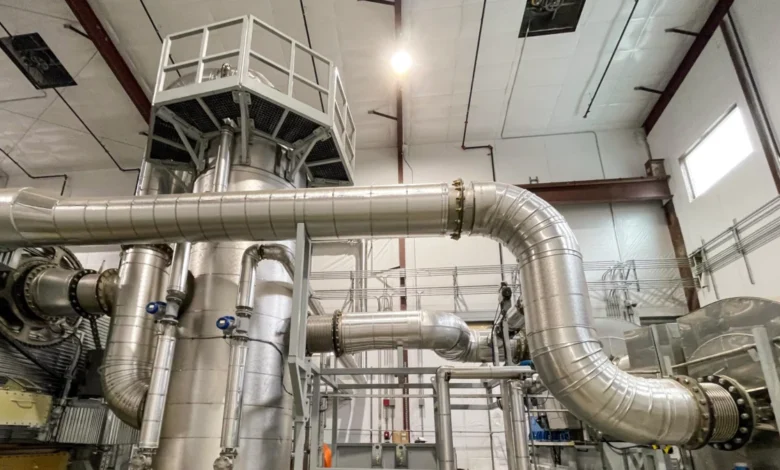
In a move toward a more circular economy, a new industrial facility in suburban Seattle is demonstrating how human and livestock waste can be transformed into a valuable agricultural resource. The facility, operated by a firm named Varcor, uses an energy-efficient vapor-recompression and distillation process to treat fecal waste. This process eliminates pathogens while extracting concentrated nutrients like nitrogen, phosphorus, and potassium—elements that are essential for farming but are currently in short supply or produced through carbon-intensive industrial processes.
This technology reframes the concept of "waste" as a misplaced resource. By scaling these systems, municipalities can reduce the environmental impact of traditional sewage treatment, which often involves energy-heavy incineration or the contamination of waterways. As global food security becomes increasingly threatened by soil depletion and fertilizer shortages, the ability to safely recycle nutrients from urban centers back to rural farmlands represents a critical advancement in sustainable engineering.
Implications for the Future of Technology and Society
The convergence of these diverse technological advancements—from the frontiers of AI and neural engineering to the reimagining of waste management—illustrates a world in rapid transition. The narrowing AI gap between the US and China suggests a future defined by multipolar technological competition rather than unipolar dominance. Meanwhile, the breakthroughs in BCI and exoplanet research continue to push the boundaries of what it means to be human and where humanity might eventually reside.
However, as evidenced by the misinformation surrounding perimenopause and the privacy risks of health-tracking apps, technological progress does not always equate to social benefit. The role of regulation, as seen in the EU’s actions against Google, will be paramount in ensuring that the next generation of technology serves the public interest rather than merely the interests of a few powerful corporations or political entities. As we move further into 2026, the challenge for society will be to balance the breakneck speed of innovation with the necessary safeguards for privacy, health, and ethical integrity.
Related posts: