Peter J. Denning’s Critique of Alan Turing and the Future of Artificial Intelligence

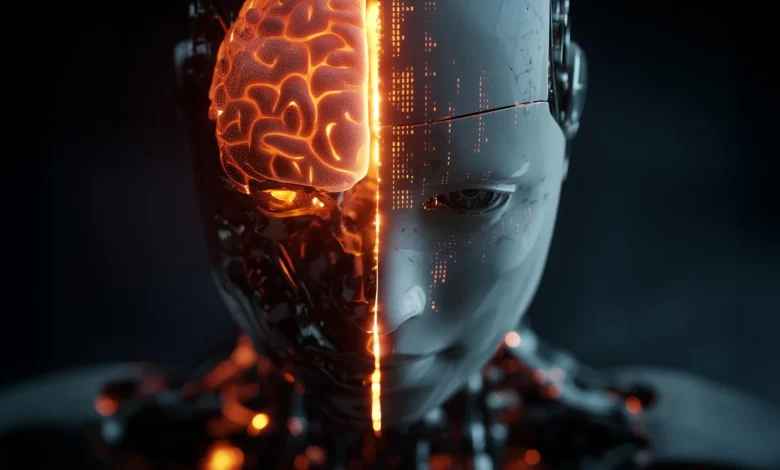
The foundational principles of artificial intelligence, largely established by Alan Turing in the mid-20th century, are being fundamentally challenged by one of the field’s most respected veterans. Peter J. Denning, a prominent computer scientist and professor at the Naval Postgraduate School, argues in his latest work that the pursuit of artificial general intelligence (AGI) is built upon a series of flawed assumptions that have persisted for over 75 years. In his new book, Turing’s Mistake: Escaping the Yoke of Unintelligent Machines, Denning posits that the industry’s current trajectory—driven by the belief that intelligence can be decoupled from physical existence—has led to a modern "AI mess" that threatens to create alien systems incompatible with human values and safety.
The Two Pillars of Turing’s Legacy
To understand Denning’s critique, one must look back to 1950, when Alan Turing published his seminal paper, "Computing Machinery and Intelligence." In this work, Turing proposed what he called the "Imitation Game," now known globally as the Turing Test. Denning identifies two specific claims from this era that he believes have led the industry astray.
The first is the assumption that intelligence is a function of information processing that can exist independently of a physical body. This "disembodied" view of cognition suggests that if the right algorithms are written and enough data is provided, software can replicate the complexities of the human mind. The second assumption is the behavioral metric of the Turing Test itself: the idea that if a machine can successfully imitate a human in a text-based conversation, it has demonstrated intelligence.
Denning argues that our collective "acquiescence" to these claims has shaped the development of everything from early expert systems to modern Large Language Models (LLMs) like ChatGPT, Claude, and Gemini. By focusing on imitation rather than genuine understanding or embodiment, Denning suggests that researchers have spent decades building increasingly sophisticated "unintelligent machines" while moving further away from true human-like cognition.
A Chronology of the Search for Machine Intelligence
The history of AI research is a series of shifts between different paradigms, all of which, according to Denning, fail to address the core problem of tacit knowledge.
- 1950–1956: The Formative Years. Following Turing’s paper, the 1956 Dartmouth Workshop officially birthed "Artificial Intelligence" as a field. Early pioneers like John McCarthy and Marvin Minsky believed that every aspect of learning or intelligence could, in principle, be so precisely described that a machine could be made to simulate it.
- 1970s–1980s: The Era of Expert Systems. This period focused on "Symbolic AI" or "Good Old-Fashioned AI" (GOFAI). Researchers attempted to code the rules of human expertise into databases.
- 1984–Present: The Cyc Project. One of the most significant attempts to solve the "common sense" problem was Douglas Lenat’s Cyc project. Lenat aimed to codify millions of pieces of everyday knowledge. After 40 years and 25 million entries, the project proved that even a massive treasury of facts cannot replicate the background of common sense required for true expertise.
- 2010s–Present: The Connectionist Revolution. The rise of deep learning and neural networks shifted the focus from rules to patterns. While this led to breakthroughs in image recognition and natural language processing, Denning argues it merely scaled the "imitation" problem rather than solving the "understanding" problem.
The Tacit Knowledge Barrier
At the center of Denning’s argument is the concept of "tacit knowledge," a term popularized by philosopher Michael Polanyi, who famously stated, "We know more than we can tell." Denning identifies five major categories of human understanding that remain fundamentally inaccessible to machine learning:
- Common Sense: The intuitive understanding of how the world works, which humans gain through physical interaction.
- Everyday Social Interaction: The nuances of interpersonal relationships and environmental navigation.
- Emotions and Perception: The internal states that color human decision-making.
- Practical Performance Skills: The "know-how" of a virtuoso or a craftsman.
- Cultural Context: The deep historical and social knowledge embedded in human societies.
Denning uses the example of a virtuoso violinist to illustrate the "know-how" gap. While a computer can store the digital representation of a perfect performance ("know-what"), it cannot encode the embodied knowledge required to produce that performance. A robot lacks the biological feedback loops—the feeling of the bow against the strings or the emotional resonance of the music—that define the human experience of skill.
The Representation Problem and the Semantic Gap
Denning identifies what he calls the "representation problem" as the primary technical hurdle. Computers operate through the manipulation of symbols—physical forms like bits and electrical pulses. However, Denning argues that these symbols are not the meanings themselves; they are merely representations.
"Behind every word is a deep well of tacit knowledge that gives it meaning," Denning explains. Current LLMs are remarkably adept at predicting the next word in a sequence based on statistical probabilities derived from massive datasets. However, because these models lack a physical presence in the world, they cannot "know" what a word refers to. They operate in a closed loop of syntax without ever reaching semantics.
This creates a fundamental divide. Because scientists cannot fully explain how tacit knowledge is hosted in the human body—it remains, in many ways, a biological mystery—they cannot translate it into a form that a silicon-based processor can recognize.
The Role of Context and Culture
Intelligence, in Denning’s view, is not a standalone property of a brain or a processor; it is heavily dependent on context. Human communication is a "fractal" system where every conversation rests on previous contexts, social cues, and cultural norms.
Context allows humans to distinguish between a literal statement and a sarcastic one, or to understand when a joke is appropriate versus when a situation requires diplomacy. Denning argues that culture—encompassing values, judgments, and power dynamics—is not something that can be "scraped" from the internet and fed into a neural network.
"Scaling up LLMs with ever larger neural networks will not enable them to acquire the embodied human knowledge we call culture," Denning writes. He suggests that no matter how many trillions of parameters a model has, it will never achieve the objective of the Turing Test: a machine thought process that is truly indistinguishable from human thought, because the foundation of that thought—human life—is absent.
AI Safety and the Risk of "Alien" Intelligence
The implications of Denning’s critique extend beyond philosophy into the realm of global AI safety. Most current safety discussions focus on "superintelligence"—the fear that a machine will become so much smarter than humans that it takes over. Denning, however, warns of a different, more immediate threat: "low-intelligence" machines that are powerful but fundamentally alien.
Because machines and humans do not share the same tacit knowledge or physical reality, there is an "uncrossable divide" between them. This makes the "alignment problem"—the effort to ensure AI goals match human goals—potentially unsolvable. If a machine cannot interpret the unspoken context of human intentions, it may execute commands in ways that are technically correct but practically disastrous.
Denning warns that we are building "agentic networks of machines" that develop their own form of machine intelligence. This intelligence does not care about human concerns because it has no biological or social basis for doing so. "We do not yet know how to live safely with these machines," he admits.
Analysis of Implications and Industry Response
Denning’s perspective aligns with a growing school of thought often referred to as "Embodied Cognition," which argues that the mind is not just in the brain but is a product of the entire body’s interaction with the environment. This stands in stark contrast to the "Computationalism" favored by many Silicon Valley leaders.
Industry giants like OpenAI and Google DeepMind continue to pour billions of dollars into scaling LLMs, operating on the "Scaling Hypothesis"—the belief that as models get larger and see more data, emergent properties of reasoning and understanding will eventually appear. However, Denning’s critique suggests that this is a category error. If he is correct, the industry may eventually hit a "wall" where adding more data yields diminishing returns in terms of actual reliability and common sense.
Data from recent years supports some of Denning’s concerns regarding AI "hallucinations"—instances where LLMs confidently state falsehoods. These errors often stem from a lack of world-grounding; the model understands the statistical relationship between words but does not know that "the sun rises in the east" is a physical fact rather than just a likely sequence of characters.
Reasserting the Human Element
The conclusion of Denning’s argument is a call for a fundamental shift in how society views its relationship with technology. He suggests that the "AI automation singularity"—a point where machines take over most human functions—is not an inevitability but a choice.
"Pulling back… will demand much from us," Denning writes. He advocates for a reassertion of humanity, where society refuses to be "subservient to machines" or to submit to a "yoke" imposed by systems that lack true understanding. By celebrating the differences between human and machine—specifically our capacity for intuition, imagination, and embodied skill—Denning believes we can navigate the challenges of the AI era without losing our cultural identity.
As AI continues to integrate into critical infrastructure, from healthcare to defense, Denning’s warning serves as a reminder that the map (the code) is not the territory (the world). The "mistake" of Turing, in Denning’s eyes, was believing that the two could ever be the same. The future of AI safety and innovation may depend on whether the scientific community continues to pursue the ghost in the machine or begins to respect the irreplaceable nature of the machine’s creator.
Related posts: