React Native 0.83 Marks Major Milestone with React 19.2 Integration and Zero Breaking Changes

The Meta-backed React Native team has officially released version 0.83, a pivotal update that signals a new era of stability and performance for the world’s most popular cross-platform mobile framework. This release is headlined by the integration of React 19.2, a significant overhaul of the React Native Developer Tools (DevTools), and the introduction of several Web-standard APIs aimed at bridging the gap between mobile and web development workflows. Perhaps most notably for enterprise developers and maintainers of large-scale applications, React Native 0.83 is the first release in the project’s history to feature no user-facing breaking changes, marking a significant shift in the framework’s versioning and stability policy.
The Integration of React 19.2 and the Security Landscape
At the core of the 0.83 release is the transition to React 19.2. This update brings two highly anticipated APIs to the mobile environment: <Activity> and useEffectEvent. These additions are designed to give developers more granular control over component lifecycles and performance optimization.
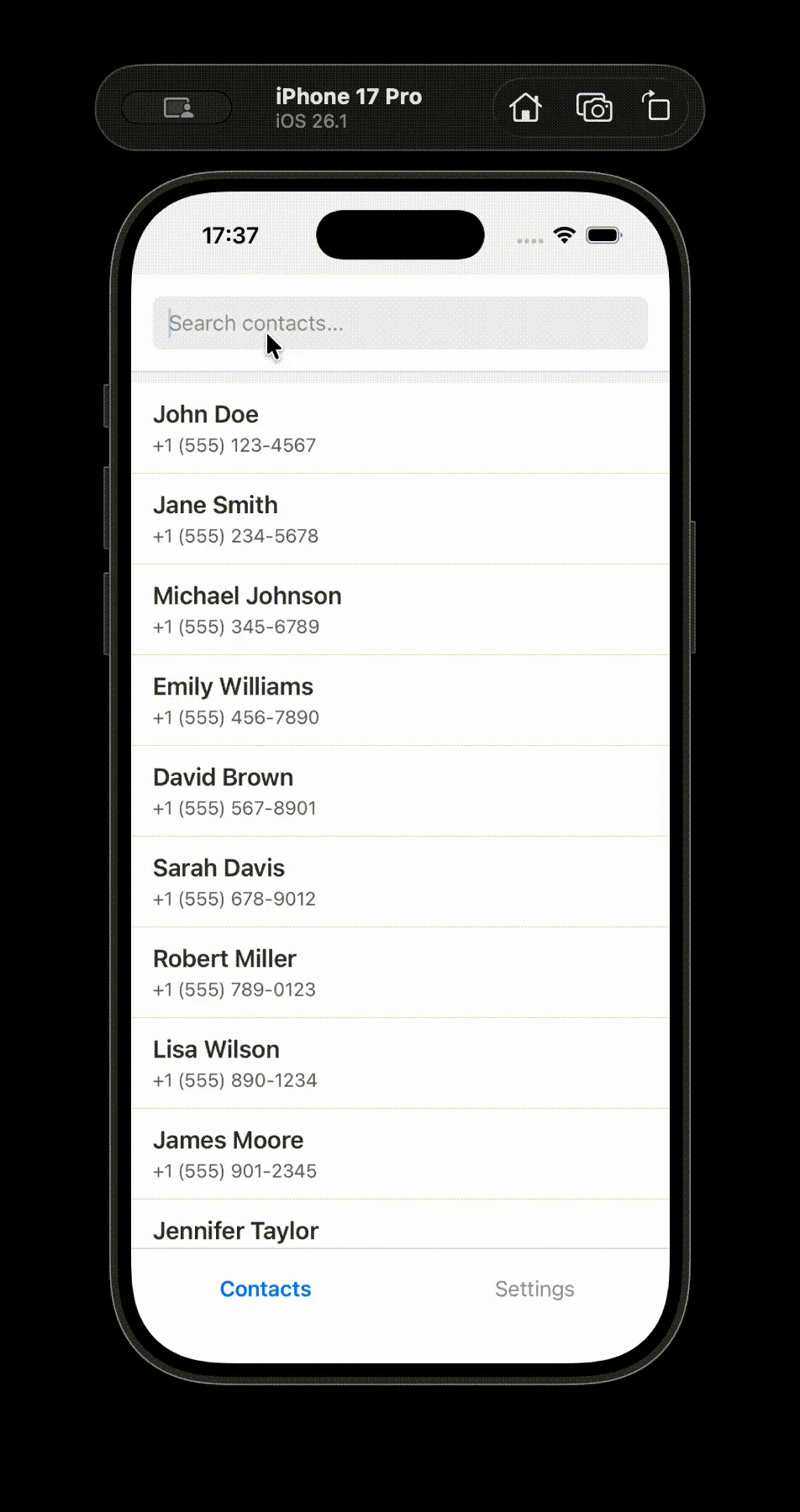
The <Activity> component introduces a way to manage app "activities" by prioritizing or deprioritizing specific parts of the component tree. Supporting ‘visible’ and ‘hidden’ modes, <Activity> serves as a sophisticated alternative to conditional rendering. Unlike standard conditional rendering, which unmounts components and loses their state, a component tree hidden via <Activity mode='hidden'> preserves its internal state, including scroll positions, search inputs, and user selections. This allows for seamless transitions when a user navigates back to a previously visited screen, significantly improving the perceived performance of complex applications.
Simultaneously, the useEffectEvent API addresses a long-standing friction point in React development: the "reactive effect" problem. In previous versions, developers often struggled with useEffect hooks re-running unnecessarily because of dependencies on non-reactive logic. useEffectEvent allows developers to extract "event-like" logic into a dedicated hook that does not trigger re-renders or effect re-runs, maintaining clean code without the need to suppress linter warnings.

The release of React 19.2 also coincides with a broader industry discussion regarding a critical security vulnerability discovered in React Server Components (RSC). The React Native team took the proactive step of clarifying that React Native is not directly affected by this vulnerability, as the mobile framework does not depend on the impacted server-side packages. However, for teams operating in monorepo environments where web and mobile code coexist, the team urged immediate upgrades to React 19.2.1, which will be the baseline for the next React Native patch release.
Revolutionizing the Developer Experience with New DevTools
One of the most substantial improvements in version 0.83 is the complete reimagining of the React Native DevTools. Historically, debugging React Native applications required launching a browser-based interface, which often felt disconnected from the native development environment and lacked certain deep-level inspection capabilities.
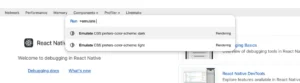
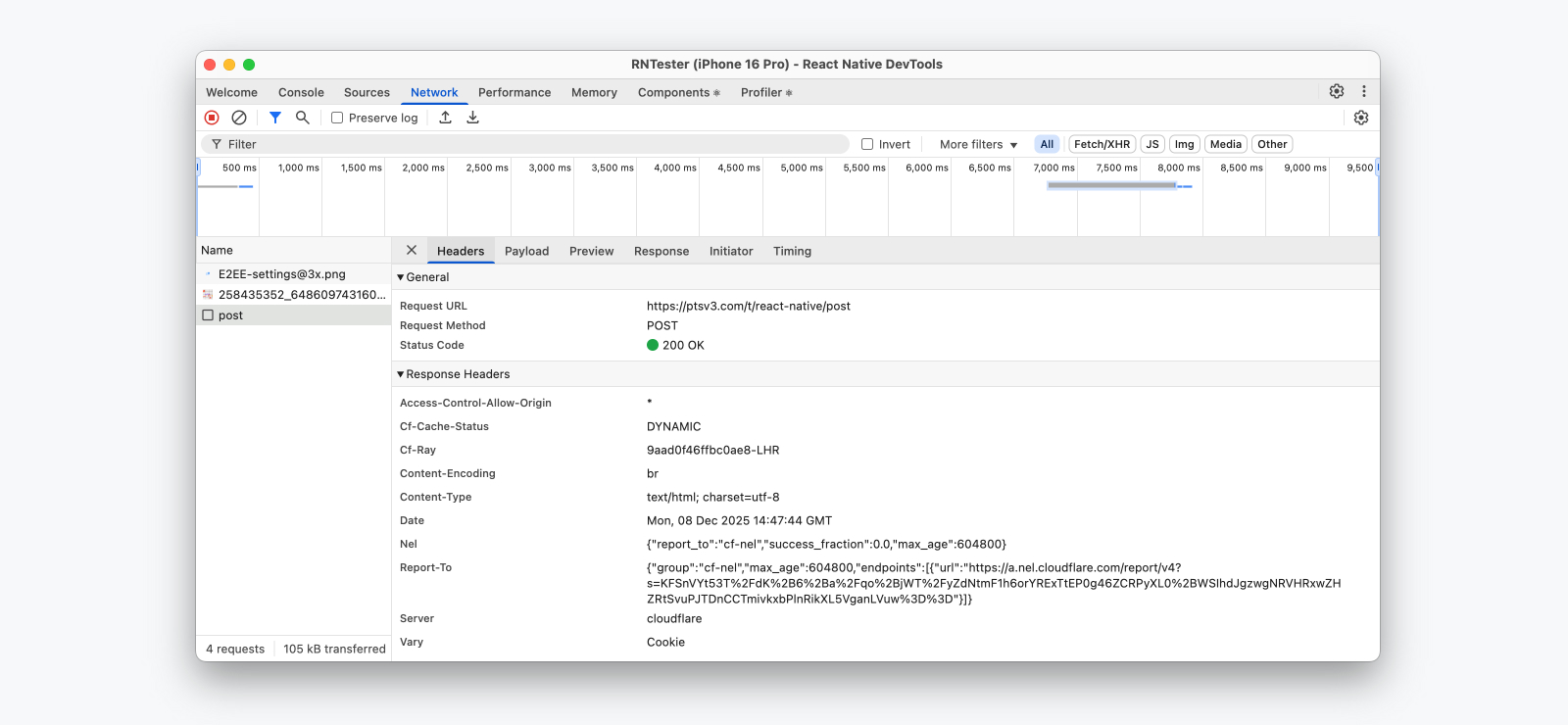
The 0.83 release introduces a standalone desktop application for DevTools, providing a more integrated and performant experience. This new desktop suite includes dedicated Network and Performance panels that offer web-like debugging parity. The Network inspection panel now allows developers to view detailed metadata, including headers and response previews, for all calls made via fetch(), XMLHttpRequest, and the <Image> component. A breakthrough feature in this release is the "Initiator" tab, which enables developers to trace a network request back to the specific line of JavaScript code that triggered it—a functionality that was previously difficult to achieve in a native mobile context.
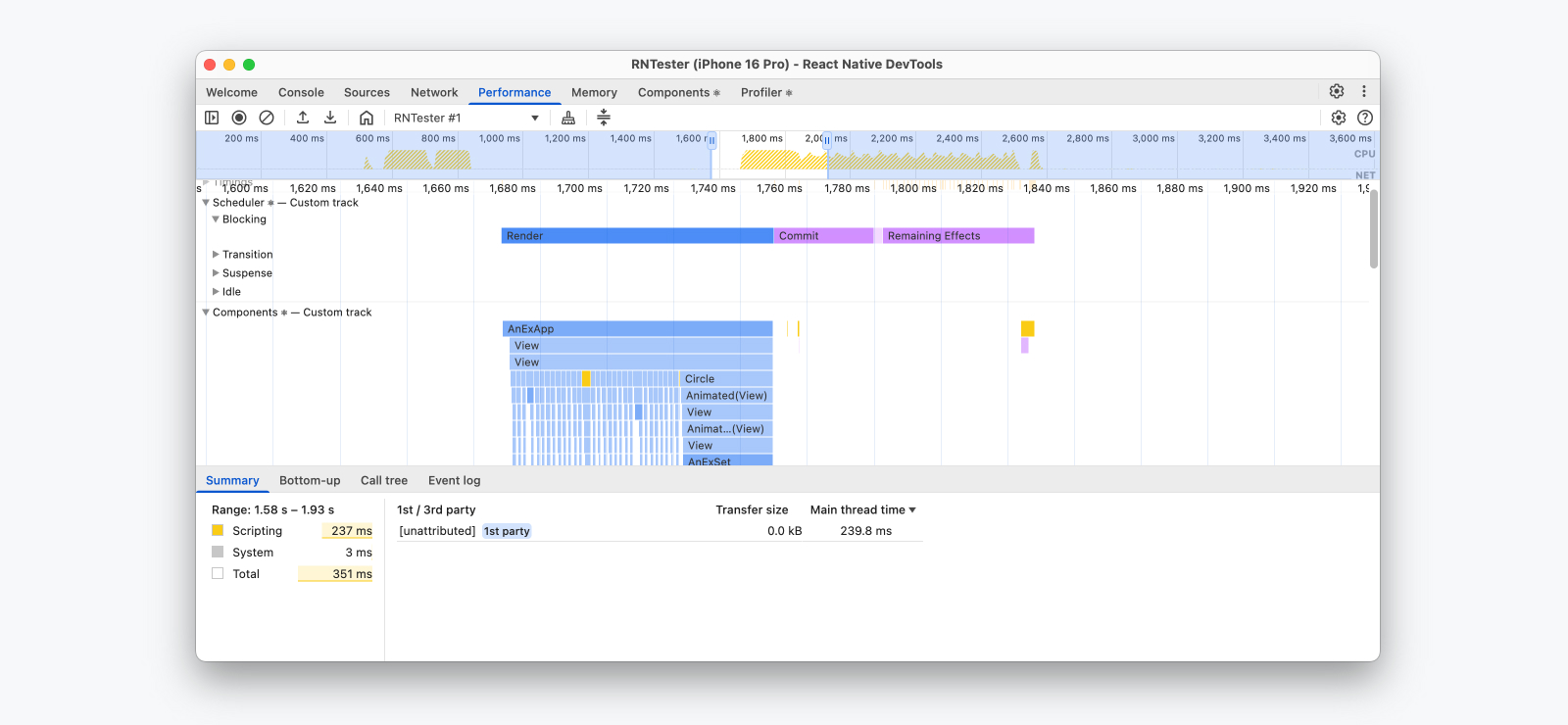
The Performance tracing panel has also seen a major upgrade. It now allows for the recording of performance sessions that visualize JavaScript execution, React performance tracks, and custom User Timings in a unified timeline. By leveraging the Web Performance APIs now stabilized in this release, developers can identify bottlenecks with millisecond precision, ensuring that React Native apps remain responsive even under heavy computational loads.
Bridging the Web-Mobile Divide: Intersection Observer and Performance APIs
A major strategic goal for the React Native ecosystem is "platform parity," ensuring that developers can use the same standard APIs on mobile as they do on the web. Version 0.83 takes a significant step forward by introducing a Canary implementation of the IntersectionObserver API.
IntersectionObserver provides a way to asynchronously observe changes in the intersection of a target element with an ancestor element or with a top-level document’s viewport. In practical terms, this allows for highly efficient implementation of lazy-loading images, infinite scrolling lists, and visibility-based analytics without the performance overhead of traditional scroll listeners. While currently in the Canary phase, its inclusion signals a move toward a more standardized layout-detection system within React Native.
Furthermore, several Web Performance APIs introduced as experimental in version 0.82 have now reached "Stable" status. These include performance.now(), performance.mark(), performance.measure(), and the PerformanceObserver. The stabilization of these APIs allows for consistent performance measurement across production builds, enabling developers to capture real-world telemetry and identify regressions that may not be apparent in local development environments.
Evolution of the Hermes Engine and iOS Architecture
Under the hood, React Native 0.83 continues to push the boundaries of JavaScript execution speed through improvements to the Hermes engine. Hermes V1, the next evolution of the JavaScript engine specifically optimized for React Native, remains in experimental status but has received further performance boosts in its compiler and virtual machine (VM). While Hermes V1 currently requires building React Native from source, the team reports significant gains in startup times and memory efficiency, paving the way for it to become the default in future releases.
For iOS developers, 0.83 introduces an experimental flag, RCT_REMOVE_LEGACY_ARCH, which allows for the complete removal of legacy architecture code from the build process. As the community transitions to the "New Architecture" (Fabric and TurboModules), maintaining legacy compatibility adds unnecessary bloat to app binaries. In internal testing conducted by the Meta team, enabling this flag on a clean project reduced build times from 73.0 seconds to 58.2 seconds—a nearly 20% improvement—and reduced the final app size by approximately 3 megabytes. This represents a major win for CI/CD pipelines and end-user download speeds.
Analysis of the Zero Breaking Changes Milestone
The decision to ship React Native 0.83 with no user-facing breaking changes is a milestone that reflects the maturation of the framework. For years, the React Native upgrade process was often viewed as a daunting task, sometimes requiring days of refactoring to accommodate API shifts or internal architectural changes. By achieving a "break-free" release, the core team is demonstrating a commitment to the "Stability at Scale" philosophy.
This shift is likely a response to the needs of enterprise partners who maintain massive codebases where frequent breaking changes create significant technical debt. By decoupling internal improvements from public API changes, the React Native team is making it easier for organizations to stay current with the latest performance enhancements without risking regressions in their application logic.
Chronology and Ecosystem Support
The development of version 0.83 follows a rigorous release cycle aimed at increasing predictability. This release follows version 0.82, which laid the groundwork for the Performance APIs and the experimental Hermes V1.
Looking forward, the ecosystem is already preparing for the next steps. Expo, the most popular framework built on top of React Native, has announced that support for React Native 0.83 will arrive with Expo SDK 55, scheduled for release in January 2026. This timeline allows Expo to thoroughly test the new DevTools and React 19.2 integrations within their managed workflow.
In line with the project’s support policy, the release of 0.83 moves version 0.80.x into the "unsupported" category. The React Native team continues to maintain a "three-version" support window, ensuring that developers on 0.81 and 0.82 will continue to receive critical security patches while encouraging a transition to the latest stable branch.
Broader Implications for the Mobile Industry
The release of React Native 0.83 occurs at a time of heightened competition in the cross-platform space, with frameworks like Flutter and Kotlin Multiplatform (KMP) gaining traction. By doubling down on web-standard APIs and developer tooling, Meta is reinforcing React Native’s primary advantage: the ability for web developers to transition to mobile with minimal friction.

The inclusion of sophisticated tools like the desktop DevTools and the initiator-tracking for network calls suggests that the framework is moving beyond mere "UI rendering" and into providing a comprehensive, professional-grade development environment. For the broader industry, this release underscores the trend toward "Universal React"—a world where the boundaries between web, iOS, and Android development continue to blur, driven by shared logic, shared APIs, and shared developer tooling.
As the community begins the transition to 0.83, the focus remains on the New Architecture. While many of the most exciting features in this release are experimental or Canary, they provide a clear roadmap for the future of mobile development: a future that is faster, more stable, and more aligned with the standards of the open web. Developers are encouraged to use the React Native Upgrade Helper to facilitate their transition to this landmark version, taking advantage of a smoother upgrade path than ever before.
Related posts: