Claude Fable 5.1 Is Now Available on AWS Bringing Advanced Frontier Intelligence to Enterprise Workflows

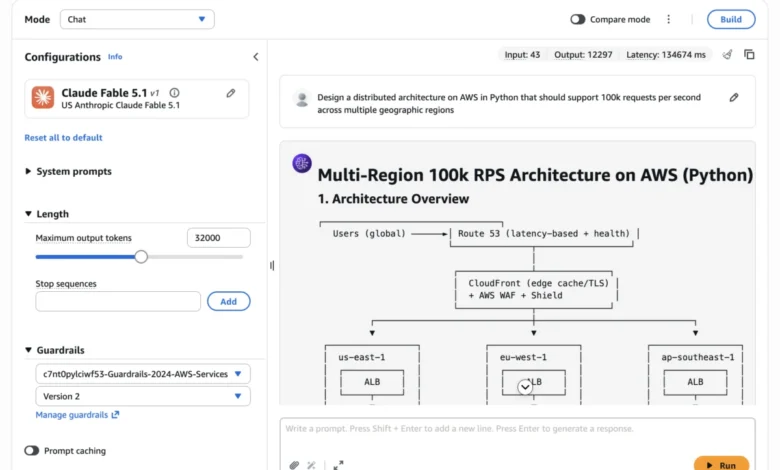
The landscape of generative artificial intelligence took a significant step forward last week as AWS officially integrated Anthropic’s Claude Fable 5.1 into its cloud ecosystem. This release represents a strategic shift in how high-stakes, long-running computational tasks are handled within enterprise environments. By offering this model through both Amazon Bedrock and the Claude Platform on AWS, the companies are aiming to address the increasing demand for autonomous agents capable of managing complex software engineering projects, intricate scientific research, and multi-faceted enterprise workflows that require sustained, high-level reasoning over extended periods.
The Evolution of Frontier Intelligence
Claude Fable 5.1 is engineered to transcend the limitations of typical chat-based AI models. Unlike its predecessors, which are often optimized for singular, turn-based queries, Fable 5.1 is purpose-built for "high-stakes work." This implies a capability set that includes managing an entire software codebase autonomously, conducting comprehensive code reviews, and executing performance optimization tasks across long-running sessions that can span several hours.
Industry analysts suggest that the deployment of such a model signifies a move toward "agentic AI"—systems that do not merely suggest code snippets but actively participate in the lifecycle of a software project. This capability is particularly relevant for sectors such as pharmaceutical research, financial modeling, and large-scale infrastructure management, where errors in logic or context retention can result in significant operational losses.
A New Standard for Data Governance and Safety
One of the most critical aspects of the Fable 5.1 launch is its designation as a "Covered Model." This classification addresses the primary barrier to AI adoption among highly regulated industries: data privacy and security. AWS and Anthropic have introduced a rigorous governance framework to ensure that organizations using this frontier model maintain control over their proprietary information.
Under this new policy, Fable 5.1 users can utilize the aws_review data retention mode. In this configuration, prompts and model outputs are retained for up to 30 days, specifically to facilitate human safety reviews conducted by authorized Amazon personnel. This is a distinct departure from legacy models where data sharing with the model provider was a standard concern. Notably, Amazon Bedrock has clarified that it does not share customer data with Anthropic, ensuring that the model provider remains insulated from the sensitive inputs of the user.
Furthermore, the introduction of Enterprise Frontier Safeguards (EFS) provides an additional layer of security. Developed in a collaborative effort between the two tech giants, EFS allows eligible customers to deploy these advanced models within a controlled, isolated cloud environment. This ensures that even the most sensitive enterprise data remains within the customer’s perimeter, mitigating risks associated with data leakage or unauthorized model training.
Chronology of the Integration
The path to the release of Fable 5.1 follows a rapid succession of advancements in the AWS-Anthropic partnership. Since the initial announcement of the strategic collaboration, the timeline has been marked by a focus on security-first deployment:
- Initial Strategic Alliance: AWS and Anthropic announce a multi-year partnership to develop safer, more capable AI systems, with AWS serving as the primary cloud provider for Anthropic’s model training.
- Expansion of Amazon Bedrock: Throughout the preceding year, Amazon Bedrock expanded to include a diverse library of foundation models, gradually introducing more granular controls for data retention and VPC (Virtual Private Cloud) support.
- The "Covered Model" Framework: Recognizing the risks inherent in frontier models, the companies formalized the "Covered Model" category, creating a dedicated policy pipeline for the most capable AI architectures.
- Launch of Fable 5.1: Following beta testing and safety assessments, Fable 5.1 was made generally available on the AWS platform, marking the first time such an advanced agentic model has been fully integrated into the existing enterprise security stack.
Technical Implications and Market Context
The release of Claude Fable 5.1 arrives at a moment of intense competition in the LLM (Large Language Model) space. While competitors focus on speed and multimodal capabilities, the emphasis on "long-running, high-stakes work" positions Fable 5.1 as a productivity multiplier for engineering teams.
From a technical standpoint, the ability to maintain context over an entire codebase—rather than just isolated files—suggests a significant leap in context window management and architectural reasoning. In traditional LLM deployments, "hallucinations" or context loss often occur when a task exceeds the model’s memory buffer. Fable 5.1’s architecture is designed to mitigate this, enabling the AI to act as a project manager for code, identifying cross-dependency issues that might otherwise require human intervention.
For businesses, the cost-benefit analysis of adopting Fable 5.1 hinges on the efficiency gains in development cycles. By offloading technical debt management and routine maintenance to an agentic model, firms can theoretically reallocate human capital toward innovation rather than troubleshooting.
Official Stance and Future Outlook
While Anthropic has not released specific performance benchmarks regarding the latency of Fable 5.1 compared to its predecessors, the company’s documentation emphasizes that the model is intended for "ambitious tasks." The partnership between AWS and Anthropic is expected to continue evolving as they integrate these models further into the AWS service suite, potentially expanding into automated data center management and predictive supply chain logistics.

For current AWS customers, accessing the new model is straightforward. Developers and enterprise architects can utilize the model card on Amazon Bedrock to review performance metrics and safety parameters. Similarly, the Claude Platform on AWS provides a unified interface for those looking to integrate Fable 5.1 into existing applications via API, ensuring a consistent experience across different deployment tiers.
Broader Impact on the Cloud Ecosystem
The introduction of Claude Fable 5.1 underscores the increasing "commoditization" of high-end intelligence. As AWS continues to provide the underlying infrastructure for these models, the focus for the industry is shifting from "how to build a model" to "how to safely integrate a model."
The move also places pressure on other cloud service providers to offer similar levels of data transparency and governance. By formalizing the aws_review mode and EFS, AWS is setting a precedent that transparency is no longer optional for enterprises looking to scale AI. As more organizations adopt these technologies, the industry can expect to see a stabilization of AI safety protocols, with "Covered Model" policies likely becoming a standard expectation for any AI-integrated enterprise software.
As the industry looks toward the next quarter, observers expect to see further refinements in how these models interact with other AWS services, such as AWS Lambda and SageMaker. The synergy between high-performance computing and specialized AI models like Fable 5.1 will likely dictate the next phase of cloud-native development.
For now, the availability of Fable 5.1 on AWS serves as a testament to the maturation of generative AI. It is no longer a tool for experimentation but a sophisticated utility for production-grade, high-stakes enterprise operations. As developers begin to experiment with the model’s capacity for codebase ownership, the results of these early deployments will provide the data necessary to determine the long-term viability of fully autonomous agents in the corporate workforce.
The integration of such models marks a pivotal turning point in the trajectory of the digital economy, effectively moving the industry closer to a future where software development is a collaborative endeavor between human architects and intelligent, context-aware agents. As these systems become more deeply embedded in the cloud, the promise of increased productivity and reduced operational overhead remains the primary driver of this rapid, ongoing technological shift.