Amazon S3 Vectors now supports metadata pre-filtering for higher recall on filtered searches | Amazon Web Services

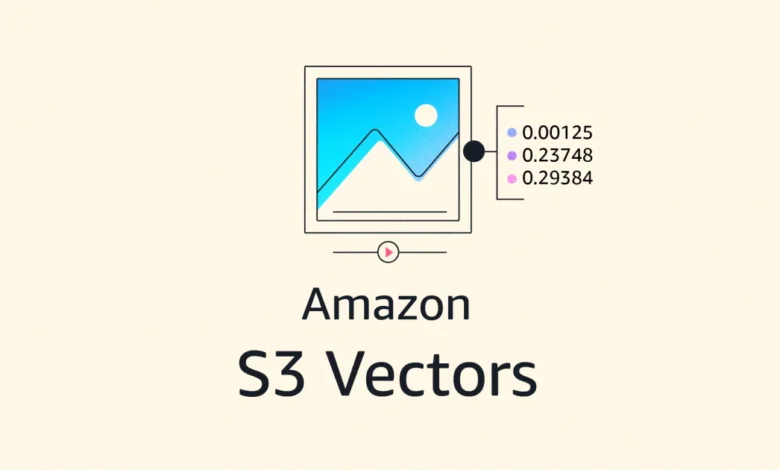
The Evolution of Vector Search in Amazon S3
Vector databases have become the cornerstone of modern artificial intelligence, particularly for applications involving Retrieval-Augmented Generation (RAG) and semantic search. These systems convert unstructured data—such as text, images, or audio—into high-dimensional vectors, allowing machines to find mathematically similar items. However, the efficacy of these systems often depends on the ability to scope searches to specific subsets of data.
Previously, Amazon S3 Vectors operated primarily on a "classic" index mode. In this mode, the system would perform vector similarity searches across the entire dataset and then filter the results based on metadata attributes. While effective for smaller datasets, this approach often led to reduced recall in larger, highly partitioned environments. For instance, if an application sought the top 10 most similar items for a specific user within a database of millions, the classic approach might return irrelevant items from other users, effectively wasting query slots on candidates that would ultimately be discarded by the filter.
The introduction of "Enhanced" mode changes this paradigm. By evaluating metadata filters before initiating the vector search, the system ensures that the similarity engine only considers the specific subset of data defined by the query. This ensures that the requested number of results (the "k" in "top-k") are drawn exclusively from the most relevant data pool, significantly increasing the quality of information retrieved.
Technical Mechanics and Implementation
The implementation of metadata pre-filtering is designed for seamless integration, requiring minimal overhead for developers. The update allows for up to 100 filter constraints per query, with each vector capable of carrying 2 KB of associated metadata.
A key feature of this release is the support for prefix matching via the $startsWith operator. This is particularly beneficial for hierarchical data structures, such as nested file systems, URL paths, or multi-tenant directory structures. By allowing developers to filter by path prefixes, S3 Vectors can now handle complex scoping requirements that were previously difficult to manage without extensive manual indexing.
The transition process for existing users is straightforward. Developers can update their index mode from CLASSIC to ENHANCED without the need for re-ingestion. This in-place upgrade preserves existing data while immediately enabling the new query capabilities. The administrative control is granular, allowing users to toggle index modes on a per-index basis or set a default mode for an entire vector bucket.
Chronology of Amazon’s Vector Search Expansion
The launch of metadata pre-filtering follows a series of incremental updates to Amazon’s AI-focused infrastructure.
- Initial Launch: Amazon introduced S3 Vectors to allow customers to leverage their existing storage infrastructure for machine learning and generative AI workflows, eliminating the need to move data into separate, specialized vector databases.
- The Scaling Phase: As RAG applications grew in complexity, users reported difficulties with multi-tenancy. In large-scale SaaS applications, ensuring that one customer’s data never bleeds into another’s search results became a primary technical hurdle.
- The Current Milestone: With the announcement of pre-filtering, Amazon addresses the performance gap between general-purpose storage and dedicated vector engines, marking a shift toward making S3 a primary engine for high-performance semantic search.
Data-Driven Impact: Why Recall Matters
Recall is the metric that defines the ability of a search system to find all relevant items in a database. In the context of RAG, if a system fails to retrieve the most pertinent documents due to a sub-optimal filtering process, the resulting LLM response is likely to be inaccurate or hallucinated.
Consider a support knowledge base containing 8 million tickets. In a classic index, a query restricted by customer_id might perform a global similarity search and filter down, potentially missing highly relevant but slightly less "similar" documents that would have been caught if the search space had been constrained from the start.
By resolving the customer_id first—as is now standard in ENHANCED mode—the system directs its entire computational budget toward the 400 tickets belonging to that customer. Empirical testing suggests that this approach can yield up to 5x more matching vectors than the classic approach, effectively closing the gap between search performance and data accuracy.
Industry Implications and Market Context
The move by Amazon to prioritize pre-filtering reflects a broader industry trend toward "data gravity." As companies look to reduce the complexity of their technology stacks, the ability to perform high-fidelity vector searches directly within their primary object storage is a significant competitive advantage.
Analysts note that for enterprises, the ability to avoid "data silos" is paramount. By keeping vector indices within S3, organizations reduce the risk of data drift and simplify their security posture. Since the metadata is stored alongside the vector data, security and access control policies applied at the S3 level remain robust and easier to manage.
Furthermore, the absence of additional costs for this feature suggests that Amazon is aggressively positioning S3 as the default backend for generative AI applications. By lowering the barrier to entry for advanced retrieval techniques, the company is encouraging the development of more sophisticated agents that require both high speed and high precision.
Future-Proofing AI Applications
As organizations transition from proof-of-concept AI projects to production-grade enterprise deployments, the requirements for data management become more stringent. The ability to perform complex, multi-condition filtering—such as combining $and, $or, and $gt operators—allows developers to build sophisticated query logic that mirrors traditional SQL capabilities but within a vector space.
For example, a product catalog application can now query for items that are "in stock," "within a specific price range," and "similar to the user’s current selection" in a single, atomic operation. The integration of these filters directly into the query-vectors API allows for a streamlined architecture, where the application layer no longer needs to perform complex post-processing to reconcile database filters with vector similarity scores.
Conclusion: Accessibility and Adoption
Metadata pre-filtering is currently available across all commercial AWS regions, as well as AWS China regions. This widespread availability is a testament to the platform’s focus on enterprise scalability. For developers currently utilizing Amazon S3 Vectors, the path forward is clear: validating current indexes, testing the ENHANCED mode, and eventually standardizing on the new mode for all future deployments.
By removing the trade-off between strict scoping and high recall, Amazon has provided a critical building block for the next generation of AI-driven applications. As the demand for more context-aware, secure, and accurate RAG systems continues to climb, these infrastructure-level improvements will likely define the success of enterprise-scale AI integration. The focus now shifts to how developers will leverage these granular control features to build the next wave of intelligent, data-centric services.