Stack Overflow expands Stack Internal to give AI agents ‘trusted’ enterprise knowledge

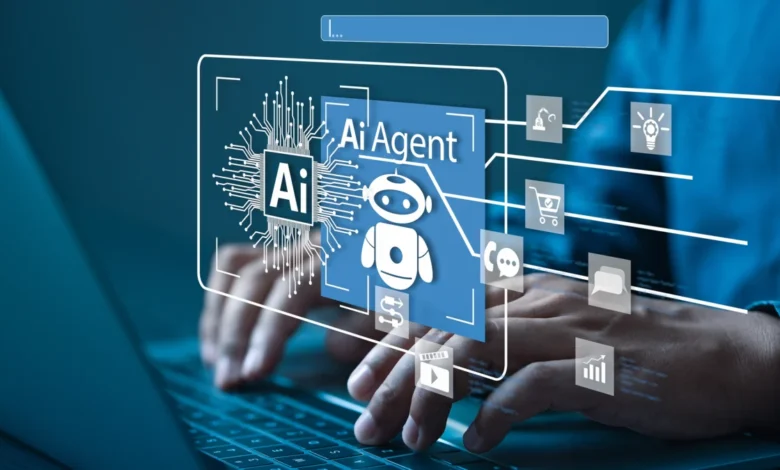
As the software development landscape shifts toward autonomous AI agents, the necessity for a "single source of truth" within corporate environments has never been more acute. Stack Overflow, long the industry standard for public coding discourse, is doubling down on its enterprise strategy with a series of significant upgrades to Stack Internal. These enhancements aim to bridge the gap between fragmented organizational data and the hungry, context-dependent large language models (LLMs) that now drive modern software engineering.
The Evolution of Enterprise Knowledge Management
The transition from static documentation to dynamic, AI-ready knowledge bases represents a pivotal moment in the development lifecycle. Historically, enterprises have struggled with "knowledge rot"—the tendency for internal wikis, Slack threads, and documentation to become outdated, contradictory, or inaccessible. When developers deploy AI coding agents to assist with complex tasks, these agents often hallucinate or provide suboptimal solutions because they lack the specific, nuanced context of the organization’s internal tech stack.
Stack Internal’s new update seeks to address this by transforming raw documentation into structured, "trusted" context. By assigning a trust score to internal data—calculated through factors like provenance, recency, and human validation—the platform provides a quantitative signal for AI agents. This allows an agent to determine, in real-time, whether a snippet of internal code or architectural documentation is reliable enough to act upon, or whether it requires further human intervention.
Chronology of the Platform’s Expansion
The trajectory of Stack Overflow’s enterprise offerings has been rapid over the last 24 months.
- Early 2023: Stack Overflow signaled its intent to pivot toward enterprise-grade AI integration, recognizing that public forum data, while useful, was insufficient for the proprietary needs of large-scale corporations.
- Late 2023: The launch of "Stack Overflow for Teams" began incorporating more AI-driven search capabilities, though these were largely reactive rather than proactive.
- Mid-2024: The industry saw the rise of "agentic" workflows, where AI does not just suggest code snippets but actively navigates terminals and repositories.
- Q1 2025: The current rollout of the Model Context Protocol (MCP) server and advanced ingestion APIs marks a move toward seamless interoperability with tools like Claude Code, GitHub Copilot, and Gemini CLI.
Data and Technical Integration: The Role of MCP
The introduction of an MCP server is perhaps the most significant technical advancement in this update. By standardizing how AI coding tools interact with Stack Internal, the platform removes the "context-switching" friction that has plagued developers. Previously, an engineer might need to jump from their IDE to a browser, search a internal wiki, copy the context, and paste it into a prompt. With the MCP server, the organizational knowledge is piped directly into the developer’s environment, allowing for more fluid interaction with tools like Google’s Gemini CLI or Anthropic’s Claude Code.
Furthermore, the new ingestion APIs support a wide ecosystem of data sources. By pulling information from Microsoft Teams, Slack, and Google Docs, Stack Internal acts as a centralized repository. This is critical because, in many organizations, the most vital technical knowledge is buried in transient communication channels rather than formal documentation.
Official Responses and Industry Sentiment
Industry analysts and practitioners are largely optimistic about the productivity gains, though they remain cautious regarding the implementation hurdles.
"The fundamental problem with early coding agents was the ‘black box’ nature of their reasoning," says Ashish Chaturvedi, an executive research leader at HFS Research. "When an agent treats every internal document as equally credible, you end up with code that adheres to outdated security standards or deprecated libraries. Stack Internal’s trust scoring effectively creates a quality-gate for AI, which is a necessary evolution for enterprise-grade deployment."
However, some practitioners highlight the operational burden. Aditya Ranjan, a senior data engineer at H-E-B, notes that while the expert validation workflow is a powerful tool for accuracy, it introduces a human-in-the-loop requirement that could slow down automated pipelines. "The goal of these agents is to increase velocity," Ranjan observes. "If every piece of critical code requires an expert to hit ‘approve’ in Slack, we haven’t solved the bottleneck; we’ve just moved it."
Broader Implications for the CIO Office
For Chief Information Officers, these features are as much about governance as they are about productivity. As enterprises move from AI prototypes to production-grade applications, the ability to audit why an agent made a specific decision becomes a regulatory and operational requirement.
The new governance controls—including exportable audit trails and custom roles—address a key concern for the C-suite: accountability. When an AI agent pushes a change to a production environment, CIOs now have a mechanism to trace the knowledge source that informed that decision. If the code fails, the audit log can reveal whether the failure was due to a flawed instruction in a Slack thread or a misinterpretation of a policy document.
The Emerging Risks of Automated Trust
Despite the clear benefits, the implementation of trust scores and automated ingestion introduces a new category of enterprise risk. Stephanie Walter, practice lead of the AI stack at HyperFrame Research, warns against over-reliance on automated systems.
"The danger lies in the ‘authority bias’ of a trust score," Walter explains. "If an agent sees a high score, it may stop questioning the input. A piece of information might be ‘recent’ and ‘validated by a lead developer,’ but it could still be contextually wrong for a specific edge case. Furthermore, the act of ingesting everything from Slack threads brings a massive security risk: you are essentially creating a centralized index of your company’s internal chatter, including potentially sensitive, unvetted, or confidential discussions."
This creates a "data hygiene" challenge. Organizations must now invest in knowledge management teams to curate the information being fed into the system. If they fail to do so, the agent will simply be consuming a larger volume of noise, potentially leading to "automated technical debt."
Balancing Velocity and Vigilance
The path forward for enterprise AI is clearly leaning toward hybrid models where machines handle the heavy lifting of information retrieval and synthesis, while humans maintain oversight over the veracity of the underlying knowledge.
As Stack Overflow continues to evolve its platform, the primary challenge will not be technical, but cultural. The success of these tools depends on the willingness of subject matter experts to engage with the validation workflows and the discipline of teams to keep their Slack and documentation repositories clean.
In the coming months, the industry will be watching to see if these "trust signals" lead to a measurable increase in production stability or if they merely add another layer of complexity to the already crowded stack of enterprise DevOps tools. For now, the integration of trust-based context into the developer’s workflow represents a bold step toward the maturation of agentic AI, turning the chaotic sea of corporate information into a structured foundation for future innovation. CIOs will need to remain vigilant, ensuring that the convenience of automated coding does not come at the expense of long-term architectural integrity or security compliance.