Versioning and Tracking Scikit-LLM Experiments with MLflow and Scikit-learn Pipelines

In the rapidly evolving landscape of generative artificial intelligence, the transition from experimental prototype to production-ready deployment represents one of the most significant hurdles for machine learning engineers. As enterprises increasingly integrate Large Language Models (LLMs) into standard scikit-learn workflows, the necessity for robust version control, reproducibility, and lifecycle management has become paramount. By combining the Scikit-LLM library—which facilitates the integration of LLMs into the familiar scikit-learn ecosystem—with MLflow, an open-source platform for the machine learning lifecycle, practitioners can now standardize how these complex models are tracked, audited, and registered.
The challenge of managing LLM-integrated pipelines often stems from the non-deterministic nature of model outputs and the frequent updates to model backends. Without a centralized tracking mechanism, teams often struggle with “model drift” or the inability to reproduce specific classification results when shifting between different model versions, such as moving from a lightweight local Orca Mini instance to a more robust Falcon deployment.
The Evolution of LLM Lifecycle Management
Historically, machine learning pipelines were composed of static algorithms—linear regression, decision trees, or support vector machines—that were easily versioned via simple serialized files. However, the integration of LLMs introduces a dynamic layer of complexity. An LLM is not merely a set of weights but a sophisticated interface to a generative engine that requires specific configuration parameters, context window settings, and prompt templates.
In response to this, the industry has seen a convergence of MLOps tools. Scikit-LLM has emerged as a bridge, allowing developers to wrap zero-shot classification tasks or text vectorization processes within standard scikit-learn pipeline objects. When coupled with MLflow, these pipelines become first-class citizens in an enterprise environment, benefiting from experiment tracking, artifact storage, and a formal model registry.
Technical Prerequisites and Environment Setup
Implementing this workflow begins with a rigorous configuration process. The initial requirement involves setting up the environment to support local execution, which is crucial for organizations that prioritize data privacy by avoiding external API calls for sensitive inference tasks.
For developers operating in cloud-based notebooks or local workstations, the installation process requires specific dependencies:
pip install "scikit-llm[gpt4all]" mlflowThe inclusion of the gpt4all extra is a critical technical detail, as it enables the execution of quantized, local models that do not require proprietary cloud infrastructure. Once the environment is provisioned, developers must initialize the Scikit-LLM configuration. Even in local settings, the library requires placeholder credentials to maintain structural compatibility with its architecture. Furthermore, establishing a persistent database backend, such as SQLite, ensures that the MLflow Model Registry can maintain a historical record of all registered models across multiple sessions.
Establishing the Baseline: The Orca Mini Deployment
The first phase of the pipeline lifecycle involves the creation of a baseline model. By utilizing ZeroShotGPTClassifier, developers can define a classification task without the need for traditional model training or fine-tuning. This "zero-shot" approach relies on the inherent capabilities of the LLM to understand classification labels provided in the pipeline initialization.
In a professional setting, this baseline serves as the "control" against which future improvements are measured. By wrapping the pipeline execution within an MLflow start_run block, researchers can log vital parameters, including the model file path and the specific backend engine. This level of granularity is essential for reproducibility. Should a production issue arise, the ability to pinpoint the exact model file—such as orca-mini-3k-71m-q4_0.gguf—allows for rapid root-cause analysis.
Scaling Up: The Impact of Model Upgrades
The true value of this integrated framework is revealed during the model upgrade cycle. As performance requirements change, teams often need to swap the underlying LLM for one with higher reasoning capabilities, such as the Falcon model architecture.
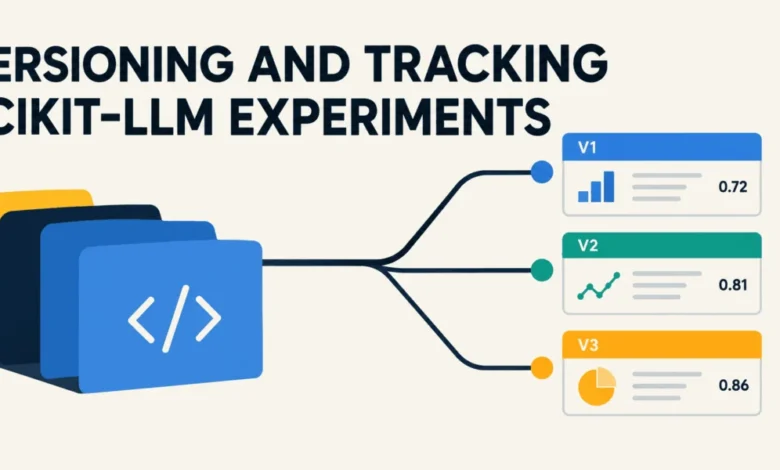
The transition from the baseline Orca Mini to the more resource-intensive Falcon model is managed by simply re-initializing the pipeline with the new model file and initiating a new MLflow run. Because the logging logic is standardized, the transition provides a clear, side-by-side comparison in the MLflow UI. This process effectively mitigates the risk of "black box" updates, where an upgrade is pushed to production without a clear understanding of its performance impact compared to the previous version.
Auditing and the Model Registry
Perhaps the most critical component of this workflow is the transition from a "logged" run to a "registered" model. Logging a run is an exploratory act, whereas registering a model is a formal commitment to production readiness.
Once multiple versions of a pipeline have been executed, the MLflow search API allows engineers to extract performance metrics and metadata into a pandas DataFrame. This audit trail is invaluable for regulatory compliance and internal quality assurance. It allows teams to see the history of failed attempts—which are just as informative as successful ones—and identify the precise point at which a model achieved the desired accuracy threshold.
When a candidate model is selected, it is promoted to the MLflow Model Registry. This creates a versioned artifact that can be retrieved by deployment services. For example, by querying the registry for the Production_ZeroShot_Classifier, an automated deployment pipeline can pull the specific version that was validated, ensuring that what was tested in the lab is exactly what is deployed to the server.
Broader Implications for Enterprise AI
The integration of these tools signals a maturation phase in the deployment of Large Language Models. As LLMs become a standard component of software engineering, the reliance on "ad-hoc" scripts is being replaced by systematic, automated MLOps pipelines.
The implications of this approach are threefold:
- Reproducibility and Compliance: In sectors such as finance, healthcare, and legal services, the ability to explain how a model arrived at a specific classification is a legal requirement. By tracking every parameter and model version, organizations can maintain a comprehensive audit log.
- Operational Efficiency: The ability to swap out LLM backends without rewriting the entire pipeline code reduces technical debt. It allows data science teams to experiment with newer, smaller, or more specialized models as they become available, without disrupting the broader application architecture.
- Risk Mitigation: The use of the MLflow Model Registry acts as a safeguard against untested code entering production. By enforcing a registration step, teams can implement "human-in-the-loop" approval processes, ensuring that only models that meet specific performance criteria are promoted.
Future-Proofing the Machine Learning Lifecycle
The methodology described here represents a shift toward treating AI models with the same rigorous engineering standards applied to traditional software development. As the ecosystem continues to expand, we can expect to see further integration between local LLM libraries and enterprise-grade management platforms.
The current reliance on manual selection of the "best" model will likely evolve toward automated "champion-challenger" models, where incoming data is routed to multiple models, and the one with the highest confidence score or accuracy is automatically registered and promoted. Furthermore, as quantization techniques improve, the ability to run high-performance models on standard hardware will continue to drive the adoption of local, private, and secure LLM deployments.
In summary, the synergy between Scikit-LLM and MLflow provides a robust foundation for organizations looking to scale their AI operations. By implementing a standardized logging and registration process, teams can move beyond the "experimental" phase and begin delivering consistent, reliable, and auditable AI solutions. Whether the goal is to optimize a customer support ticket classification system or to automate complex document analysis, the principles of versioning and tracking remain the bedrock of sustainable machine learning success. As the industry moves toward more complex agentic workflows, the lessons learned from managing simple zero-shot pipelines will serve as the blueprint for the next generation of intelligent, automated enterprise systems.