IHSG Closes Slightly Lower After Dramatic Rebound as Rupiah Weakens Amid Global Market Pressures

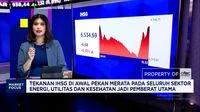
Jakarta, CNBC Indonesia — The Jakarta Composite Index (Indeks Harga Saham Gabungan or IHSG) staged a remarkable late-session recovery on Monday, September 14, 2026, successfully erasing the majority of its steep intraday losses. After plunging by more than 2% during the early trading hours, the benchmark index managed to trim its correction down to a marginal 0.1%, ultimately closing the trading day at the 6,534 level.
However, the broader macroeconomic landscape reflected persistent pressures, notably in the currency market. The Indonesian Rupiah faced renewed downward momentum, weakening to the psychological threshold of Rp 17.640 against the United States Dollar. The dynamic trading session highlighted both the underlying resilience of domestic equities and the acute sensitivity of emerging market assets to shifting global and domestic liquidity trends.
The dramatic market movements at the start of the week were extensively analyzed by anchors Shafinaz Nachiar and Bunga Cinka during the Closing Bell program on CNBC Indonesia. As market participants navigate a complex web of macroeconomic uncertainties, analysts continue to dissect the multifaceted drivers behind Monday’s roller-coaster session, seeking to gauge the trajectory of Indonesian financial markets for the remainder of the third quarter of 2026.
Chronology of the Trading Day: From Deep Sell-Off to Resilience
The trading session on Monday began under a heavy cloud of pessimism. Within the first hour of market opening, the IHSG experienced a sharp and aggressive sell-off. Driven by aggressive foreign capital outflows and nervous selling by retail investors, the index plummeted by over 2%, breaching key technical support levels and triggering widespread caution across various sectoral boards.
Market participants pointed to early morning regional sell-offs across Asia-Pacific markets as a primary catalyst for the initial domestic plunge. Compounding the negative sentiment, the Indonesian Rupiah opened on a weak footing, depreciating rapidly against the greenback as foreign exchange markets reacted to shifts in global risk appetite.
Nevertheless, the tide began to turn entering the afternoon trading session. Bargain hunters stepped in to accumulate blue-chip and heavily discounted large-cap stocks, viewing the morning crash as an overreaction. Heavyweight counters in the banking, consumer goods, and telecommunications sectors slowly regained lost ground, providing the necessary lift to pull the benchmark index away from its intraday lows. By the closing bell at 16:00 Western Indonesia Time (WIB), the IHSG had successfully clawed back most of its deficits, settling at 6,534—a remarkably resilient finish given the morning’s severe correction.
Macroeconomic Sentiments and Market Drivers
Several critical macroeconomic catalysts dominated the attention of institutional investors and market makers at the onset of the week.
First and foremost is the ongoing global monetary policy tightening cycle led by major central banks, particularly the United States Federal Reserve. Persistent inflation prints in developed economies have fueled speculation that interest rates will remain elevated for a prolonged period. This "higher-for-longer" narrative continues to trigger a flight to safety, drawing capital away from emerging markets like Indonesia and back into dollar-denominated assets.
Second, domestic economic indicators have presented a mixed picture for investors. While Indonesia’s fundamental growth metrics remain relatively stable compared to regional peers, the widening current account dynamics and fluctuating commodity prices have introduced volatility. The correction in key export commodities—such as coal and crude palm oil (CPO)—has reduced trade surplus expectations, directly impacting the stability of the local currency.
Third, domestic liquidity conditions and upcoming corporate earnings reports have kept investors on edge. Market analysts noted that institutional portfolio rebalancing at the midpoint of the month also contributed to the sharp intraday volatility, as fund managers adjusted their asset allocations in response to changing macroeconomic probabilities.
Currency Pressures: The Rupiah at Rp 17.640 per US Dollar
The depreciation of the Indonesian Rupiah to Rp 17.640 per US Dollar remains a central point of concern for financial authorities and corporate treasuries alike. A weaker Rupiah increases the cost of imported raw materials and energy, potentially feeding into domestic inflationary pressures and squeezing corporate profit margins, particularly for manufacturing and energy-dependent sectors.
Bank Indonesia (BI), the country’s central bank, has maintained an active stance in the foreign exchange market to manage excessive volatility. Through its triple-intervention strategy—operating in the spot market, the Domestic Non-Deliverable Forward (DNDF) market, and secondary government bond markets—BI aims to anchor market expectations and maintain economic stability. However, external pressures driven by the strengthening US Dollar index continue to challenge emerging market currencies globally.
Economists emphasize that while corporate foreign debt has been managed prudently in recent years, a sustained depreciation toward or beyond the Rp 17.600 level requires heightened vigilance from policymakers to prevent imported inflation from eroding consumer purchasing power.
Expert Analysis and Market Implications
Financial analysts have offered mixed yet pragmatic assessments following Monday’s dramatic market recovery. The ability of the IHSG to defend the 6,500 psychological support zone indicates that domestic institutional buyers, including pension funds and state-owned investment vehicles, continue to act as a stabilizing cushion against foreign capital flight.
However, caution remains the watchword for the days ahead. Technical analysts suggest that while the rebound demonstrates strong buying interest at lower levels, the IHSG must decisively break resistance barriers to confirm a reversal of the current medium-term downtrend. Failure to hold critical support levels in the event of renewed global shocks could expose the index to further downside risks.
For equity investors, the current environment underscores the importance of a defensive asset allocation strategy. Sectors with strong pricing power, solid balance sheets, and minimal foreign exchange exposure are widely recommended by wealth management firms to weather ongoing macroeconomic turbulence.
Outlook for the Rest of the Week
As the trading week progresses, market participants will closely monitor incoming macroeconomic data releases, including domestic trade balance figures, loan growth statistics, and global central bank communications. Additionally, any intervention updates or policy signals from Bank Indonesia and the Ministry of Finance will be scrutinized for clues regarding future monetary and fiscal interventions.
The events of Monday, September 14, 2026, serve as a stark reminder of the interconnected nature of global financial markets and the resilience embedded within Indonesia’s domestic capital ecosystem. While external headwinds and currency depreciation persist, the capacity of the IHSG to mount a robust recovery from a 2% deficit highlights underlying market depth that continues to attract long-term investors looking past short-term volatility.
Related posts: