Microsoft Secures Position as a Leader in the 2026 Gartner Magic Quadrant for Container Management with Furthest Placement for Completeness of Vision

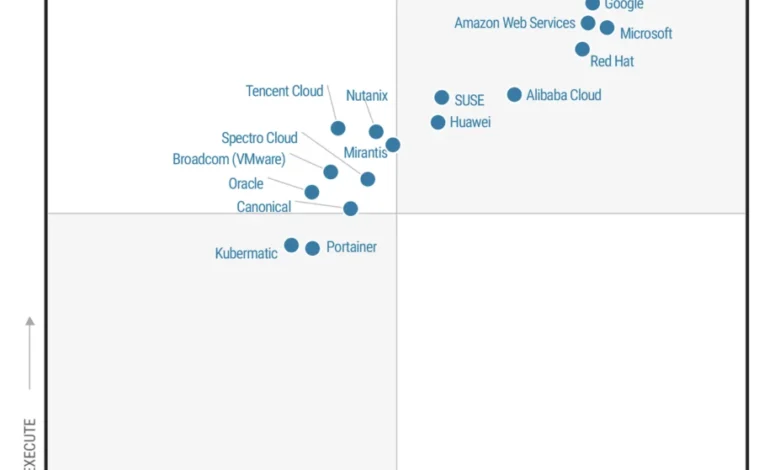
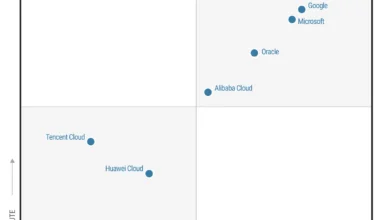
Microsoft has been officially named a Leader in the 2026 Gartner Magic Quadrant for Container Management, earning the furthest placement to the right for Completeness of Vision in the annual evaluation. This recognition highlights the technology giant’s evolving portfolio of enterprise infrastructure solutions, designed to help organizations modernize legacy applications and seamlessly integrate artificial intelligence workloads into production environments without introducing unmanageable operational friction.
The evaluation arrives at a pivotal inflection point for the cloud-native ecosystem. As modern enterprises shift from experimental AI pilots to scaled production deployments, container orchestration platforms are increasingly expected to support a vastly broader spectrum of workloads, operating models, and fragmented deployment environments than early enterprise architects originally envisioned.
Evolution of Container Orchestration: From Distributed Systems to AI Infrastructure
When Kubernetes was first developed more than a decade ago, the primary technical challenge was narrow yet critical: democratizing distributed systems to make the construction of reliable, fault-tolerant services easier for software engineers. Early architects purposely designed schedulers to evaluate workloads based on resource requirements rather than physical or geographical placement, allowing the system to make optimal scheduling decisions without forming rigid opinions about the nature of the software it executed. This flexibility ultimately proved foundational, ensuring that the orchestration framework could adapt as application topologies evolved.
Today, artificial intelligence has fundamentally reshaped the technical requirements of container management. While Kubernetes has demonstrated natural alignment with compute-heavy AI workloads, the broader architectural shift involves moving applications and AI models physically closer to data sources, end-users, and strict regulatory boundaries dictated by data sovereignty laws. Modern organizations require far more than basic container orchestration; they demand a unified platform that delivers a consistent operating model across public cloud regions, on-premises datacenters, edge computing sites, and hybrid environments, all while adapting to rapid technological changes without forcing enterprises to rebuild existing software portfolios.
This overarching vision forms the structural foundation of Microsoft’s comprehensive container ecosystem, which spans Azure Kubernetes Service (AKS), Azure Container Apps, Azure Arc, and Azure Kubernetes Fleet Manager.
Dual Architectural Models for Enterprise Artificial Intelligence
As enterprises operationalize AI at scale, deployment patterns have predominantly coalesced into two distinct architectural models, each addressing different operational and economic priorities.
The first model relies on a persistent serving layer managed by centralized platform engineering teams. In this paradigm, platform operators retain strict control over GPU scheduling, model lifecycles, compliance boundaries, and security governance. As inference volumes grow and predictable throughput becomes critical, organizations prefer treating AI infrastructure like standard enterprise platform capabilities—consumed dynamically by application development teams while remaining governed by central IT. To support this, AKS integrates open-source tooling such as the AI toolchain operator to automate model deployment and GPU provisioning. Furthermore, holding Cloud Native Computing Facility (CNCF) AI Conformance certification ensures that the surrounding software ecosystem remains fully compatible as it scales.
The second model is built around on-demand elasticity and isolation, typically invoked by applications or autonomous agent frameworks that trigger inference tasks, execute generated code, and immediately release compute capacity upon completion. This ephemeral model places a premium on rapid autoscaling, strict workload isolation, and security guardrails for unpredictable agentic behaviors. Azure Container Apps was specifically engineered to support this operational model, offering serverless GPUs for on-demand inference alongside hardware-isolated execution sandboxes that preserve state across discrete user interactions.
Enterprises frequently find themselves needing to deploy both models simultaneously within the same organization. The primary engineering challenge lies in establishing a frictionless boundary between these paradigms—allowing development teams to utilize identical container images, shared identity frameworks, network controls, and governance policies regardless of where the workload executes. While platform teams demand the rigorous governance of the first model for core business systems, application developers and agent frameworks lean toward the agility of the second, often without requiring deep, specialized knowledge of Kubernetes internals.

Maintaining Operational Consistency Across Distributed Estates
As inference workloads decentralize to follow localized data, enterprise IT estates frequently transform from centralized datacenters into sprawling, distributed topologies. Clusters accumulate rapidly across multiple cloud providers, regional datacenters, remote factory floors, and disconnected edge environments where network connectivity may be intermittent or legally prohibited due to jurisdictional data sovereignty mandates.
In these distributed environments, systemic failures are rarely caused by isolated cluster crashes; instead, they stem from coordination failures, including configuration drift across geographical locations, uneven patch deployments, and inconsistent security policies. Hybrid cloud strategies frequently fail when organizations treat these large-scale coordination hurdles as localized cluster problems rather than enterprise platform challenges.
To bridge the gap between cloud and edge infrastructure, Microsoft developed AKS Everywhere, delivering a consistent, Azure-secured Kubernetes platform across disparate hardware footprints. Additionally, Azure Arc for Kubernetes extends unified identity, policy enforcement, and observability frameworks across any CNCF-conformant Kubernetes environment, including clusters running on competing cloud platforms. To combat cluster sprawl—the administrative overhead accompanying rapid infrastructure growth—Azure Kubernetes Fleet Manager provides multi-cluster management capabilities, helping organizations streamline upgrades, workload placement, and policy governance across massive fleets of clusters.
Underpinning this entire portfolio is Microsoft’s ongoing commitment to upstream Kubernetes stability. By avoiding proprietary forks and keeping AKS closely aligned with the open-source upstream project, Microsoft ensures that APIs remain stable regardless of physical deployment location. Data from the CNCF indicates that Microsoft remains the second-largest overall contributor to CNCF projects and the leading contributor among major cloud providers over a sustained three-year period.
Combating Operational Sprawl with Automation and Agentic Operations
As digital transformation accelerates, enterprise cluster counts frequently outpace the growth of internal operations teams. Organizations routinely encounter severe operational friction before establishing formal management frameworks to handle large-scale fleet expansion.
To mitigate this administrative burden, platform vendors are increasingly relying on intelligent defaults and automation. AKS Automatic, for instance, embeds operational best practices derived from Microsoft’s internal experience running hyper-scale Kubernetes infrastructure, abstracting away routine maintenance while preserving full access to standard Kubernetes APIs.
Simultaneously, the industry is witnessing a profound shift toward agentic operations. Industry analysts and engineering leaders anticipate that autonomous IT operations will experience more transformation over the next several years than almost any other domain of cloud management. Tools such as Azure SRE Agent and the AKS MCP Server are designed to assist system operators in transitioning smoothly from initial alert detection to automated diagnosis and remediation, leveraging existing security permissions and compliance controls. Rather than replacing human operators, these agentic systems aim to eliminate the exhaustive, routine investigations that consume substantial engineering hours.
Real-World Customer Momentum and Enterprise Validation
Enterprise adoption of Azure’s container portfolio spans diverse, highly demanding industry verticals—ranging from massive AI training clusters comprising thousands of specialized GPUs to regulated, multi-tenant software-as-a-service (SaaS) platforms and edge analytics running inside heavy industrial manufacturing plants.
Organizations consistently cite flexibility and cost-efficiency as primary drivers for migrating critical workloads to managed container environments. For instance, companies like CallRevu have successfully utilized Azure Kubernetes Service to dynamically scale GPU resources based on real-time call volumes while testing advanced machine learning models safely isolated from production environments.
Industry analysts note that recognition within evaluation benchmarks such as the Gartner Magic Quadrant places clear performance expectations on technology providers moving forward. Ultimately, enterprise IT leaders retain the autonomy to determine the ideal physical or virtual home for every corporate workload. The defining responsibility of a modern container platform is to accommodate shifting deployment strategies seamlessly, sparing engineering teams from the costly necessity of redesigning applications or adopting fragmented operating models as their business requirements scale globally.