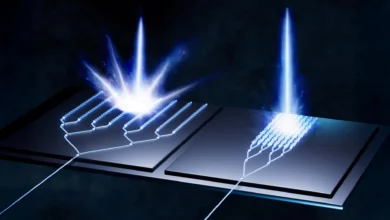
The relentless march of modern computing has long been bound by a physical and thermodynamic dilemma: as our appetite for data processing grows exponentially, the energy required to power traditional silicon-based architectures threatens to outstrip global electrical capacities. For decades, the tech industry has relied on conventional transistors governed by Moore’s Law, packing billions of microscopic switches onto single silicon chips. However, as these transistors approach atomic scales, researchers encounter insurmountable barriers of quantum tunneling, extreme heat generation, and skyrocketing energy consumption. Enter skyrmions—tiny, quasiparticle-like magnetic vortices that operate under entirely different physical principles. According to a landmark study recently published in the prestigious journal Nature Nanotechnology, an international team of researchers has achieved a critical breakthrough in observing and manipulating these magnetic anomalies in real time, bringing humanity one step closer to ultra-efficient, brain-inspired computing architectures.
The groundbreaking research was primarily conducted at the Institute of Physics at Johannes Gutenberg University in Mainz, Germany, with pivotal contributions from the Norwegian University of Science and Technology (NTNU), specifically through its Centre for Quantum Spintronics (QuSpin). By successfully capturing the first-ever real-time footage of a magnetic skyrmion lattice melting while simultaneously exercising precise control over individual skyrmions, scientists have unlocked a new frontier in materials science and electronics. This achievement not only deepens our fundamental understanding of topological condensed matter physics but also provides the empirical foundation necessary to transition skyrmions from theoretical curiosities into tangible, commercial technology.
Understanding Skyrmions: The Physics of Magnetic Vortices
To comprehend the significance of the recent findings, one must first examine the nature of skyrmions themselves. Named after the British particle physicist Tony Skyrme, who originally proposed them in the 1960s as a model for subatomic particles, skyrmions in condensed matter physics are localized, particle-like magnetic swirls that form within certain magnetic materials, typically thin films with specific crystal symmetries and strong spin-orbit interactions.
In a standard ferromagnet, all electron spins point in roughly the same direction, much like a field of wheat bending in unison under a steady breeze. A skyrmion, however, represents a radical departure from this uniformity. Within a skyrmion, the magnetic moments of the electrons twist continuously into a whirlpool-like vortex structure. Crucially, the outer edge of the vortex points in one direction, while the core points in the exact opposite direction. Because of their topological protection—a mathematical property that prevents them from easily unwrapping or decaying—skyrmions are remarkably stable. They can exist as isolated particles or organize themselves into regular, repeating patterns known as skyrmion lattices, mirroring the atomic arrangement of a crystal lattice.
This inherent stability makes skyrmions exceptionally attractive for data storage and manipulation. Unlike conventional magnetic domains on a hard drive, which require substantial magnetic fields to alter and are prone to degradation at extremely small scales, skyrmions can be moved around with remarkably low electrical currents—often up to 100,000 times less current than what is required to move domain walls in traditional spintronic devices. This minuscule energy footprint is what elevates skyrmions from an academic novelty to a holy grail for green computing.
Asle Sudbø, who leads NTNU’s Centre for Quantum Spintronics, emphasizes the paradigm shift these structures represent. "Skyrmions are small, magnetic vortices that can store information in a completely new way," Sudbø explained. "Instead of the current technology, where we constantly need more space and energy to process data, skyrmions could make it possible to build much smaller and more energy-efficient data storage systems."
Chronology of a Breakthrough: Filming the Melting of a Skyrmion Lattice
The journey toward harnessing skyrmions has been marked by steady incremental progress punctuated by moments of intense innovation. For many years, the existence of skyrmions was merely theoretical, confined to mathematical models of high-energy physics. It was not until 2009 that researchers experimentally observed skyrmion lattices in bulk helimagnets using neutron scattering. Throughout the 2010s, scientists demonstrated that skyrmions could be stabilized at room temperature in engineered multilayer thin films, a crucial prerequisite for any real-world electronic application.
Despite these milestones, a significant bottleneck remained: scientists could observe skyrmions statically, but capturing their dynamic behavior—such as how they respond to thermal fluctuations, external magnetic fields, or electrical currents—proved extraordinarily difficult. Understanding how a skyrmion lattice transitions from an orderly, crystalline arrangement to a disordered, liquid-like state (a process known as lattice melting) was largely a matter of theoretical speculation.
The study published in Nature Nanotechnology shattered this observational barrier. For the first time in history, researchers successfully recorded the melting of a magnetic skyrmion lattice in real time. More impressively, the experimental setup allowed the team to manipulate individual skyrmions concurrently while the filming was taking place.
"For the first time, researchers have managed to film how a magnetic skyrmion lattice melts in real time, while simultaneously being able to manipulate each individual skyrmion directly as they film it," Sudbø noted. "For example, both their shape and size can be changed ‘on the fly’."
This unprecedented level of control was achieved by combining advanced transmission electron microscopy with localized electrical and thermal stimuli. By observing the exact mechanisms by which the lattice breaks down, the researchers gained critical insights into the energetic thresholds required to create, alter, and annihilate individual magnetic vortices. This dynamic control is paramount; to build functional logic gates or memory cells out of skyrmions, engineers must be able to write, read, and delete them reliably and at nanosecond speeds.
Neuromorphic Computing: Building Machines That Think Like Brains
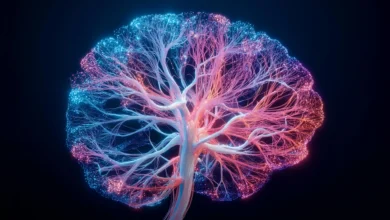
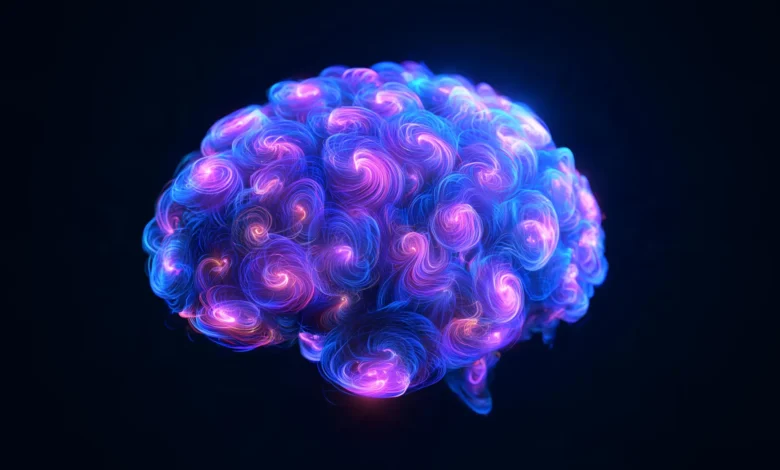
While the immediate benefits of skyrmions point toward denser, more energy-efficient non-volatile memory devices, their long-term promise extends far beyond conventional data storage. The most transformative application lies in the realm of neuromorphic computing—an emerging field dedicated to designing computer hardware that mimics the neural architecture of biological brains.
Traditional computers operate on the von Neumann architecture, which strictly separates the central processing unit (CPU) from the memory storage units. Data must constantly shuttle back and forth across a bus, a process that consumes significant amounts of time and energy—a phenomenon known in computer science as the "von Neumann bottleneck." Furthermore, standard computers rely on binary logic (zeros and ones) executed via rigid transistor switches.
The human brain, by contrast, operates on an entirely different paradigm. It is an analog, massively parallel network where processing and memory are inextricably intertwined within billions of interconnected neurons and synapses. The brain consumes a mere 20 watts of power—roughly the energy required to power a dim incandescent light bulb—yet it effortlessly performs complex pattern recognition, adaptive learning, and real-time decision-making tasks that would require massive supercomputers running on megawatts of electricity.
Skyrmions, with their particle-like behavior, rich dynamics, and ability to interact with one another in complex spatial networks, provide an ideal physical medium for emulating neural synapses and neurons. Because they can be continuously modulated in size, shape, and position, skyrmions can represent analog weights similar to the synaptic strengths found in biological neural networks.
"These nanoscale vortices could help develop computers that resemble biological brains," Sudbø stated. By leveraging topological magnetism rather than traditional charge-based transistor logic, future neuromorphic systems could process information locally and adaptively. In principle, this approach could dramatically reduce electricity consumption, potentially allowing future computers to perform complex cognitive tasks, machine learning workloads, and autonomous reasoning with a fraction of the energy footprint demanded by today’s data centers.
Spintronics and Topological Quantum Effects
The broader academic and industrial implications of the Mainz and NTNU study touch heavily upon the fields of spintronics and quantum information science. Spintronics (short for spin electronics) goes beyond standard electronics by exploiting not only the electrical charge of electrons but also their intrinsic quantum property known as spin. By manipulating electron spins, spintronic devices can achieve higher processing speeds, lower power dissipation, and non-volatile data retention.
Skyrmions reside at the vanguard of spintronics. Because they are topological entities—meaning their structural integrity is protected by mathematical invariants—they are exceptionally resilient against localized defects and impurities in the host material. An electric current passing through a skyrmion lattice can herd the vortices along without causing them to scatter or dissolve, minimizing resistive heating losses.
Furthermore, the topological quantum effects associated with skyrmions open up fascinating pathways for quantum computing architectures. Researchers are increasingly investigating how topological quasiparticles can be utilized to build fault-tolerant quantum bits (qubits) that are naturally shielded from environmental decoherence, one of the primary obstacles facing modern quantum hardware developers.
Analysis of Implications and Industry Challenges
Despite the immense enthusiasm generated by the Nature Nanotechnology findings, industry analysts and physicists urge a measured perspective. Translating fundamental discoveries in condensed matter physics into commercially viable consumer electronics is a notoriously arduous path fraught with engineering hurdles.
Several critical challenges remain before skyrmions can replace or even supplement conventional silicon technology:
- Material Stability: While skyrmions have been successfully stabilized at room temperature in laboratory settings, maintaining this stability across the wide operating temperature ranges required for consumer electronics—from sub-zero winter conditions to the intense heat of a running laptop—remains difficult.
- Integration with Existing Manufacturing: Semiconductor fabrication plants are optimized for silicon CMOS (Complementary Metal-Oxide-Semiconductor) manufacturing. Integrating skyrmion-based magnetic materials onto standard silicon wafers without disrupting existing fabrication lines requires entirely new manufacturing processes and tooling.
- Scalability and Speed: Although researchers can now manipulate individual skyrmions in real time under a microscope, scaling this control to manipulate millions or billions of skyrmions simultaneously at gigahertz frequencies is an engineering mountain yet to be climbed.
Nevertheless, the historical trajectory of technology suggests that fundamental breakthroughs in materials science invariably find their way into practical applications over time. The transition from vacuum tubes to transistors, and from discrete transistors to integrated circuits, faced similar skepticism in their infancy. The ability to film and manipulate skyrmion lattices in real time marks a transition from empirical trial-and-error to precise, deterministic engineering of topological magnetic states.
Conclusion: A Revolution on the Horizon
The successful observation and real-time manipulation of melting skyrmion lattices represent a watershed moment for nanoscale physics and computer engineering. By bridging the gap between theoretical topology and empirical observation, the collaborative work led by researchers at Johannes Gutenberg University and NTNU provides the blueprint for overcoming long-standing energy and spatial limits in modern computing.
As the global demand for artificial intelligence, machine learning, and data processing continues to skyrocket, the limitations of traditional silicon-based architectures become increasingly acute. Technologies that look beyond binary transistor logic toward the rich, energy-efficient dynamics of topological magnetic vortices offer a beacon of hope for a sustainable technological future.
While substantial development is still required before skyrmions populate everyday consumer devices, the foundational science is advancing at a breathtaking pace. By learning to observe, control, and harness these tiny magnetic whirlpools, scientists are laying the groundwork for a complete reimagining of computational hardware.
"This could revolutionize the way we think about computers," Sudbø concluded. If future generations of computers succeed in mimicking the elegance, adaptability, and energy efficiency of the human brain through the power of skyrmions, historians may well look back upon this recent microscopic breakthrough as the moment the paradigm truly shifted.