Office Depot Parent Company Rebrands as Office Depot Group, Retiring ODP Name in Major B2B and Retail Alignment

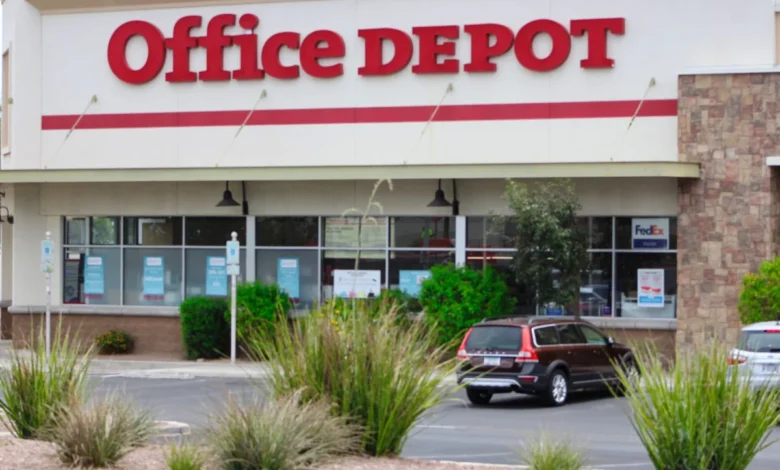
Office Depot’s parent organization has officially dropped its corporate moniker, transitioning from The ODP Group to the Office Depot Group. Alongside this corporate-level renaming, the company is also retiring the designation of its distribution and business-to-business (B2B) division, ODP Business Solutions, rebranding it simply as Office Depot Business. This strategic corporate maneuver successfully unifies a retail and commercial legacy spanning more than four decades under a single, highly recognizable master brand. The consolidation brings both the physical retail store footprint and the extensive B2B distribution network under the unified Office Depot banner, eliminating internal silos and presenting a singular front to consumers, corporate clients, and enterprise partners alike.
The transition marks a definitive chapter in the ongoing corporate evolution of a retail giant that currently holds the No. 24 spot in the prominent Top 2000 Database, an authoritative industry ranking of North American online retailers measured by annual ecommerce sales. Within the office supplies and corporate provisioning sector, Office Depot stands firmly as the second-largest retailer, trailing only behind industry rival Staples. By leaning heavily into its legacy name, leadership hopes to capitalize on ingrained consumer trust while streamlining operations to better compete in a modern, highly digitized omnichannel marketplace.
Strategic Rationale and Leadership Perspectives
Company executives have championed the rebrand as an essential step toward achieving complete branding consistency and clarity. Craig Gunckel, the chief executive officer at Office Depot, took to professional networking platforms to articulate the vision behind the corporate shift, emphasizing the immense equity built into the 40-year-old brand name.
Office Depot is a brand with more than 40 years of history behind it — the kind of recognition that can’t be built overnight, only earned over decades by showing up for our customers, our partners and the communities we serve, Gunckel wrote in a public statement.
According to corporate communications, the newly minted Office Depot Group branding will roll out progressively across all consumer touchpoints, including the primary enterprise websites, corporate communications channels, and social media networks over the coming weeks. Leadership maintains that returning to the foundational roots of the enterprise will yield compounding positive dividends for internal personnel, loyal buyers, and corporate partners who have relied on the company’s services for generations.
As we continue rebuilding this business for the future, we believe returning to that legacy will have a tremendous, positive impact — for our co-workers, our customers and everyone who has relied on Office Depot for a generation, Gunckel added.
Historical Context and Evolution of the ODP Corporate Structure
To fully understand the weight of this latest corporate rebrand, one must examine the complex evolutionary timeline of the parent company. For decades, Office Depot operated as a dominant, publicly traded retail powerhouse before entering a transformative period marked by mergers, structural reorganizations, and strategic shifts toward digital and enterprise B2B sales.
In 2013, Office Depot merged with rival OfficeMax in a multi-billion-dollar stock-for-stock transaction, creating a combined corporate entity that sought to rationalize the brick-and-mortar footprint of both legacy brands in the face of declining retail foot traffic and the rise of e-commerce giants like Amazon. Following the merger, the parent organization operated under the name Office Depot, Inc., continually adjusting its operational model to pivot away from pure-play retail toward high-margin contract stationery, corporate services, and technology solutions.
By late 2021, the company executed a significant corporate restructuring, separating its retail operations from its B2B distribution and sourcing arms. This maneuver resulted in the creation of a holding company named The ODP Corporation (often referred to as The ODP Group). Under this holding structure, the enterprise was divided into distinct operating units: ODP Business Solutions (handling B2B distribution and contract sales), Office Depot LLC (managing retail stores and direct consumer e-commerce), Veyer (the supply chain and sourcing arm), and CompuCom (the IT services subsidiary).
While this multi-brand architecture allowed the company to isolate and target specific market segments, it ultimately created consumer confusion and fragmented the overall corporate identity. Procurement officers, retail shoppers, and B2B buyers frequently struggled to untangle the web of subsidiary names. The latest rebrand to Office Depot Group and the retirement of the ODP Business Solutions name in favor of Office Depot Business represents a direct effort to dismantle this fragmentation, returning to a singular, cohesive market identity.
Market Positioning and the B2B Landscape
The transformation of ODP Business Solutions into Office Depot Business carries immense significance for the company’s commercial strategy. In the modern corporate landscape, B2B e-commerce represents a primary engine for sustainable revenue growth. Office Depot’s extensive distribution network serves thousands of enterprise clients, educational institutions, government agencies, and small-to-medium-sized businesses (SMBs).
However, applying a legacy retail brand to an enterprise-level B2B distribution model is not without strategic challenges. Marketing and branding experts have analyzed the rebrand closely, noting both the immediate advantages in brand equity and the potential pitfalls associated with legacy retail positioning.
Alys Reynders, chief marketing officer at operations platform Quickbase, offered a balanced perspective on the operational risks and rewards of the corporate overhaul. While she acknowledged that the move achieves vital brand consistency, she highlighted potential perceptual hurdles among enterprise procurement professionals.
One big concern is that procurement officers have already built four decades of connotations to the Office Depot brand as a brick-and-mortar entity, which could dilute the identity of the company and its perceived areas of expertise, Reynders explained.
Reynders noted that a brand carrying 40 years of heavy retail recognition can inadvertently box itself into a corner. Buyers accustomed to purchasing printer paper, binders, and ink cartridges at a local strip-mall storefront may harbor preconceived notions about the firm’s capacity to deliver complex enterprise solutions, logistics management, or specialized technological services.
This may carry an unwanted impact where the aligned branding masks the broader scope of the company as a whole, which runs the risk of limiting what clients believe the firm can and can’t do for them, Reynders cautioned.
Despite these risks, Reynders emphasized that the long-term benefits of brand unification outweigh the initial friction, provided the company executes a disciplined marketing strategy to educate the market on its full-service capabilities.
Overall, this stronger alignment means that Office Depot has the opportunity to unify its identities beyond the barriers created by operating under different names. It can take some smoothing out by marketing teams, but when managed effectively, operating under a single entity can stamp out customer confusion about who the brand is and its heritage, she assessed.
Academic Analysis: Overcoming Legacy Constraints
Echoing these strategic observations, Shailendra Pratap Jain, a professor of marketing at the Foster School of Business at the University of Washington, pointed out that while the corporate rebrand grants immediate familiarity, it also forces the company to contend with the historical boundaries of its own legacy.
The B2B side is particularly interesting. Renaming ODP Business Solutions as Office Depot Business gives the company immediate familiarity and legitimacy, Jain stated. It also creates a strategic challenge: can a brand strongly associated with retail office supplies stretch credibly into a broader B2B solutions and distribution identity?
Jain characterizes the rebrand as a powerful and visible signal of a corporate turnaround, but he stresses that nomenclature alone cannot substitute for comprehensive operational execution. A name change sets the stage, but the daily delivery of value must align with the elevated brand promise.
But the name itself cannot accomplish the turnaround, Jain cautioned. The real test is whether Office Depot can convert legacy brand awareness into a new meaning — from ‘the place where businesses buy office supplies’ to ‘the company that helps businesses operate.’
To achieve this ambitious perceptual shift, Jain notes that Office Depot Group must meticulously orchestrate every facet of its marketing mix. This includes refining its target audience segmentation, adjusting its product and service portfolios, optimizing pricing architecture, and aligning its promotional messaging with the needs of modern enterprise buyers.
Whether the move successfully accomplishes this shift will determine whether returning to the past becomes an asset for the future, Jain concluded.
Broader Industry Implications and Future Outlook
The decision by Office Depot Group to consolidate its operating entities reflects a wider macroeconomic trend among legacy retail and distribution conglomerates. In an era defined by margin compression, supply chain volatility, and fierce competition from digital-first native platforms, corporate entities are increasingly realizing that fragmented branding models waste valuable marketing capital and confuse key decision-makers.
By consolidating under the universally recognized Office Depot banner, the parent company is betting that heritage is still a powerful differentiator. In crowded commercial sectors where trust and reliability are paramount, a brand with a multi-decade track record can inspire confidence—provided it successfully modernizes its value proposition.
As Office Depot Group rolls out its unified branding across digital touchpoints, supply chain operations, and commercial contracts in the coming weeks, industry observers will be watching closely. The ultimate success of the rebrand will not be measured by the corporate name printed on annual reports or website headers, but by its ability to convince corporate procurement officers, enterprise partners, and everyday consumers that Office Depot is no longer just a store down the street, but an indispensable operational partner for the modern business world.