Docling: Bridging the Gap Between Unstructured Enterprise Data and AI Model Readiness

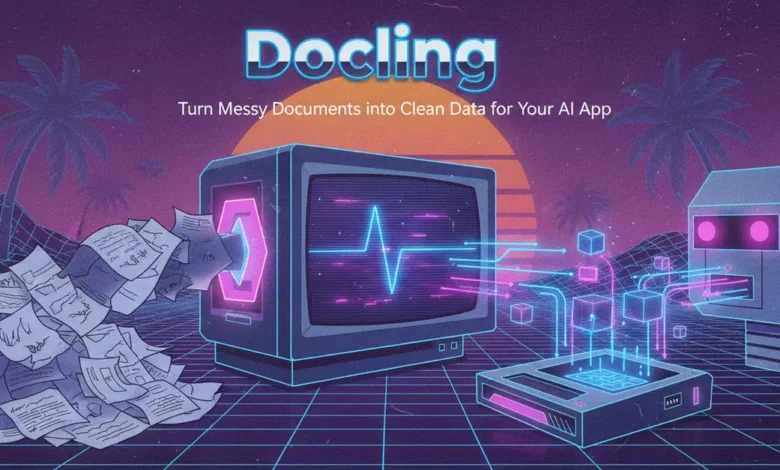
The rapid proliferation of Large Language Models (LLMs) and Retrieval-Augmented Generation (RAG) systems has exposed a critical bottleneck in the artificial intelligence value chain: the ingestion of unstructured data. While models are increasingly capable of reasoning across complex datasets, the raw materials of the corporate world—archived PDFs, intricate slide decks, legacy Word documents, and scanned imagery—remain notoriously difficult to translate into machine-readable formats. When traditional extraction tools encounter multi-column layouts, nested tables, or non-linear reading orders, they frequently produce fragmented, incoherent text that undermines the accuracy of downstream AI applications.
Docling, an open-source Python library developed by IBM Research Zurich and now hosted by the LF AI & Data Foundation, has emerged as a significant technical intervention to address this challenge. By leveraging advanced machine learning models to parse the structural semantics of documents rather than performing simple text scraping, Docling aims to standardize how organizations prepare their data for the generative AI era.
The Technical Evolution of Document Parsing
Historically, document parsing relied on rule-based heuristic approaches. Tools like pypdf or PyMuPDF could successfully extract character streams, but they remained "blind" to the visual hierarchy of a page. They could identify that a string of text existed, but not whether that text functioned as a header, a figure caption, or an entry within a complex, multi-row table.
Docling represents a paradigm shift toward model-based document understanding. Instead of treating a document as a linear sequence of characters, the library utilizes internal neural network models to identify the layout, infer logical reading order, and categorize elements into specific semantic blocks. This process, often referred to as "document layout analysis," allows the library to reconstruct the original document’s intent in formats such as Markdown, HTML, or JSON. By converting disparate input formats—ranging from XLSX spreadsheets and LaTeX documents to images and email files—into a unified internal representation known as the DoclingDocument, the software ensures that RAG pipelines receive clean, structured data regardless of the source file’s original complexity.
Chronology and Development Origins
The development of Docling by IBM Research Zurich was driven by the specific needs of enterprise-grade AI deployment. As IBM moved to integrate generative AI across its client base, the company recognized that its existing internal tools were insufficient for the scale and variety of documents handled by financial, legal, and healthcare institutions.
The library was transitioned to the LF AI & Data Foundation—an organization under the Linux Foundation dedicated to building an open ecosystem for artificial intelligence—to ensure vendor neutrality and encourage community-driven innovation. Since its public release, the project has seen a rapid rise in adoption. GitHub metrics, which often serve as a barometer for developer sentiment, indicate that the library has garnered over 66,000 stars, placing it among the most popular utility libraries in the open-source AI ecosystem. This trajectory highlights a broader market trend: as enterprise interest in AI matures, the demand for robust "data plumbing" has begun to rival the interest in the models themselves.
Comprehensive Format Support and Functional Scope
Docling’s versatility is a primary contributor to its current momentum. Beyond standard digital documents, the library provides support for scanned documents through optical character recognition (OCR) and includes capabilities for handling multi-modal inputs, such as transcribing audio and video files via integrated speech-recognition models.
The technical architecture is designed for integration rather than isolation. By providing a command-line interface (CLI) for rapid prototyping and a robust Python API for production pipelines, Docling addresses the needs of both data scientists and software engineers. Furthermore, it offers ready-made connectors for leading AI orchestration frameworks, including LangChain, LlamaIndex, CrewAI, and Haystack. This modularity allows developers to swap out legacy ingestion modules with Docling’s structured output, theoretically improving the quality of the "chunks" retrieved by vector databases.
Analysis of Implications for Data Privacy
One of the most significant implications of Docling’s design is its emphasis on local processing. In an era where data sovereignty and privacy are paramount, the ability to process sensitive documents—such as proprietary technical specifications or confidential legal contracts—entirely on-premise or within air-gapped environments is a competitive advantage.
Because the library performs its layout detection and conversion locally, no data is required to be transmitted to cloud-based APIs for processing. This minimizes the security surface area and simplifies compliance with strict data governance frameworks, such as GDPR or HIPAA, which often mandate that sensitive data remain within specific geographic or network boundaries.
Technical Trade-offs and Implementation Considerations
Despite its utility, Docling is not a universal solution for every document-processing task. Its dependence on machine learning models for layout and table detection introduces a "heavier" footprint compared to lightweight text-extraction libraries. The initial installation requires the download of these models, which may impact deployment speed in containerized environments.
Furthermore, computational overhead is a critical consideration. Processing large batches of high-resolution PDFs requires significant CPU resources, and performance can be substantially improved with GPU acceleration. For organizations whose document ingestion needs are limited to simple, single-column documents, the overhead of Docling may outweigh its benefits. In such cases, developers may find that traditional, rule-based tools provide a more efficient, low-latency solution. The library is intended for complex, unstructured scenarios where the cost of "noisy" data—in the form of hallucinations or failed retrievals in an AI system—is high.
Broader Market Context
The success of Docling serves as a case study for the current state of the AI supply chain. As the industry moves past the "hype phase" of generative AI, the focus has shifted toward reliability, accuracy, and the quality of the training or context-providing data.
The widespread adoption of Docling by the developer community underscores a fundamental truth: AI systems are only as effective as the data they consume. By solving the "garbage in, garbage out" problem for documents, IBM and the LF AI & Data Foundation have addressed one of the most persistent hurdles to enterprise AI adoption. As organizations continue to integrate large language models into their operational workflows, tools that can bridge the gap between legacy digital archives and modern AI infrastructure will remain a cornerstone of the technological stack.
For developers seeking to implement Docling, the process is straightforward: the library requires Python 3.10 or newer. A simple pip install docling command initiates the installation, after which the library can be invoked via the CLI for quick conversions or imported into Python scripts for more granular control. Whether deployed for RAG pipelines, agentic workflows via its MCP server, or as a standalone service using docling-serve, the library offers a standardized, open-source pathway to unlocking the value hidden within massive repositories of unstructured corporate documentation.
Ultimately, Docling reflects the maturation of the AI tooling ecosystem. It moves the focus from model experimentation to the pragmatic, often overlooked work of data preparation, ensuring that the next generation of AI applications is built on a foundation of clean, accurate, and contextually rich information.