The Real Value of Meeting AI Isn’t the Transcript: Moving Beyond Passive Documentation into Intelligent Work Orchestration

The modern professional meeting, once a synchronous endeavor that ended the moment participants logged off, has undergone a radical transformation. Driven by the rapid adoption of large language models, the standard workflow of recording, transcribing, and summarizing has reached a plateau of near-perfect technical execution. Yet, as corporate reliance on these tools grows, a critical gap has emerged: while artificial intelligence is exceptionally adept at capturing what was said, it remains largely ineffective at managing the work that follows. The transition from "meeting capture" to "work execution" represents the next major frontier for enterprise software, moving beyond passive documentation into a new era of intelligent, agentic orchestration.
The Evolution of Meeting Technology
The market for meeting intelligence has matured through a predictable series of phases, each designed to solve the limitations of its predecessor. In the early days of remote work, Phase 1 focused simply on digital recording, which provided a reference but offered little in terms of searchability. Phase 2, characterized by the rise of automated speech-to-text, turned audio into searchable data. By Phase 3 and 4, the focus shifted toward summarization and meeting intelligence, where AI could identify decisions, risks, and action items with increasing structural clarity.

However, industry data suggests that these advancements have not necessarily increased productivity in the way early projections anticipated. According to the 2025 Microsoft Work Trend Index, employees are interrupted every two minutes during core work hours, and a significant 55% of professionals report that "next steps" following meetings remain unclear or unexecuted. The problem is structural: the current toolset is designed to produce documents—passive, static artifacts—rather than outcomes. A transcript, no matter how accurate or well-formatted, is a snapshot in time that requires a human to manually translate it into actionable tasks across a fragmented ecosystem of project management software, calendars, and communication platforms.
The Problem of Fragmentation
The modern enterprise suffers from a severe case of "tool fatigue." A single forty-minute product meeting typically generates a cascade of obligations: deadlines, action items, technical debt, and customer concerns. In a standard workflow, these items are scattered across a spectrum of disparate applications. The launch date may live in a Slack message; the technical investigation might be logged in a Jira ticket; the customer issue may reside in an unread email; and the scheduling of follow-up sessions often remains buried in a calendar invite.
This fragmentation is not a failure of individual discipline but a consequence of the current technological architecture. Organizations are currently operating with "siloed intelligence." The meeting tool understands the context of the conversation, but it loses that context the moment the data is exported to a static document. When an AI tool acts merely as a transcriptionist, it fails to connect the "what" of the conversation to the "how" of execution. Research from the Harvard Business Review highlights the high cost of this disconnection, noting that workers switch between applications approximately 1,200 times per day, wasting nearly four hours a week simply reorienting themselves between tools.

The Shift Toward Agentic Work
The industry is now pivoting toward Phase 5: Agentic Work. Unlike previous iterations, this phase aims to move the AI from the role of a passive observer to an active orchestrator. Companies like Zoom, with its AI Companion 3.0, and Otter.ai are explicitly moving toward this model, positioning themselves as "intelligent work orchestrators." The objective is to build systems that maintain persistent context across multiple meetings, projects, and calendar events.
This evolution relies on the ability of AI to distinguish between mere suggestions and firm decisions. A common failing of early-generation tools was their inability to parse the nuanced language of a meeting—treating every "we could" or "perhaps" as a concrete action item. An intelligent system must be capable of identifying the intent behind the language, flagging dependencies, and identifying when a meeting has been implied but not yet scheduled.
The introduction of the Model Context Protocol (MCP) by Anthropic in November 2024 serves as a foundational step toward this future. By providing an open standard for connecting data sources to AI tools, MCP allows agents to interact with calendars, task managers, and knowledge bases in a secure, two-way manner. This connectivity is the key to creating an "AI workspace," where the intelligence gathered in a Monday planning meeting is still accessible and actionable when the team reviews the project’s progress on Friday.

Challenges in Reliability and Trust
Despite the technical potential, the transition to agentic AI introduces new risks. In an environment where the AI is authorized to draft emails, book meetings, or create tasks, the margin for error is significantly narrower than in a summary-only environment. A summary that is "roughly right" is acceptable; an action agent that is "roughly right" can cause significant operational friction.
Developers in the meeting-AI space are increasingly focusing on the concept of "verifiable uncertainty." Rather than blindly executing every task detected in a conversation, the most effective systems follow the executive assistant model: they prepare, synthesize, and propose, but leave final execution to the human user. This design choice maintains the necessary human-in-the-loop oversight, ensuring that permissions and context remain under the control of the individuals responsible for the work.
Engineering teams are also learning that the most dangerous failure is not a system crash, but an error that mimics success. A common issue involves extraction pipelines that return an "empty result" when they encounter complex or ambiguous speech, which the system then incorrectly labels as "no decisions found." To combat this, robust systems are implementing redundant verification processes—such as replaying meeting segments through different models—to ensure that a lack of detected tasks is a genuine reflection of the conversation, not a technical oversight.

The Future of the AI-Enabled Workspace
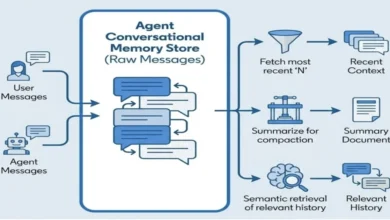
As the market moves forward, the competitive landscape will likely be defined by the quality of an assistant’s "memory" and its ability to reason across time. The most valuable AI assistants will be those that can provide continuity: connecting a customer’s complaint in a Thursday call to a product decision made on the previous Monday, and alerting the marketing lead that a launch date has been shifted without their knowledge.
The future of meeting intelligence is not the creation of more comprehensive transcripts. It is the elimination of the "hand-off" period where work is lost between the end of a conversation and the start of action. By integrating conversations, knowledge bases, and task management into a unified context, organizations can finally treat meetings not as isolated events, but as the engine room of enterprise productivity.
As the technology continues to mature, the standard for success will no longer be how accurately an AI can transcribe a speaker’s words, but how effectively it can reduce the cognitive load of the participants. The meeting is only one moment in a broader project lifecycle; the true measure of innovation lies in what happens after the room clears, the tab closes, and the work truly begins.