The Rise of Vector-Based Information Retrieval
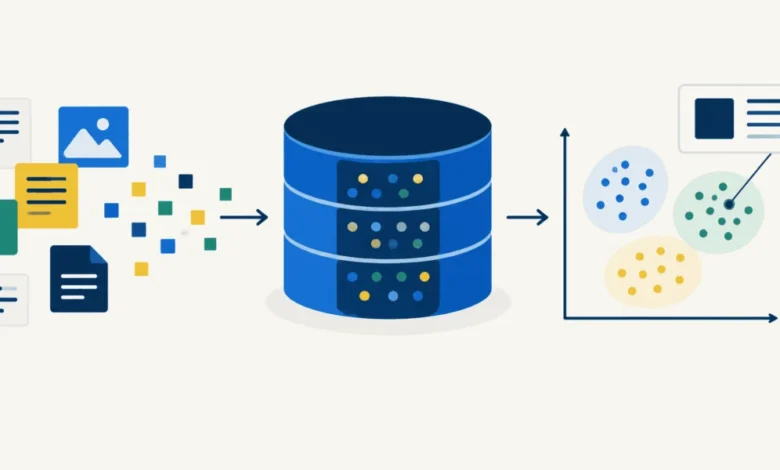
Traditional databases rely on keyword matching, an approach that is often brittle and context-blind. If a user searches for a "cellular power source," a keyword-based system might fail to return results regarding mitochondria unless the exact terminology is present in the document. Vector databases, however, represent a paradigm shift in how computers process information. By converting text into high-dimensional numerical vectors—often called embeddings—these systems map data into a mathematical space where proximity indicates semantic similarity.
This tutorial demystifies the black box of vector retrieval by breaking the process down into ten incremental, atomic steps. The implementation focuses on the "all-MiniLM-L6-v2" model, a lightweight, efficient transformer model that requires no GPU or complex cloud-based API keys. By utilizing NumPy for high-performance matrix operations, developers can witness firsthand how cosine similarity transforms a standard search query into a meaningful discovery tool.
A Chronological Breakdown of the Implementation
The development process is structured to mirror the real-world lifecycle of a database, starting from basic setup and concluding with performance optimization and scalability analysis.
- Environmental Initialization: The project begins by configuring a standard Python environment. By importing libraries like
numpyandsentence-transformers, the developer establishes the foundation for vectorization. The use of helper functions—header()for logging andshow()for formatted output—ensures that the system remains transparent throughout the build. - Indexing Strategy: The second phase involves the conversion of raw text into numerical embeddings. A crucial takeaway here is that index size is fixed; regardless of whether the document is a sentence or a novella, the embedding model produces a consistent 384-dimensional vector. This predictability is what allows vector databases to offer stable performance metrics.
- The Power of Semantic Search: Steps three and four demonstrate the contrast between traditional search and vector search. By querying for concepts like "superheroes" or "sourdough bread," the system returns relevant documents that share zero common keywords with the search string. This confirms the efficacy of embedding models in capturing intent rather than syntax.
- Scoring and Metadata Filtering: Beyond mere retrieval, the tutorial explores how to interpret distance scores and apply metadata constraints. Metadata filtering is essential for production environments where a user might want to search within a specific category, such as "bio" or "music," to prune irrelevant results before the ranking phase.
- Data Integrity and Persistence: The final steps address the "bookkeeping" required for enterprise-grade applications. This includes implementing guard rails to prevent data corruption during the ingestion phase—such as ensuring that input text matches metadata entries one-to-one—and providing methods to serialize the index to disk using efficient binary formats like
.npyand JSON.
Performance Analysis and Scalability
The final phase of the implementation offers a sobering look at performance scaling. While a 25-document database is instantaneous, the performance cost of scanning large datasets becomes apparent as the corpus grows to 100,000 documents.
Data gathered during the implementation highlights that the "scan" and "rank" operations scale linearly with the number of documents. For instance, while a 1,000-document set scans in roughly 0.01 milliseconds, a 100,000-document set requires significantly more computational overhead. This transition illustrates why commercial vector databases eventually move away from "brute-force" exact search—which relies on full matrix multiplication—toward Approximate Nearest Neighbor (ANN) algorithms like HNSW (Hierarchical Navigable Small World) or IVF (Inverted File Index) to maintain low latency as data reaches millions of vectors.
Contextualizing the Technology
The surge in interest regarding vector databases is directly tied to the explosion of generative AI. Because LLMs have a fixed knowledge cutoff and a limited "context window," organizations are increasingly turning to RAG architectures. In this model, a vector database serves as the "long-term memory" for an AI system. When a user asks a question, the application queries the vector database for the most relevant documents, retrieves the text, and feeds it into the LLM as part of the prompt.
Industry experts note that the core logic behind these systems is surprisingly elegant. By normalizing embeddings to a unit length, the complex task of calculating semantic relevance is reduced to a simple dot product. This mathematical simplification allows modern hardware to process thousands of queries per second, provided the index is structured effectively.
Implications for Future Development
For developers, the implications of building a database from scratch are twofold. First, it fosters an appreciation for the efficiency of the underlying mathematical operations. The realization that an entire search engine can be represented as a series of matrix multiplications is a powerful lesson in computational geometry.
Second, it demystifies the "managed" solutions currently dominating the market. Products from companies like Pinecone, Milvus, and Weaviate provide massive, distributed architectures that handle sharding, replication, and indexing optimizations that a manual Python script cannot. However, the fundamental "bookkeeping"—managing the relationship between metadata, raw text, and vector embeddings—remains identical regardless of the scale.
Conclusion: The Elegance of Semantic Retrieval
The journey from a simple pip install to a fully functional search engine underscores a broader trend in software engineering: the democratization of complex AI primitives. By stripping away the layers of abstraction typically provided by massive cloud platforms, developers can see that the magic of "AI search" is not found in a proprietary algorithm, but in the disciplined application of linear algebra and data structure management.
As the industry continues to iterate on these models, the ability to build and maintain these systems will likely become as standard as managing a traditional SQL database. The transition from 25 documents to 25 million is no longer a matter of changing the core logic, but rather a matter of choosing the right index structure to support that logic. For those looking to integrate AI into their own software, mastering these foundational steps provides the best possible preparation for the challenges of production-scale deployment.