The Roadmap to Mastering LLM Inference Optimization for Enterprise Production

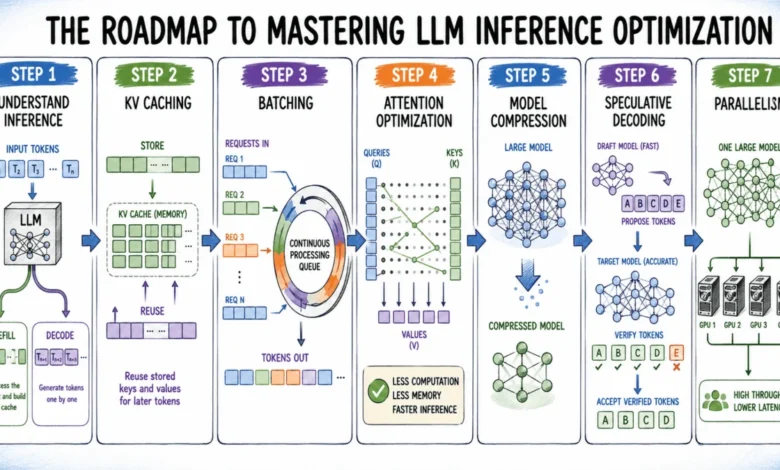
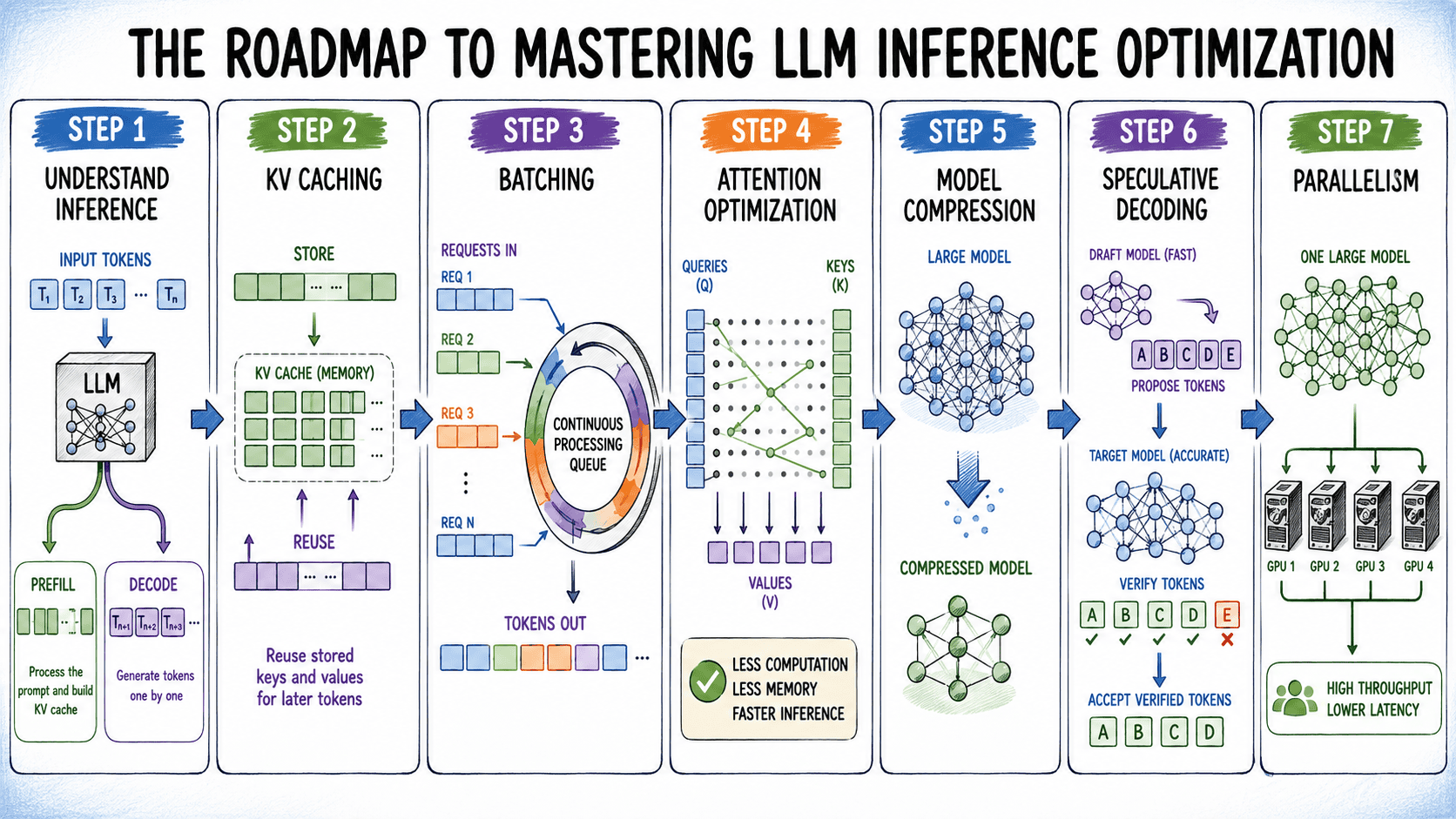
Achieving consistent, high-performance output from Large Language Models (LLMs) has transitioned from a theoretical research challenge to a critical operational requirement for modern enterprises. While the deployment of models like Llama 3, Mixtral, or GPT-4 has become relatively straightforward, the gap between functional performance and production-grade efficiency remains significant. Organizations frequently encounter "performance cliffs"—instances where latency spikes and costs balloon as request queues grow and context lengths expand. Inference optimization, the discipline of maximizing throughput and minimizing latency without modifying the underlying model architecture, has emerged as the primary mechanism for bridging this gap.
The Physics of Inference: Prefill and Decode
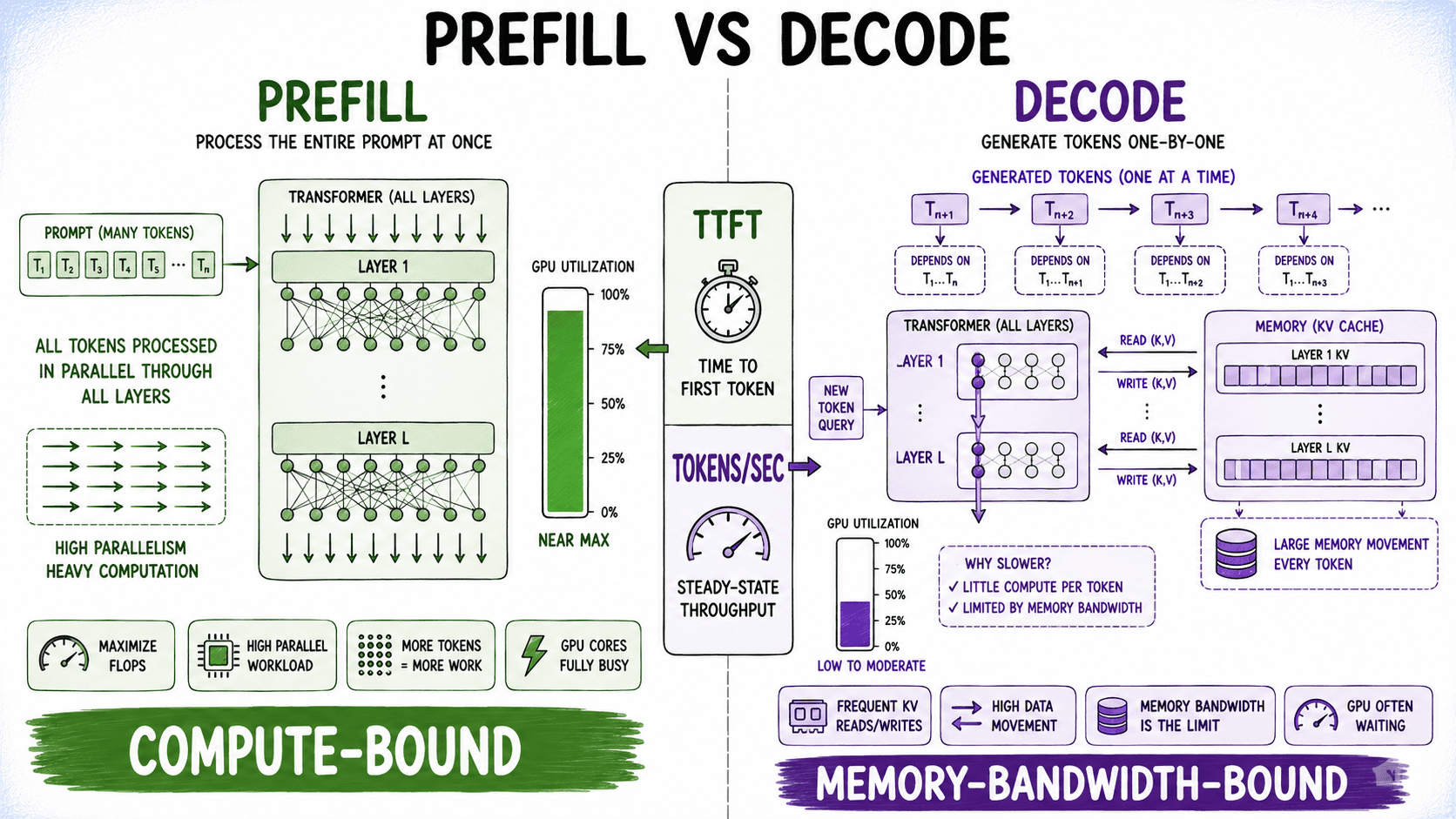
To understand how to optimize LLM performance, one must first deconstruct the two-phase inference process that defines every forward pass of a transformer-based decoder model. The first phase, known as the "prefill" or "pre-computation" stage, involves processing the entire input prompt simultaneously. During this phase, the GPU performs massive matrix multiplication to calculate intermediate states—specifically the Key and Value (KV) tensors—required to generate the first output token. Because the full prompt is available at the start, this process is highly parallelized and typically compute-bound, meaning the speed is limited by the raw teraflops of the GPU.
The second phase, the "decode" stage, is fundamentally different. Here, the model generates tokens one by one in an autoregressive fashion. Each new token is dependent on the output of the previous one, which inherently limits parallelization within a single request. Consequently, the bottleneck shifts from compute power to memory bandwidth. The GPU must constantly load model weights and the KV cache from high-bandwidth memory (HBM) into the compute units. In this stage, the system is memory-bandwidth-bound; therefore, optimizations that reduce the amount of data moved or improve the efficiency of those movements yield the most significant performance gains. This distinction explains why standard benchmarks can be misleading: Time-to-First-Token (TTFT) metrics primarily measure prefill efficiency, while Tokens-Per-Second (TPS) metrics are almost entirely determined by decode-phase optimizations.
Memory Management and the Evolution of KV Caching
The KV cache represents the most significant memory overhead in modern LLM serving. By storing the key and value tensors of previous tokens, the system avoids redundant re-computation of past context. However, as sequence lengths grow—often reaching 128k tokens or more in enterprise RAG (Retrieval-Augmented Generation) applications—the memory footprint of these caches can exceed the capacity of even the most powerful enterprise GPUs, such as the NVIDIA H100.
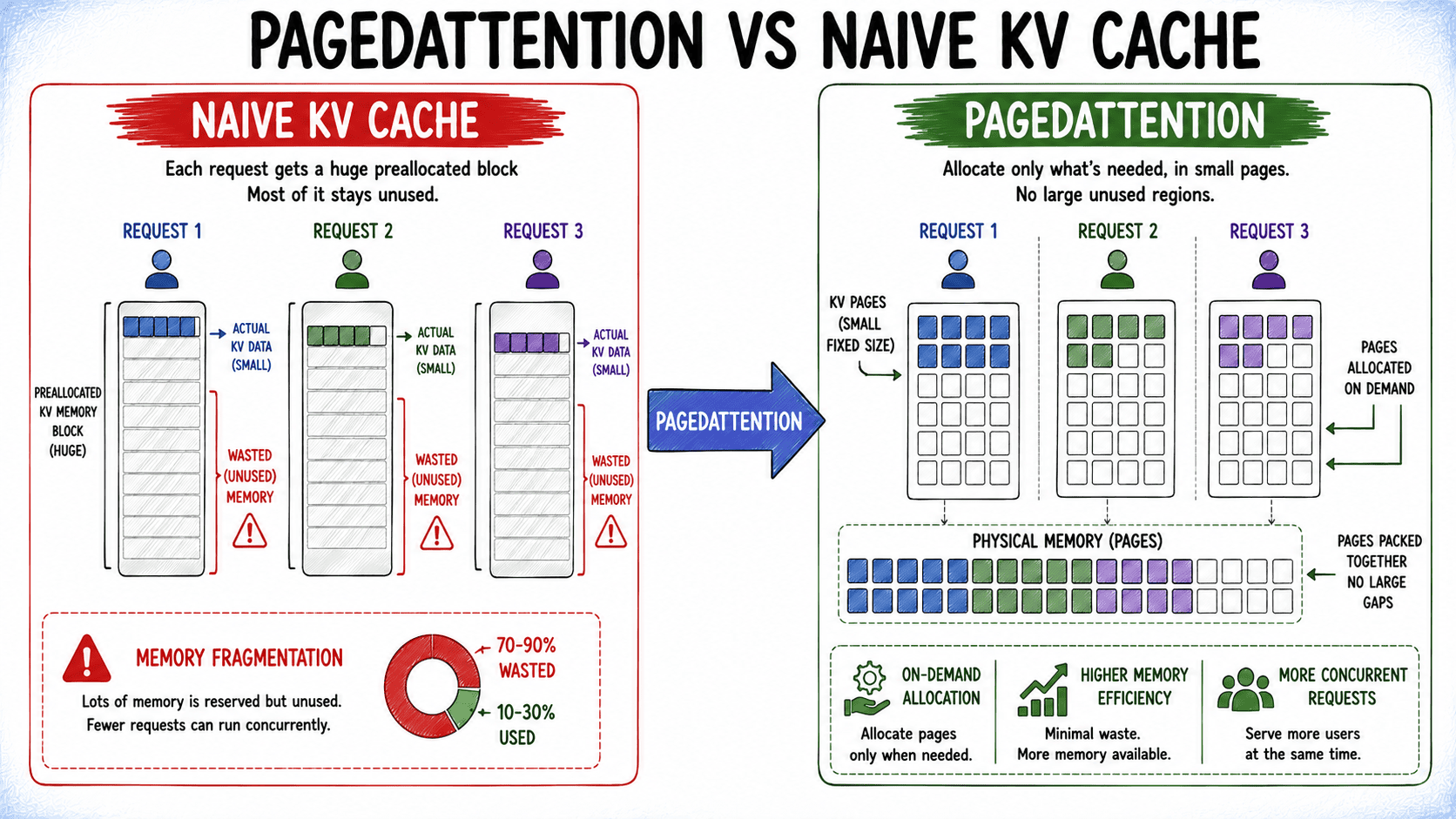
Industry researchers have shifted away from naive, contiguous memory allocation toward more dynamic strategies. PagedAttention, a breakthrough inspired by virtual memory management in traditional operating systems, allows the KV cache to be stored in non-contiguous memory blocks. This eliminates the internal fragmentation caused by pre-allocating memory for the "maximum possible" sequence length. By allowing the system to allocate memory on-demand, PagedAttention effectively increases the maximum concurrent batch size, directly lowering the cost per request. Furthermore, prefix caching has gained traction in scenarios involving heavy system prompts or shared document bases. By caching the KV states of static prompt prefixes, developers can effectively bypass the prefill phase for recurring inputs, saving significant compute cycles and reducing latency for end-users.
The Shift to Continuous Batching
Effective GPU utilization is the cornerstone of cost-efficient inference. Historically, developers relied on static batching, where a fixed number of requests were processed together. This method suffered from severe inefficiencies due to the variability in output lengths; the entire batch remained blocked until the longest request finished, leaving the GPU idle for the duration of shorter requests.
The current industry standard is continuous, or "in-flight," batching. By decoupling the batch boundaries from the request lifecycle, this approach allows the system to insert a new request into an empty slot the moment a previous request completes. Leading production runtimes, including vLLM and TensorRT-LLM, have adopted this as a default. By keeping the GPU saturated, continuous batching can improve throughput by an order of magnitude compared to traditional static methods, making it a non-negotiable component of any high-scale deployment.
Structural Optimizations: From MHA to FlashAttention
The attention mechanism, while powerful, is computationally expensive. Standard Multi-Head Attention (MHA) requires the storage of separate key and value heads for every attention head, placing immense pressure on memory bandwidth. Architectural variants such as Multi-Query Attention (MQA) and Grouped-Query Attention (GQA) have emerged as the standard solution. By forcing query heads to share a subset of key and value heads, these methods drastically reduce the memory transfer required during decoding.
While these architectural changes often require retraining or fine-tuning, FlashAttention offers a drop-in performance boost. By restructuring the attention computation to use tiling, FlashAttention minimizes the need to read and write intermediate values to main GPU memory, keeping data within the much faster on-chip SRAM. This optimization is effectively free in terms of model accuracy, making it one of the first steps any engineering team should take when optimizing their stack.
Compression and Speculative Execution
For resource-constrained environments, model compression is the ultimate lever. Quantization, the process of reducing the numerical precision of weights from 16-bit floating point (FP16) to 8-bit (INT8) or 4-bit (INT4), allows for the deployment of larger, more capable models on smaller hardware configurations. When combined with specialized hardware support—such as the tensor cores in NVIDIA’s Ampere and Hopper architectures—quantization can lead to significant speedups with negligible impact on output quality.
To address the latency limitations of the autoregressive decode phase, developers are increasingly turning to speculative decoding. This technique uses a small, "draft" model to predict the next few tokens, which a larger "target" model then verifies in a single parallel pass. If the draft model is accurate, the system effectively generates multiple tokens in the time it would take to generate one. This technique is particularly effective in latency-sensitive applications like real-time customer support chatbots, where the cost of a single-token wait is high.
Scaling and Infrastructure Disaggregation
As LLM applications move toward trillion-parameter models, single-node inference is often insufficient. Tensor parallelism splits model layers across multiple GPUs, reducing the latency of large matrix multiplications, while pipeline parallelism distributes layers vertically across nodes. However, the most sophisticated deployments are now moving toward prefill-decode disaggregation. By separating the hardware pools responsible for the compute-intensive prefill phase from those dedicated to the bandwidth-intensive decode phase, infrastructure teams can tailor their cluster composition to the specific bottleneck of each phase. This modular approach is becoming the blueprint for large-scale production environments, ensuring that resources are never wasted and that latency remains predictable even under high traffic volatility.
In summary, the transition from prototype to production requires a rigorous, data-driven approach to inference. By aligning the chosen optimization techniques—ranging from memory management and batching strategies to hardware-level parallelism—with the specific performance requirements of the workload, organizations can achieve the balance of speed, cost, and reliability necessary to sustain long-term AI-driven operations.