Signal Completes Cross-Platform Secure Backup Rollout with Version 8.30 Update

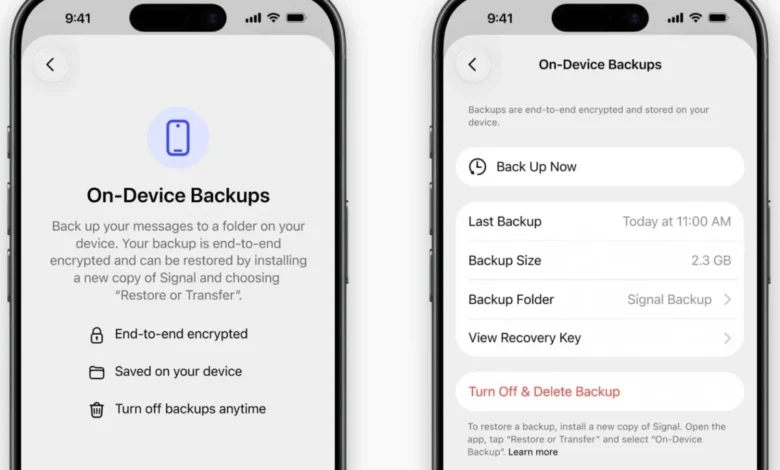
The landscape of encrypted digital communications has undergone a significant transformation as the privacy-focused messaging application Signal officially released version 8.30. This landmark update marks the completion of a comprehensive, multi-platform rollout designed to bring secure, end-to-end encrypted chat backups to every supported operating system across the globe. With this release, users of Android, iOS, Linux, macOS, and Windows now have access to standardized, robust backup and recovery solutions tailored to modern digital security and data portability needs.
The journey toward a unified backup ecosystem began nearly a year prior, when Signal first introduced its secure cloud-hosted backup architecture to the Android ecosystem. Historically, Signal maintained a strict philosophy against cloud backups to protect user metadata and message contents from unauthorized access or subpoena-based decryption demands. However, as user bases expanded and consumer expectations shifted toward seamless multi-device synchronization and effortless device migration, the engineering team at Signal undertook the monumental task of designing a backup framework that would not compromise the application’s core tenet: uncompromised end-to-end encryption.
Main Facts of the Version 8.30 Release
The deployment of version 8.30 finalizes the architecture by extending on-device local backup capabilities to iOS and desktop platforms, while simultaneously revamping the Android client to utilize a unified, cross-platform backup format. Under the updated system, Signal users are presented with two distinct architectural choices for preserving their message history: Signal-hosted cloud backups and unrestricted on-device local backups.
The Signal-hosted backup option is structured around storage quotas and tiered user access. Free users are allocated a streamlined experience that limits media retention to the preceding 45 days, alongside a strict message size limitation of 128 kilobytes per transmission. In contrast, paid subscribers gain access to a significantly expanded 100-gigabyte storage tier, accommodating extensive media archives without arbitrary temporal restrictions.
Meanwhile, the local backup option operates entirely on the user’s hardware, imposing zero size restrictions and allowing individuals to curate archives as large as their device storage permits. Regardless of the chosen path, both methodologies enforce strict cryptographic controls. Every backup file is encrypted and demands a specialized user-generated recovery key for successful decryption.
For hosted backups, Signal incorporates an additional layer of security: a supplemental cryptographic key that rotates dynamically on a daily basis within a Trusted Execution Environment (TEE). This design decision provides enhanced protection and forward secrecy, ensuring that even if a static vulnerability is discovered, historical data remains heavily shielded. According to technical documentation released alongside the update, a single on-device backup recovery key possesses the capability to decrypt all historical backup files generated by that specific key, irrespective of the physical storage medium where the files reside.
Chronology and Evolution of Signal’s Backup Strategy
The implementation of cloud and local backups did not occur in a vacuum; it represents the culmination of years of iterative development, community feedback, and cryptographic engineering.
Phase one of Signal’s backup modernization initiative kicked off on Android, serving as a real-world testing ground for the encryption schemas and recovery key methodologies. Throughout this period, security researchers, privacy advocates, and adversarial entities alike closely monitored the rollout.
Shortly after the initial introduction of secure cloud backups on Android, threat actors recognized the intrinsic value of the cryptographic recovery keys safeguarding these archives. Intelligence reports and cybersecurity analyses indicated that advanced persistent threat (APT) groups, including state-sponsored and financially motivated hackers, rapidly incorporated the targeting of Signal backup recovery keys into their operational scopes. Adversaries realized that acquiring a user’s recovery key could bypass the application’s transport-layer encryption entirely, granting unauthorized access to decrypted message archives if the key material was inadequately protected on the endpoint device.
In response to these emerging threats, Signal’s engineering division refined its protocols, ultimately leading to the comprehensive release schedule finalized in version 8.30. By unifying the Android backup architecture with the newly minted iOS and desktop systems, the platform ensured that cross-platform data handling adheres to identical cryptographic standards. Furthermore, linking a new device from a primary terminal now prompts the system to retrieve older chat attachments that may have been previously missing, solving a long-standing synchronization friction point for multi-device users.
Architectural Enhancements and Storage Management
Beyond cryptographic security and cross-platform compatibility, version 8.30 introduces structural optimizations designed to streamline local storage footprints and network efficiency.
Most notably, Signal has decoupled media storage from the core backup archive. Under previous iterations, media files were frequently bundled or redundantly processed alongside chat databases. The new architecture ensures that duplicate files are stored precisely once across the system, effectively eradicating excessive background backing up and synchronization loops that previously drained battery life and consumed unnecessary bandwidth.
For paying subscribers utilizing hosted solutions, the update introduces a specialized storage optimization setting. Users can now configure their applications to automatically purge old media from local device storage, retaining only lightweight thumbnails. When a user wishes to view a historical file, the full-resolution media is retrieved dynamically and securely from the Signal-hosted cloud backup on demand.
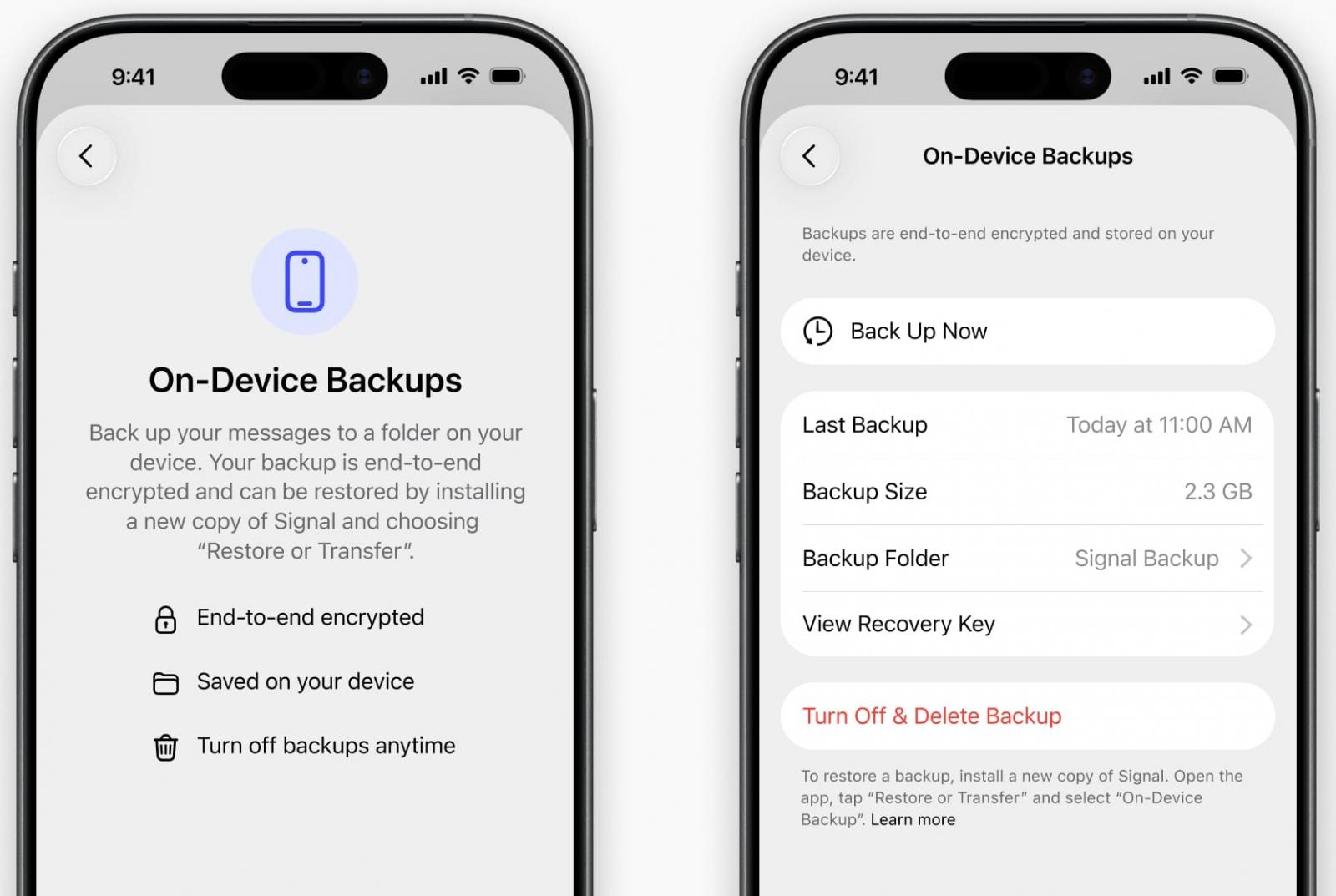
Data hygiene has also been enhanced regarding ephemerality. The backup system is explicitly programmed to ignore disappearing messages configured to vanish within a 24-hour window on both local and hosted backup paths. By design, these transient communications are entirely excluded from the generated archives. For individuals who maintain both hosted and local backup routines, Signal clarifies that generating a cloud backup does not purge or overwrite existing local archives. However, during any restoration procedure, expired disappearing messages originating from local backups are systematically filtered out and skipped, preserving the integrity of the user’s ephemeral communication preferences.
Additionally, the iOS client release introduces direct iPhone-to-iPhone data transfers. By leveraging a local, end-to-end encrypted Wi-Fi Aware link, users can migrate their application data between Apple devices with markedly improved transfer speeds and operational reliability, bypassing the need to route data through external intermediary servers.
Official Responses and Strategic Implications
With the completion of this extensive engineering phase, Signal leadership has characterized the rollout as the definitive conclusion of the first major phase of its long-term backup and synchronization project. Moving forward, Signal’s engineering teams are pivoting their focus toward enhancing non-backup core systems, including protocol efficiency, network resilience, and metadata protection mechanisms.
Security analysts and privacy experts have offered a mixed analytical perspective on the implications of this release. On one hand, the introduction of robust, end-to-end encrypted backups solves a major usability barrier that historically drove mainstream users toward less secure alternatives like WhatsApp or Telegram, which traditionally offered more forgiving, albeit less private, cloud storage solutions. The ability to retain chat histories securely across device upgrades without sacrificing zero-knowledge architectural principles is widely viewed as a major victory for consumer privacy.
On the other hand, cybersecurity professionals emphasize that the presence of recovery keys shifts the security paradigm directly onto the end user and the endpoint device. Because the security of an entire chat archive relies fundamentally on the confidentiality of the recovery key, any compromise of the host device—via sophisticated spyware, physical device seizure, or social engineering—can expose the underlying data. This reality was underscored by reports that intelligence and law enforcement agencies have actively targeted recovery key storage mechanisms on compromised hardware. Consequently, while the transit and storage states of the data are mathematically secured against remote interception, the human element and endpoint hygiene remain critical vectors in the overall security posture.
As Signal continues to cement its status as the gold standard for secure messaging in an era defined by automated surveillance and advanced cyber threats, the successful deployment of version 8.30 demonstrates that privacy and convenience can coexist, provided they are bound by rigorous cryptographic architecture and transparent engineering practices.