European E-commerce Growth Decelerates as Market Maturity and Inflation Challenge Regional Momentum

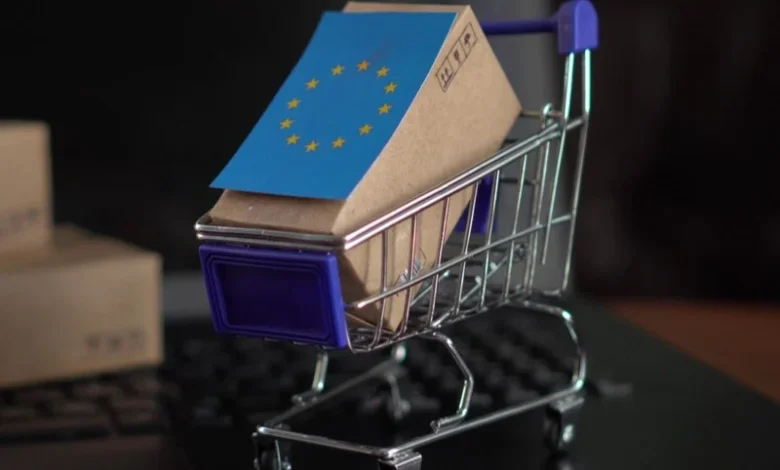
The European digital marketplace is entering a period of cooling momentum, according to the latest data released by Ecommerce Europe and EuroCommerce. The "European E-commerce Report 2026" reveals a landscape characterized by steady but diminishing growth rates, as the sector grapples with the transition from the rapid post-pandemic expansion phase to a more mature, inflation-sensitive environment. While 2025 saw total European online consumer spending reach a milestone of 911 billion euros—representing a 7 percent nominal increase from the previous year—the forecast for 2026 suggests a further softening to 5 percent nominal growth, with real growth—adjusted for inflation—expected to stagnate at 3 percent.
The Evolution of the European Digital Economy
To understand the current state of the European e-commerce sector, one must look at the recent trajectory of the industry. In 2024, the total European online market was valued at 842 billion euros. The subsequent rise to 911 billion euros in 2025, while substantial, marked a deceleration in year-on-year performance, falling one percentage point behind the growth rates observed in the preceding cycle.
This trend reflects a broader shift in consumer behavior. During the 2020–2022 period, e-commerce benefited from an unprecedented forced migration of shoppers to digital platforms. As brick-and-mortar retail regained its footing and inflationary pressures began to weigh on household disposable income, the "digital-first" growth miracle began to stabilize. The current figures confirm that the sector is no longer in a phase of explosive adoption, but rather in a cycle of consolidation, where market leaders must contend with increased competition, supply chain fluctuations, and evolving regulatory frameworks.
Regional Disparities: From Eastern Surge to Stagnation
The report highlights a significant divergence in performance across different European territories. While Western Europe remains the undisputed heavyweight of the continent, accounting for 57 percent of total turnover, it is also experiencing the lowest growth rates. In 2025, Western Europe saw nominal B2C e-commerce turnover grow by only 5 percent. This is largely attributed to market saturation; in countries with high internet penetration and mature logistics networks, the opportunity for rapid new-user acquisition has significantly narrowed.
Conversely, Southern and Central Europe have demonstrated more resilience. Southern Europe recorded an 11 percent increase in 2025, while Central Europe posted 8 percent. However, the most striking narrative in the 2026 report concerns Eastern Europe. Once the engine of growth for the continent—having achieved double-digit expansion rates of 18 percent in 2024 and 14 percent in 2025—the region is now facing a sharp downturn. Projections for 2026 indicate that nominal growth in Eastern Europe will plummet to just 5 percent.
More concerning is the real-term impact of inflation in these markets. When adjusted for the rising cost of goods, the report forecasts a 1 percent decline in real e-commerce spending in Eastern Europe. This represents a significant reversal of fortune for retailers who had identified the region as a primary growth corridor. The volatility in Eastern Europe serves as a cautionary tale regarding the sensitivity of emerging e-commerce markets to macroeconomic shocks, particularly in the energy and food sectors where inflation hits hardest.

A Call for Regulatory Reform and Level Playing Fields
As the market enters this phase of slower growth, the pressure on policy makers in Brussels has intensified. Ecommerce Europe and EuroCommerce have utilized the 2026 report as a platform to lobby for structural reforms that would simplify cross-border trade. The core argument presented by these industry associations is that the European Single Market remains fragmented, with disparate administrative burdens, VAT complexities, and varying consumer protection laws creating friction that discourages SME expansion.
Specifically, the organizations are advocating for a more consistent enforcement of digital regulations. The rise of non-European marketplaces, which often utilize different supply chain models and pricing structures, has placed immense pressure on local European vendors. Industry representatives argue that for a truly "level playing field" to exist, the same regulatory standards—regarding sustainability, product safety, and data privacy—must be enforced with equal rigor on all players, regardless of their origin.
"The current regulatory landscape is often perceived as a deterrent rather than an enabler," an industry consultant noted in response to the report’s findings. "When growth is easy to come by, businesses can absorb the costs of compliance. When growth is slowing to 3 or 5 percent, these administrative barriers become existential threats to smaller, localized players."
Strategic Implications for Retailers
The implications for retailers in this climate are profound. The era of growth through simple volume expansion is likely over for the majority of the continent. Companies are now pivoting toward strategies focused on:
- Efficiency and Margin Protection: With top-line growth slowing, profitability is becoming the primary metric. Retailers are increasingly automating logistics and utilizing AI to optimize inventory management and pricing.
- Sustainability and Circularity: As European regulation tightens, particularly concerning the European Green Deal, e-commerce firms are being forced to integrate sustainability into their core business models. This includes everything from sustainable packaging to reverse logistics for returned goods, which remain a significant cost burden.
- Personalization through AI: The report acknowledges that the integration of AI is no longer a luxury but a necessity for survival. Companies are leveraging generative AI to improve customer service, create personalized shopping experiences, and predict demand cycles more accurately in an uncertain economic climate.
Looking Ahead: The 2026-2027 Outlook
As we look toward the remainder of 2026 and into 2027, the industry is bracing for a period of adjustment. The forecast of 5 percent nominal growth is a sobering reality check for investors who had grown accustomed to the double-digit expansion of the early 2020s. However, the report also suggests that the European e-commerce market remains fundamentally sound. The underlying infrastructure—internet penetration, mobile connectivity, and digital payment adoption—has never been stronger.
The challenge for the coming years will not be one of technological adoption, but of economic navigation. Retailers who can manage the dual pressure of inflationary headwinds and a complex regulatory environment will likely thrive. Meanwhile, the role of European policymakers will be pivotal. Whether Brussels chooses to reduce the administrative friction within the Single Market or continues to oversee a fragmented regulatory environment will play a significant role in determining whether Europe can regain its momentum in the global digital economy.
The 2026 European E-commerce Report serves as both a scorecard and a roadmap. It documents the transition from a period of hyper-growth to a more nuanced era of maturity. For retailers, policymakers, and consumers alike, the data suggests that the next phase of the digital journey will be defined by resilience, regulatory compliance, and a strategic shift toward sustainable, value-driven growth. As the market cools, the focus shifts from simply being online to being efficient, compliant, and deeply integrated into the changing needs of the European consumer.